Most people who go missing in the backcountry are found within a day; the rare ones who survive a week or more alone, injured, and exposed are the cases that reveal just how much the human body and will can absorb before giving out.
Key Points
- A 72-year-old Siskiyou County woman was rescued after an estimated five to seven days alone in remote terrain near the Shasta-Siskiyou county line.
- Her vehicle’s location triggered a joint, multi-agency search involving Shasta and Siskiyou county resources.
- A Siskiyou County ground team found her alive, with physical injuries and signs of exposure.
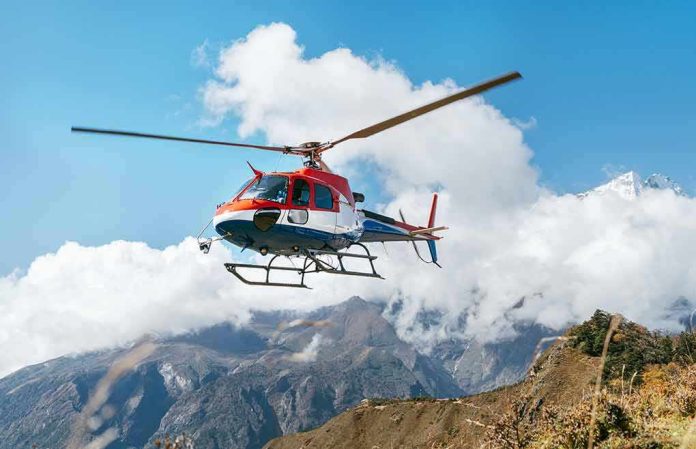
- CHP air operations hoisted her from steep canyon terrain and flew her to a hospital for treatment.
- Her ordeal fits a well-documented pattern in search-and-rescue science: survivals stretching beyond a day or two are statistically unusual, which is precisely why they become news.
What Happened in the Shasta-Siskiyou Backcountry
The rescue, reported October 6 by KRCR, began with a discovery rather than a distress call: the Siskiyou County Sheriff’s Office located the woman’s vehicle parked near the county line separating Shasta and Siskiyou counties, a discovery that set a joint search effort into motion between the two jurisdictions. That detail matters more than it might seem. In backcountry search-and-rescue work, an abandoned vehicle at a trailhead is frequently the first solid clue investigators get, often preceding any formal missing-person report by hours or days and giving searchers a fixed point from which to calculate a plausible radius of travel.
Once the vehicle was identified, Shasta County Search and Rescue moved to support Siskiyou County’s effort, deploying dog teams, ground crews, dirt riders, and a Jeep team into terrain KRCR described as steep canyon country laced with creeks, trails, dirt roads, and narrow shelf trails. That combination of assets reflects a standard SAR escalation: canines to pick up scent trails across difficult ground, motorized teams to cover distance quickly, and ground crews to conduct the close-in, foot-by-foot searching that dogs and vehicles cannot replace. The terrain description alone signals why this search took days rather than hours — shelf trails and canyon drainage systems are exactly the kind of landscape that swallows sound, breaks sightlines, and makes a single lost person extraordinarily hard to spot from the air or from a ridge.
The Rescue and Extraction
A Siskiyou County ground team ultimately located the woman alive, though with physical injuries and visible signs of exposure, according to SAR. From there, the extraction fell to California Highway Patrol air operations, which performed a hoist rescue — lowering a line and litter or rescue basket from a hovering helicopter rather than attempting a landing, a technique reserved for exactly the kind of terrain where no safe landing zone exists — and flew her directly to a hospital for treatment. The sequence, from vehicle discovery to multi-agency ground search to helicopter hoist, is the textbook arc of a successful wilderness rescue in rugged Northern California terrain, and it worked.
What the public record does not yet specify is how she endured the days in between: her water access, whether she sheltered in place or kept moving, and the nature of her injuries. SAR’s own timeline is itself an estimate — five to seven days — rather than a precisely reconstructed chronology, which is typical in cases where the exact moment someone was last seen isn’t independently witnessed.
Why a Week-Long Survival Is the Exception, Not the Rule
Search-and-rescue data make clear why this case reads as remarkable rather than routine. Research drawn from eleven years of Yosemite National Park incident records found that roughly 62 percent of SAR cases involve missing hikers, with nearly two-thirds of those searches resolved for a single missing subject. More tellingly, analysis of backcountry search patterns nationally has found that roughly 85 percent of lost people are located within twelve hours and 97 percent within twenty-four. Measured against that baseline, a survivor recovered alive after five to seven days sits well outside the normal distribution of outcomes — not because such cases are impossible, but because the physiological and environmental pressures compound sharply after the first day or two: dehydration, nighttime temperature swings, and injury risk all accumulate the longer someone remains exposed without shelter or reliable water.
That same body of SAR research offers a partial explanation for how survivors like her make it out at all. Studies of lost-person behavior consistently find that the majority of people eventually located are found close to identifiable terrain features — ridgelines, drainages, roads, or trails — rather than deep in trackless wilderness, because disoriented hikers tend to gravitate toward the path of least resistance even when they’ve lost the route itself. Staying near such features, intentionally or not, keeps a person within range of the search grids and canine sweeps that eventually find them. It is a pattern search teams rely on, and it is very likely part of why ground crews using dogs and dirt riders were able to close in on steep canyon terrain that would otherwise have taken far longer to clear.
What the Case Illustrates Going Forward
Stories like this one tend to circulate as inspirational outliers, and the instinct to read them that way isn’t wrong — surviving a week of exposure injuries alone in canyon terrain at 72 is a genuine feat of endurance. But the more durable lesson sits with the institutional machinery behind the headline: a sheriff’s office that treats an abandoned vehicle as actionable evidence, a cross-county SAR partnership willing to pool dog teams and dirt riders on short notice, and an air unit equipped to hoist an injured patient out of terrain with no safe landing zone. That infrastructure, more than luck alone, is what converts a dire five-to-seven-day disappearance into a recovery rather than a search-and-recovery operation of the grimmer kind.
Sources:
nypost.com, abc7.com, siskiyou.news
Missing 72-year-old hiker beats the odds and survives a harrowing week alone in unforgiving California wilderness https://t.co/gDZF4vEafT pic.twitter.com/umde1WV2Xv
— New York Post (@nypost) October 7, 2026