President Trump’s foreign policy decisions reveal a fundamental truth the liberal establishment refuses to acknowledge: not every global crisis stems from American actions, yet partisan divides and adversary exploitation threaten to undermine our nation’s strategic position.
Story Snapshot
- January 2026 polling shows 57% of Americans believe Trump weakened the U.S. global role, while 89% of Republicans see strengthened leadership amid sharp partisan divisions
- China exploited 2025 chip sales gaining AI advantages while Russia and Iran capitalize on perceived American restraint creating dangerous power vacuums
- Venezuela military operation on January 3, 2026 sparked debate over American intervention with 83% Republican support versus 80% Democrat opposition
- National Security Strategy demands allies increase defense spending as conditional support replaces automatic multilateral commitments
Partisan Warfare Obscures Strategic Reality
The American public remains deeply divided over Trump’s foreign policy approach, with approval ratings dropping to 37% by January 2026 from 41% in July 2025. This partisan split masks a critical debate conservatives understand well: whether America should continue bearing disproportionate costs for global security while allies fail to meet basic defense commitments. Republicans demonstrate 83% approval of Trump’s foreign policy decisions, recognizing that transactional diplomacy protects American interests rather than subsidizing wealthy European nations. Democrats and independents oppose military interventions at rates exceeding 80%, yet offer no coherent alternative to address threats from China, Russia, and regional instability that directly impact American security and prosperity.
Adversaries Exploit Weakness While Liberals Blame America
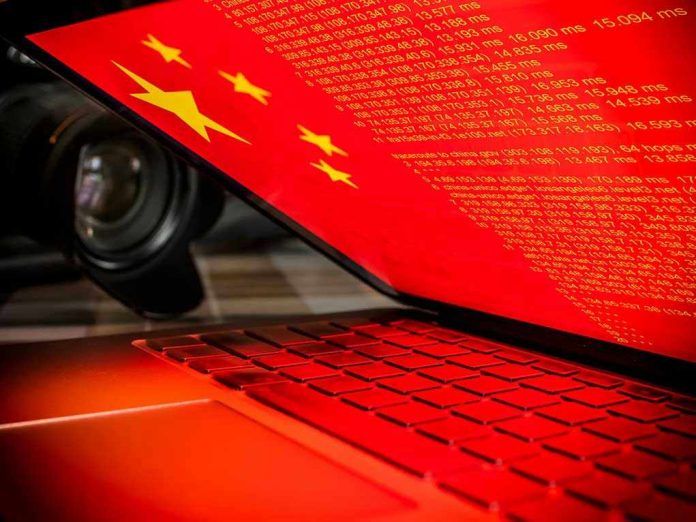
China capitalized on the Biden administration’s legacy when H200 Nvidia chips—critical AI building blocks according to the Department of Justice—were sold in 2025, undermining American technological superiority. Russia continues advancing in Ukraine while Iran destabilizes the Middle East, exploiting what they perceive as American hesitation. The left’s reflexive criticism of American power creates vacuums that hostile nations eagerly fill, threatening allies from Taiwan to Eastern Europe. Secretary of State Marco Rubio and Secretary of Defense Pete Hegseth correctly identify China as the primary long-term threat, yet the administration faces accusations of purging experts who might challenge these assessments with globalist conventional wisdom that has weakened America for decades.
Venezuela Operation Exposes Double Standards
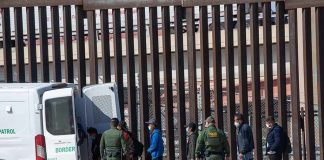
The January 3, 2026 special operation that exfiltrated Venezuelan dictator Maduro from power demonstrates the contradictions plaguing American foreign policy debates. Brookings Institution critics immediately condemned it as “lawless bravado,” yet these same voices remained silent when the Biden administration allowed Venezuelan oil and migration crises to spiral out of control. Republicans backed the operation at 83% support rates, understanding that regional instability directly impacts American energy security and border integrity. The operation echoes Monroe Doctrine principles that protected American interests for generations before globalist elites deemed self-defense unfashionable. Critics warning of “open-ended responsibilities” conveniently ignore that inaction also carries costs—mass migration, energy price spikes, and terrorist safe havens that threaten American families.
Alliance Framework Demands Reciprocity
The December 2025 National Security Strategy rightfully demands European allies boost defense spending and trade alignment rather than freeloading on American taxpayers. Historian Hal Brands notes Trump’s approach mixes wins and failures but achieves better ally burden-sharing if trust holds—a significant improvement over decades of one-sided arrangements. NATO nations face what the strategy terms potential “civilizational erasure” from Russia and China, yet many continue spending far below agreed defense targets while lecturing America about global responsibility. This conditional support model protects American resources and forces allies to take ownership of their security. The alternative—continued blank-check commitments—enables European welfare states while American communities struggle with infrastructure decay and economic pressures from globalist trade policies that hollowed out our manufacturing base.
China Threat Requires Clear-Eyed Response
The Council on Foreign Relations correctly rejects both isolationist restraint that creates vacuums and naive nationalism that ignores genuine threats. China advances aggressively in the South China Sea and Taiwan Strait while squeezing global trade networks, prompting Japan and South Korea to debate nuclear weapons development as deterrence weakens. The Cato Institute’s Jon Hoffman identifies Trump’s tension between non-intervention instincts and primacy requirements, reflected in administration staffing decisions. This balancing act frustrates conservatives who recognize that strategic withdrawal differs fundamentally from abandoning American interests. The real danger lies not in reassessing commitments but in allowing adversaries to exploit American political divisions, turning legitimate policy debates into vulnerabilities that embolden Beijing, Moscow, and Tehran to challenge the post-World War II order that secured unprecedented prosperity and freedom.
Sources:
U.S. Foreign Policy – Marist Poll January 2026
America Revived – Council on Foreign Relations
Trump Foreign Policy Second Term – TIME
Making Sense of the US Military Operation in Venezuela – Brookings
Visualizing 2026: Five Foreign Policy Trends to Watch – CFR