The first American pope just publicly urged President Trump to “silence the weapons” after U.S.-Israeli strikes killed Iran’s supreme leader—putting the Vatican on the opposite side of an escalating war.
Quick Take
- Pope Leo XIV used his March 1 Angelus message to condemn escalating violence after U.S.-Israeli strikes on Iran and to push “responsible dialogue” over force.
- The strikes—described as “Operation Epic Fury” in multiple reports—killed Iran’s Supreme Leader Ayatollah Ali Khamenei and triggered missile and drone retaliation across the region.
- Iran’s counterattacks reportedly killed civilians in Israel and U.S. service members at American bases in the Gulf region.
- Reporting notes Pope Leo XIV has previously criticized Trump-era policies, making his direct appeal to Trump politically charged as well as moral.
Pope Leo XIV’s Angelus plea lands in the middle of a shooting war
Pope Leo XIV addressed the Middle East crisis from St. Peter’s Square on March 1, calling for diplomacy and warning that the situation risks an “irreparable abyss,” according to multiple outlets and Vatican reporting. His remarks came as conflict expanded beyond rhetoric into direct exchanges among the U.S., Israel, and Iran. The pope’s core message centered on ending threats and weapons in favor of “reasonable” and “responsible” dialogue.
Some headlines and social media framed the pope as “making a fool of himself,” but the source material summarized here does not substantiate that as a factual description. The public record in the research shows a conventional papal peace appeal—strongly worded, yes, and unusually pointed in naming President Trump, but consistent with the Vatican’s longstanding posture against wider war. The sharper question for Americans is what his intervention means amid real-time escalation.
What triggered the Vatican’s intervention: strikes, Khamenei’s death, and rapid retaliation
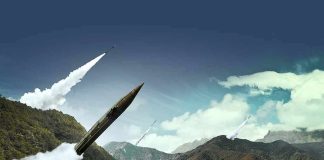
Reports say U.S. and Israeli forces launched “preemptive” strikes across Iran on Feb. 28, targeting military sites and killing Ayatollah Ali Khamenei, who had ruled for decades. Coverage describes attacks spanning a large portion of Iran’s provinces and connects the operation to U.S.-Israeli aims of degrading nuclear and missile threats. Iran responded with drones and missiles, with strikes reported against Israel and U.S. bases across Gulf states.
By March 1–2, the situation had already produced reported deaths on multiple sides, including at least four civilians in central Israel and U.S. service member fatalities at American installations in the region. President Trump, in comments quoted in the research, warned Iran against further retaliation and promised overwhelming force if attacks continued. The U.N. secretary general publicly urged de-escalation, citing the danger to civilians if the war widens.
Why this matters to conservatives: national security vs. global moral pressure
For conservative readers, the clash here is not “Trump vs. the Pope” as a personality drama, but competing frameworks for preventing catastrophe. Trump’s posture, as described in the research, centers on deterrence and eliminating nuclear or missile dangers before they mature. The pope’s posture prioritizes immediate de-escalation, treating military action as a spark for an uncontrollable spiral. Those are fundamentally different approaches to protecting innocent life.
What the research does establish is that Iran’s regime has a long record of hostility toward America, including “Death to America” rhetoric over decades, which informs why U.S. leaders view Iranian capabilities as intolerable. At the same time, the research also underscores an immediate humanitarian and strategic risk: retaliation cycles can kill civilians, drag allies and host nations into the fight, and destabilize energy routes. Those outcomes can hit American families through security threats and economic shocks.
The politics inside the story: an American pope, prior Trump criticism, and credibility questions
Several reports emphasize that Leo XIV is the first American pope, elected in May 2025, and that he has previously criticized Trump on issues including war, immigration, and alliances. That history shapes how his March 1 message is interpreted: supporters of the administration may view the Vatican’s language as moralizing from a distance, while critics see it as a necessary restraint. The research supports the existence of prior friction, not a single definitive motive.
With facts still developing, the most defensible conclusion is narrow: the pope’s message is real, the strikes and retaliation are real, and the risk of wider conflict is real. Whether diplomacy can “silence the weapons” depends on actors who are currently trading missiles. Americans should watch for measurable indicators—ceasefire terms, verified pauses, and credible negotiations—rather than slogans. The immediate priority remains protecting U.S. forces and preventing further civilian casualties.
Pope Leo XIV Weighs in on Military Strikes on Iran — Makes Fool of Himself https://t.co/fV0dx5EiBt
— ConservativeLibrarian (@ConserLibrarian) March 2, 2026
As this unfolds, conservatives will also weigh a familiar concern: international institutions and global voices often demand restraint from the United States while offering few enforceable tools to stop regimes that openly threaten us. The research shows the Vatican and the U.N. pressing to de-escalate, while Iran’s leadership frames the strike as a broader religious confrontation and vows revenge. The policy test for Washington is whether deterrence can restore order without sliding into a prolonged regional war.
Sources:
At the Vatican Sunday, Pope Leo XIV pleads for peace amid Middle East-Iran violence
Pope Leo condemns ‘spiral of violence’ in U.S., Israel strikes on Iran
Iran war: Trump Pope Leo warning video
Pope Leo, Iran, United States, Israel, war, Trump
Pope warns of ‘tragedy of enormous proportions’ after U.S.-Israeli strikes on Iran
Pope warns escalating Iran conflict could tip Middle East into ‘irreparable abyss’
Pope Leo XIV Angelus appeal for peace amid Middle East-Iran conflict