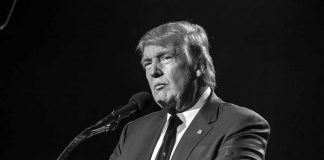

President Trump faces unverified rumors of appointing a “New Hoax Hunter” amid persistent demands to expose deep state abuses from the Russia collusion saga, raising questions about government accountability in his second term.
Story Snapshot
- No credible evidence confirms a 2026 Trump appointment of a “Hoax Hunter” to probe Russia collusion origins, despite social media buzz.
- The narrative revives the “Russia hoax” theory, alleging Clinton-funded Steele dossier sparked FBI bias against Trump.
- Durham Report (2023) validated key claims: no Trump-Russia collusion, FBI flaws in relying on unverified intel.
- Both conservatives and liberals share frustration with federal institutions prioritizing power over people.
- Declassified 2025 documents highlight ongoing intel manipulation concerns, fueling calls for transparency.
Rumors of a New Hoax Hunter Emerge
Social media posts in 2026 claim President Trump appointed a “New Hoax Hunter” to expose Russia collusion origins. These assertions lack verification from official sources. The story echoes longstanding conservative concerns about the 2016 investigations as a fabricated hoax orchestrated by Democrats. Trump supporters point to recycled partisan narratives without fresh evidence of such an appointment. This development, if true, would signal renewed efforts to hold deep state actors accountable during Republican control of Congress.
Origins of the Russia Hoax Narrative
The Clinton campaign hired Fusion GPS in 2016 through lawyer Marc Elias to fund the Steele dossier, alleging Trump-Russia ties. FBI’s Crossfire Hurricane probe used this unverified information for FISA warrants on Carter Page. CIA Director John Brennan briefed Obama in July 2016 on Clinton’s plan to vilify Trump with a Russia scandal. Mueller’s 2017-2019 investigation confirmed Russian election interference but found no Trump collusion. These events form the core of claims that federal agencies abused power against a political opponent.
Durham’s 2019-2023 probe, ordered by Trump via Attorney General Barr, criticized FBI procedural failures and reliance on the dossier. The 2023 Durham Report finalized findings of no collusion basis, eroding trust in institutions among conservatives frustrated by past liberal policies and deep state overreach.
Durham Report Validates Conservative Concerns
John Durham’s final report confirmed the FBI accepted unverified dossier claims without proper vetting, undermining the collusion narrative. No broad conspiracy emerged, but documented biases fueled GOP unity and delegitimized Mueller findings. Costs exceeded $40 million in probes and hearings, diverting resources while public faith in the FBI plummeted. Trump allies view this as partial vindication, highlighting how elites protected their own over American principles of justice and limited government.
Declassified House Permanent Select Committee on Intelligence documents from July 2025 exposed “manufactured” intelligence issues in raw reporting. Speculation persists around Brennan’s notes, but no post-2023 releases confirm new breakthroughs. The narrative remains dormant absent fresh investigations.
Trump Appoints New Hoax Hunter to Expose the Russia Collusion Originshttps://t.co/262dFATjsh
— RedState (@RedState) April 19, 2026
Shared Frustrations Across the Divide
Conservatives decry the hoax as a deep state coup eroding individual liberty and traditional values. Liberals, while defending the probes, increasingly share anger at federal failures making the American Dream elusive for millions. Both sides see elected officials more focused on reelection than solving inflation, immigration, and economic woes. This bipartisan distrust underscores departures from founding principles of accountable, limited government serving the people.
Sources:
Gang That Invented the Russia Hoax Is Behind Issue 1
Russia investigation origins conspiracy theory
The Durham Report Confirms It: No Russian Collusion
Declassified HPSCI Report on Manufactured Russia Hoax