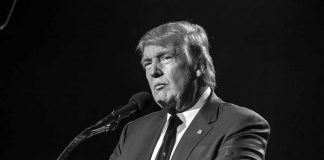
President Trump warns that handing China unchecked control over rare earth magnets would spell disaster for America’s defense and economy, as he threatens crippling 200% tariffs to force supply access.
Story Highlights
- China’s near-monopoly on rare earth magnets threatens U.S. aviation, defense, and EV industries with potential supply cutoffs.
- Trump leverages massive tariffs as a powerful tool to counter China’s export controls and protect American interests.
- U.S. firms like Boeing already retaliated by withholding parts from Chinese planes amid escalating tensions.
- Recent U.S.-China talks signal negotiation room, but self-sufficiency plans aim to end dangerous dependency.
China’s Magnet Monopoly Endangers U.S. Security
China controls 70% of global rare earth mining and 90% of processing, dominating production of magnets essential for jet engines, radar systems, electric vehicles, and defense technology. Over the past 20 years, China strategically convinced industries worldwide to adopt these magnets, securing its near-monopoly. This dominance creates a chokepoint for American companies like Boeing, Lockheed Martin, GM, Ford, and Raytheon, which rely heavily on these critical components for manufacturing and national security.
Trump’s Tariff Threats Counter Chinese Export Controls
In April 2026, China imposed export controls on rare earth elements and magnets, citing national security, requiring licenses even for civilian uses. President Trump responded forcefully, demanding China supply magnets to the U.S. or face 100-200% tariffs, calling it an “incredible card” in negotiations. Vice President JD Vance labeled China’s control a “national emergency,” justifying tariffs to reduce dependency and protect manufacturing. This stance aligns with America First principles, prioritizing U.S. self-sufficiency over globalist supply chains.
Recent Escalations and Negotiation Signals
U.S.-China negotiators met over the weekend prior to April 29, 2026, marking the first talks since the escalation. Trump accused China of a “sinister” move but softened his tone, stating he wants to “help” China while assuring Americans, “Don’t worry about China, it will all be fine.” China clarified no outright bans exist and urged “equal-footed consultation,” while insisting it fears no tariff war. These developments highlight mutual dependencies, with China risking economic fallout from overproduction if U.S. firms diversify suppliers.
Trump plans ramped-up domestic magnet production, predicting the U.S. will make “so many we won’t know what to do.” Such moves address frustrations on both sides of the aisle over federal over-reliance on foreign adversaries, echoing calls for government accountability to secure the American Dream through innovation and hard work, not elite-driven globalism.
Impacts on Industries and Broader Economy
Short-term disruptions loom for U.S. and EU manufacturers, including halted deliveries like the U.S. withholding Boeing parts from 200 Chinese planes. Long-term, tariffs could generate revenue and spur reshoring, accelerating de-globalization from China. Defense, aviation, auto, and tech sectors face immediate shortages but stand to gain from diversified supply chains. Chinese factory workers risk job losses if Western boardrooms shift away, underscoring the high stakes in this trade standoff.
Sources:
Xi says US-China confrontation would be disaster
Trump’s policy toward China is already a disaster—even before taking office