
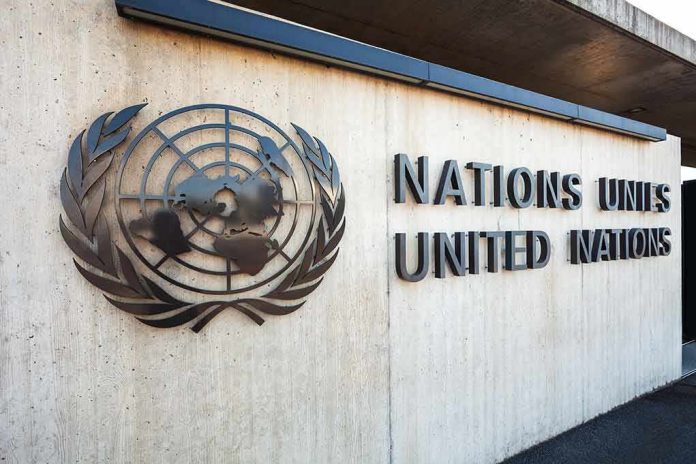
In New York, the friction between protected protest and the city’s duty to keep critical arteries moving is not an abstraction; it lives in curb lanes and crosswalks, and during United Nations week it often ends in zip-ties.
At a Glance
- Protesters near the UN repeatedly moved into the roadway; NYPD warned and then detained people to clear traffic under disorderly conduct and obstruction rules.
- Police characterized the demonstration and arrests as peaceful, while emphasizing zero tolerance for violence or property destruction.
- Advocacy and human-rights commentary argue temporary traffic disruption remains protected assembly and warn against overbroad arrests.
- UN General Assembly security and road closures turn Midtown into a carefully managed bottleneck, heightening the stakes of any roadway blockade.
What actually drives roadway arrests during UN week
The operational question in Midtown is narrow and concrete: are people in the roadway after lawful orders to disperse. When demonstrators enter traffic lanes during the gridlocked United Nations General Assembly, police routinely respond first with amplified warnings, then with brief detentions or summonses to restore flow. This sequence appeared again: coverage identifies groups trying to block Second Avenue at 43rd Street; officers warned that remaining in the street would trigger arrest; around 20 people were taken into custody, with the NYPD calling both the protest and arrests peaceful. That framing aligns with how the department publicly sets its posture for UN week—facilitate speech, prevent violence, and keep streets passable.
Those decisions are underwritten by well-worn law. New York’s disorderly conduct statute bans intentional or reckless obstruction of vehicular traffic, and state courts have long held that protests, however protected, are subject to reasonable regulation when conduct substantially interferes with public safety and order. In practice, that gives line commanders a clear hook when a crowd moves off the curb into an active corridor.
Why UN week turns curb space into policy
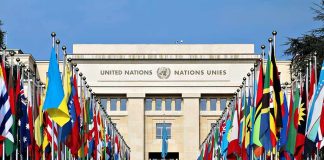
The UN General Assembly compresses security needs, diplomatic motorcades, and ordinary commuting into a few square blocks. First Avenue between 41st and 48th is heavily restricted; cross streets around the Secretariat close; even the FDR exit at 42nd often shuts until evening. The Department of Transportation designates multiple “Gridlock Alert” days, with expected speeds that can fall to a crawl. Agencies plan for a high volume of demonstrations and a high-threat environment, even when there are no specific credible threats; the net effect is a security plan that treats curb space as a finite, mission-critical resource. In that context, an improvised roadway sit-in is not merely expressive conduct; it is a node that can stall a convoy, divert routes, and ripple delays through a pre-negotiated security ballet.
Police posture accordingly. Leaders publicly promise to facilitate First Amendment activity while drawing a bright line at violence, destruction, and roadway blockages. That dual message—talk and chant on the sidewalk, do not seize the lane—has become the city’s seasonal script around the UN, reiterated in multiple briefings and borne out by the pattern of short-duration detentions and summonses during street incursions.
The principled disagreement: disruption as speech versus neutral rules of the road
The counter-argument is not a factual refutation of whether streets were blocked; it is a rights-based challenge to how police draw the line. Human-rights commentary emphasizes that peaceful assemblies remain protected even when they temporarily disrupt traffic and that indiscriminate mass arrests are arbitrary and unlawful. Organizers and advocates also allege that police sometimes single out visible leaders, people with megaphones, and those recording arrests, which, if true, would cut against content-neutral enforcement. These critiques land in a long-running debate: when is a traffic rule a neutral time, place, and manner restriction—and when is it an instrument for suppressing dissent that is inconvenient rather than dangerous.
New York’s legal baseline, however, continues to separate message from conduct. Courts have affirmed that when a protest’s conduct, not its content, substantially interferes with public order—blocking lanes, stopping buses, sealing building entrances—police can act so long as warnings are given and force is proportional. That is the lens through which roadway detentions near the UN typically survive scrutiny. The presence of celebrities or politically polarizing messages does not change the analysis; the curved white stripe at the edge of the lane does.
Mechanics on the ground: from warning to summons
On the pavement, the process tends to be standardized. Supervisors coordinate with event organizers, define a protest footprint, and announce lawful orders by amplified sound. Crossing into the street after those orders—or refusing to return to the sidewalk—invokes the disorderly conduct provision. Most custodial actions are brief; many end in desk appearance tickets or summonses rather than criminal booking. In the cited incident, ABC7 reported approximately 50 detentions with 48 summonses for disorderly conduct after attempts to block Second Avenue; CBS New York reported roughly 20 earlier that week at the same intersection, again described by NYPD as peaceful. These numbers are consistent with a clear-the-lane tactic rather than a mass-arrest operation.
Where departments get into legal trouble is when containment tactics like kettling trap lawful demonstrators without exit routes, when warnings are perfunctory or inaudible, or when officers appear to select arrestees based on viewpoint or recording rather than conduct. Those risks are why training and documentation—recorded warnings, body-worn camera, and summons language tethered to roadway facts—matter as much as discretion in the moment.
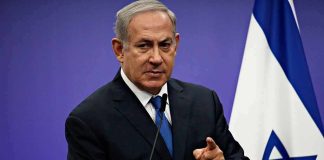
WATCH NYPD officers arrest and zip tie protesters after an anti Israel demonstration blocked streets near the United Nations during Netanyahu’s speech turning the area around the UN into a tense confrontation#NYI pic.twitter.com/rUYca2caEN
— NewYork-Insight (@NewYork_Insight) September 24, 2026
What it means going forward
Nothing about this pattern is transient. UN week will always strain Midtown infrastructure; contentious geopolitics will always draw crowds to First Avenue. The narrow space for principled compromise is procedural. Police can keep lanes open without chilling speech by making the rules of engagement legible and evenhanded: pre-event coordination, clear amplified orders, genuine sidewalk alternatives, and proportional consequences. Protest organizers, for their part, can maximize impact without ceding the lane by designing actions that exploit visibility over velocity—permitted marches, fixed-rally stages, and media-facing symbolism that does not hinge on stopping cars.
Sources:
nypost.com, ibtimes.co.uk, abc7ny.com, wionews.com, yahoo.com, aa.com.tr, diplomacyandlaw.com, cbsnews.com