
The core reality is simple and sobering: U.S. intelligence has assessed that Iran was developing options to strike senior U.S. officials in Washington, D.C., including with a radiological “dirty bomb” or chemical weapon—an assessment specific enough to trigger contingency planning across the national-security system, and consistent with a months-long pattern of elevated Iranian plotting against Americans abroad.
At a Glance
- Seven U.S. officials told CNN that intelligence indicated Iranian planning for potential dirty-bomb or chemical attacks targeting senior officials in Washington, D.C.
- An October 23 memo from the Director of National Intelligence (DNI) warned of “advanced stages” of lethal Iranian plots against U.S. personnel overseas, framing the broader threat environment.
- That warning moved policy: State ordered certain nonessential staff to leave the U.S. Embassy in Saudi Arabia as threat levels rose.
- Officials characterized the Washington plotting as option generation—not proof an attack was imminent—while still launching contingency preparations.
What the intelligence says and why it mattered
According to seven U.S. officials cited by CNN, Iran developed plans that included potential targets and locations in Washington, D.C., and contemplated unconventional means—specifically a radiological dispersal device, often called a dirty bomb, or a chemical weapon. The characterization went beyond generic threat chatter; sources described specific locations and targets, enough to drive a “flurry” of interagency contingency moves. Officials also discussed—explicitly—whether Tehran had the capability and the intent to execute, underscoring that the assessment reflected option-building, not a countdown to detonation. That nuance matters, but so does the operational response: planners acted as if the window for risk management had opened and might close quickly.
This Washington-focused reporting did not surface in isolation. Three weeks earlier, the DNI warned in writing that Iranian plotting against U.S. personnel had intensified and reached “advanced stages” in the Middle East and “certain other countries.” While that memo did not cite Washington or specify methods, it put departments on notice that lethal operations were maturing. As a result, risk tolerances shifted—both for protective measures and for situational awareness at posts that previously operated under routine threat assumptions.
How the U.S. system reacts to a plot like this
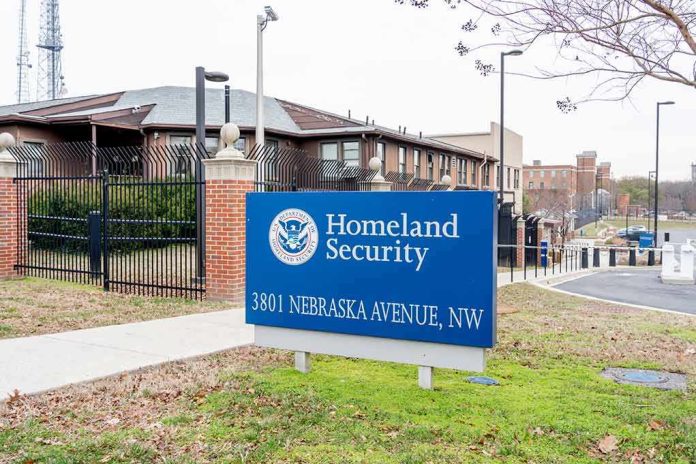
When analysts surface specific planning indicators—targets, notional locations, weapon types—Homeland Security, the FBI, and the intelligence community choreograph a familiar playbook. Protective details revisit routes, harden access control, and increase counter-surveillance. Consequence-management teams update radiological detection postures and emergency medical protocols. Interagency tasking pushes collectors to validate or falsify key judgments: What is the weapon concept of employment? Who is the authorizing authority? Where is procurement or pre-operational surveillance occurring? The CNN report’s description of a “flurry” of planning is consistent with that cadence; the government does not wait for certainty when the downside risk includes mass disruption and contamination.
In parallel, State recalibrates posture overseas. Shortly after the DNI’s warning, the department directed certain nonessential staff to depart the U.S. Embassy in Saudi Arabia, a visible signal that risk thresholds had been crossed given Iranian-linked proxy activity and historical targeting patterns. That kind of order is not issued lightly; it carries costs in diplomacy, intelligence coverage, and local confidence but buys time and resilience if threat vectors are multiplying.
The threat vector: dirty bombs and chemical agents, explained
A radiological dispersal device couples conventional explosives with radioactive material to spread contamination over an area. Its primary effect is not a nuclear blast but the convergence of panic, persistent cleanup requirements, and the possibility of exposure—psychological shock and urban paralysis as much as acute casualties. Radiological sources are not science fiction; hospitals and industry use isotopes that, if diverted, could be weaponized. Yet moving from intent to effect requires procurement, handling, shielding, timing, and emplacement without detection—friction that has thwarted many aspirants. A successful attack would still be a civic and economic body blow: closures, evacuations, and the politics of fear.
Chemical weapons present a different profile. Agents vary—from choking agents to nerve agents—with distinct signatures and delivery challenges. Urban deployment against a protected target is technically harder than sensational headlines imply; wind, weather, building HVAC, and dispersion physics complicate reliable outcomes. Even so, the mere prospect compels planning: medical stockpiles, rapid detection, decontamination routes, and public warning systems. The intelligence community’s task is to discriminate between aspirational ideas and logistics that point to a real operational pathway; the CNN account makes clear that debate on capability and intent was active even as contingency steps accelerated.
Why this fits a known Iranian external-operations pattern
Since 2020, Iranian state-linked actors have repeatedly been tied to plots against U.S. officials and dissidents abroad—attempted assassinations, kidnappings, and intimidation operations. U.S. prosecutors have publicly charged operatives and intermediaries with efforts targeting former national-security officials and journalists, and have won convictions in murder-for-hire and terrorism-transcending-boundaries cases with IRGC links. This history does not prove any single new claim, but it makes the risk of option development against high-value American targets plausible and strategically coherent with Tehran’s deterrence and revenge logic.
The October DNI memo formalized that pattern as a live operational problem, citing “advanced stages” of lethal plotting in the Middle East and beyond. That language—issued through senior channels and reportedly copied to the CIA director—signals that case officers and analysts were seeing convergent streams, not just isolated tips. It also creates the bureaucratic cover leaders need to accept near-term costs for protective measures; you do not draw down an embassy or surge protective details on hunches.
New US intelligence indicates that Iran is developing plans to target senior Trump administration officials by detonating a so-called dirty bomb or a chemical weapon in Washington, DC, even as officials continue to debate whether Iran can or will attempt to execute such a plot pic.twitter.com/a6IvTjpxIV
— mrjam54 (@mrjam54) November 16, 2026
Capability, intent, and the line between planning and imminence
Serious national-security work distinguishes three things that often get blurred in public discourse: historical capability and intent, contingency planning, and an authorized, imminent operation. Iran has both capability (networks, tradecraft, access to dual-use materials) and demonstrated intent (public and adjudicated cases) to threaten Americans overseas. Contingency planning—what the Washington reporting describes—means building options Iran could hold in reserve to signal, deter, or retaliate. Imminence demands separate indicators: specific authorizations, pre-operational movement, and logistics that compress timelines. The officials quoted by CNN rank-ordered those distinctions correctly: plan development is not proof of a go-order, but it is enough to warrant rapid defensive posture and targeted collection to confirm or defuse the threat.
What it means going forward
For Washington, three imperatives follow. First, harden the obvious without broadcasting playbooks: dignitary protection, route variation, and radiological/chemical detection in and around high-value venues. Second, accelerate left-of-boom disruption by mapping procurement pathways for radiological sources, precursor chemicals, and dual-use gear—pressing export controls, sting operations, and sanctions designations where intelligence supports action. Third, sustain diplomatic and legal pressure that raises the cost of external operations—expulsions, indictments, and targeted financial isolation of units involved in plotting.
For readers trying to parse headlines from hazards, remember that the government’s protective posture is designed to err on the side of caution when the consequence envelope includes contamination and mass disruption. In this episode, the picture is consistent: specific Washington-focused planning reportedly surfaced; officials debated feasibility while moving to reduce risk; and the broader threat context—described by the DNI and evidenced by overseas protective drawdowns—supports treating the assessment as credible until proven otherwise. That is how a prudent state behaves when adversaries experiment with options designed to shock a capital rather than defeat an army.
Sources:
redstate.com, reuters.com, bbc.com, washingtonpost.com, edition.cnn.com, thehill.com, abc15.com, gate.com, mediaite.com, politicalwire.com