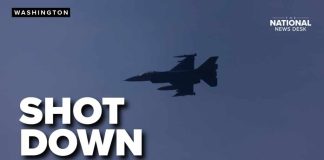

A “miraculous” rescue of two downed American airmen is colliding with a sobering reality: the U.S.-Iran war is deepening under a president who promised no new wars.
Story Snapshot
- President Trump announced the successful recovery of the second crew member from a U.S. Air Force F-15E shot down over Iran, completing a multi-day combat search and rescue.
- The shootdown marked the first confirmed downing of a U.S. warplane over Iran since the current conflict began more than a month earlier.
- Reports say a rescue UH-60 Black Hawk took small-arms fire during the operation, underscoring how risky U.S. personnel recovery has become inside Iran.
- Trump issued a 48-hour ultimatum tied to reopening the Strait of Hormuz, while saying indirect talks would continue despite the war.
F-15E shootdown turns a regional fight into a direct test of U.S. resolve
U.S. forces launched a search-and-rescue mission after an F-15E Strike Eagle went down over Iran on Friday, March 28, 2026, according to reporting on the incident. The aircraft was shot down hours after the U.S. struck a major bridge near Tehran, a detail that matters because it ties the loss directly to escalating U.S. strikes. Iranian forces reportedly closed off the area in Kohgiluyeh and Boyer-Ahmad Province, complicating recovery operations.
The U.S. recovered one crew member on Saturday, March 29, while the second remained missing until Sunday, March 30, when Trump confirmed the rescue. That timeline highlights what most Americans rarely see: a modern U.S. military can still face days of uncertainty when a pilot or weapons systems officer goes down behind enemy lines. The reporting available does not describe the exact rescue method, and that limitation keeps key operational details off the public record.
Rescue under fire shows capability, but also reveals how hot this war has become
Reporting indicates a UH-60 Black Hawk involved in the recovery effort was hit by small-arms fire, injuring personnel on board. Even without more tactical detail, that single fact shows the U.S. is conducting missions in an environment where hostile ground fire is expected, not exceptional. For conservative voters who remember decades of “limited” Middle East engagements turning into long slogs, the incident reads less like a clean operation and more like a warning signal.
Trump celebrated the outcome publicly, calling the recovery “miraculous,” and his message emphasized success and American competence under pressure. From a commander-in-chief perspective, recovering service members is a clear obligation, and the operation appears to have delivered on that duty. But the same event also confirms a bigger truth: the U.S. is now losing aircraft in Iran and risking additional casualties to recover crews, which is a hallmark of a widening, not shrinking, conflict.
Trump’s 48-hour ultimatum raises stakes as the Strait of Hormuz remains central
Trump also posted a 48-hour ultimatum warning Iran that “all Hell will reign down on them,” while demanding Tehran reopen the Strait of Hormuz. That chokepoint matters to everyday Americans because energy markets react fast to threats in the Gulf, and high fuel costs ripple through groceries, shipping, and household budgets. The research also says Trump claimed the shootdown would not affect indirect talks, a combination that signals coercive pressure alongside diplomacy.
MAGA frustration grows as “America First” collides with another open-ended fight
The reporting shows cumulative casualties since the conflict began: 13 American personnel killed and at least 365 wounded. Those numbers—paired with a shootdown and a rescue helicopter taking fire—help explain why many Trump voters are divided and increasingly skeptical. Some prioritize supporting allies and deterring Iran; others see another overseas commitment forming, with unclear endpoints and predictable costs. The current research does not include polling, but it does document the kinds of events that drive grassroots debate.
For constitutional conservatives, the central question becomes accountability: what are the defined objectives, what is the strategy to end the conflict, and how will the administration level with the public about risks and costs? The rescue is a win for the families involved and a credit to U.S. operators who carried it out under combat conditions. Yet it also highlights how quickly promises to avoid new wars can collide with realities on the ground once U.S. forces are committed and American lives are on the line.
Sources:
Fighter jet shot down over Iran (Stars and Stripes link)
Iran war latest news: Trump; US jet shot down (The Times)