

As cartel violence escalates in Mexico, a quieter kind of cartel power is tightening its grip over blue America’s politics and culture.
Story Snapshot
- Mexico’s cartels rule with guns; blue-state political machines rule with money, media, and regulations.
- Major Democrat-run cities have become “company towns” for powerful industries that shape policy and values.
- Cartel-style politics erode accountability, reward corruption, and sideline working-class Americans.
- Trump’s 2025 push to dismantle cartel power—at the border and in the bureaucracy—offers a stark contrast.
From Cartel Armies to Cartel Politics
Mexico’s cartels control territories with guns, bribes, and fear, while blue America’s political class increasingly runs entire regions through a different kind of cartel: a tight alliance of big government, big corporations, and activist groups that punishes dissent and rewards obedience. Detroit is synonymous with autos, Los Angeles with motion pictures, Texas with oil, and Pittsburgh with steel; where one sector anchors an economy, it gains leverage, and politicians start taking orders instead of giving them.
When a dominant industry becomes the lifeblood of a city, it no longer simply competes in the marketplace; it expects political protection, subsidies, and special rules that lock in its power. Blue strongholds have perfected this arrangement. Tech giants in coastal hubs, entertainment empires in California, and finance titans in New York use their economic muscle to shape speech rules, cultural norms, hiring practices, and even which viewpoints are allowed on major platforms. That looks less like free-market capitalism and more like a political cartel.
Company Towns and the New Blue Power Brokers
In the classic American “company town,” one employer dominated jobs, housing, and local politics; today, Democrat-led metros echo that pattern on a larger scale. Auto unions once anchored Detroit, Hollywood studios still anchor Los Angeles, and tech platforms dominate San Francisco and Seattle, but now these industries double as ideological enforcers. When the same companies that sign paychecks also police speech and fund political campaigns, ordinary workers quickly learn which views are safe, and which can cost them their careers.
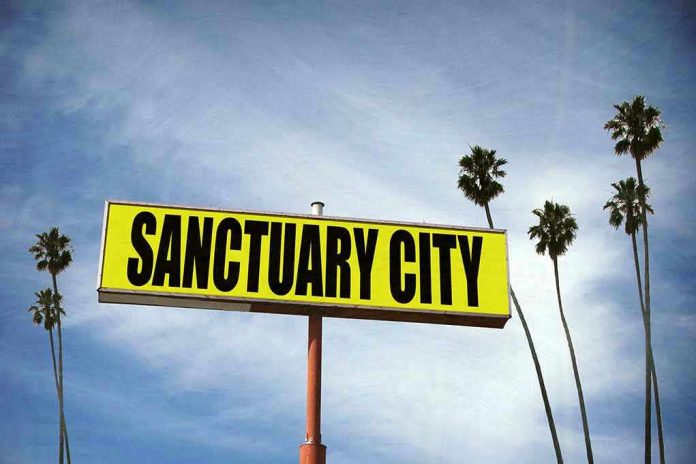
Blue-city leaders leverage this concentrated power to advance policies that many working- and middle-class residents never asked for: radical gender ideology in schools, soft-on-crime prosecutors, sanctuary laws that shield illegal immigrants, and climate rules that drive up energy costs. The industries tied to these agendas benefit from subsidies, contracts, and regulatory favors, while families bear higher taxes, weaker public safety, and shrinking say over their communities. The result is a feedback loop where money, media, and political office reinforce each other.
How Cartel Politics Undermine Constitutional Values
Cartel-style politics in blue America do not need armed militias when they control licensing boards, federal grants, regulations, and social media gatekeepers. When one political faction dominates all major levers of local power, dissenting parents, gun owners, and traditional churches feel constant pressure to keep quiet. School boards ignore families, prosecutors target law-abiding gun owners more aggressively than repeat criminals, and bureaucracies treat faith-based groups with suspicion while rewarding woke nonprofits and activists.
Under the prior left-leaning administration, this model spread through federal rulemaking, diversity mandates, and COVID-era emergency powers that normalized government overreach. Agencies used regulations to nudge businesses into enforcing speech codes and ESG-style priorities that never passed Congress. For many conservatives, this resembled a cartel agreement between big government and big business to impose cultural and economic terms on the rest of the country, with almost no democratic debate and little accountability for the damage to small towns and working families.
Trump’s 2025 Course Correction and the Cartel Clash
Trump’s return to the White House in 2025 has drawn a clear line between national leadership that confronts cartel power and blue jurisdictions that depend on it. The new administration has moved to close the border, formally designate major Latin American cartels as terrorist organizations, and halt the flow of fentanyl devastating American communities. At the same time, Trump has targeted the domestic cartel of bureaucracy and woke corporatism by reversing prior executive orders and dismantling DEI-driven mandates inside the federal government.
By prioritizing border security, unleashing American energy, and ending federal censorship partnerships, Trump is trying to restore the balance between citizen and state that cartel politics erode. Blue strongholds, however, remain wedded to their entrenched alliances: tech censors defend preferred narratives, climate regulators constrain affordable energy, and urban machines rely on federal transfers tied to activist priorities. The clash between constitutional self-government and cartel-style control defines the stakes for conservative Americans looking ahead.
Sources:
How Sanctuary Cities Shield Immigrants and Transform Communities