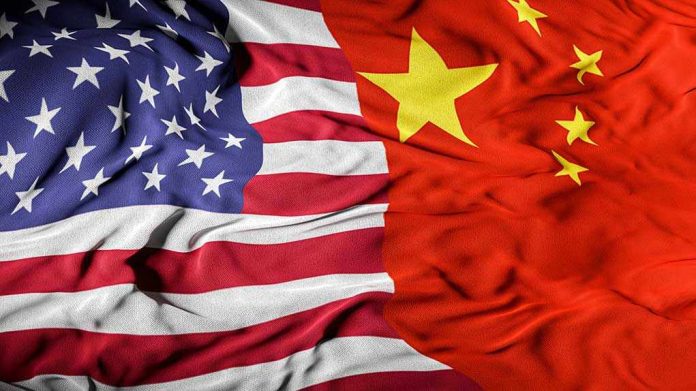
China’s latest stealth aircraft, the J-36, threatens to challenge U.S. air superiority, accelerating a new era of military competition.
Story Highlights
- China’s J-36 development accelerates, potentially surpassing U.S. programs.
- This stealth fighter-bomber boasts advanced all-aspect stealth design.
- Regional military balance in the Indo-Pacific faces new threats.
China’s Strategic Leap in Aviation Technology
The Chengdu J-36, a sixth-generation stealth fighter-bomber developed by the Chengdu Aircraft Corporation (CAC), represents a significant leap in China’s military capabilities. With a tailless diamond-double-delta wing design and trijet configuration, the J-36 is optimized for stealth and speed. These advancements highlight China’s efforts to challenge U.S. air dominance, especially in the strategically significant Indo-Pacific region.
The J-36’s development indicates a clear intention by China to accelerate its military aviation capabilities. The third prototype’s flight in December 2025 underscores the rapid pace of development. This aircraft is part of a broader sixth-generation fighter program aimed at establishing air superiority, potentially placing China ahead of U.S. Next-Generation Air Dominance (NGAD) initiatives.
Technical Advancements and Design Innovations
The J-36 incorporates several design innovations that emphasize stealth and versatility. Modifications in the second prototype include changes to the inlets, landing gear, and exhaust systems. These adjustments are aimed at improving low-observable characteristics and flight performance. Notably, the exhaust design changes suggest enhancements to rear-aspect stealth and potential thrust vectoring capabilities, addressing stability issues inherent to tailless designs.
The aircraft’s multi-role capability across air superiority, strike, interception, and command-and-control operations makes it a versatile tool for Chinese military strategy. Its significant internal payload capacity further enhances its utility as a power-projection asset in the region.
Implications for U.S. Military Strategy and Regional Security
The J-36 poses a direct challenge to U.S. air superiority, with its supercruise capabilities and sophisticated stealth design. The technological competition between the U.S. and China is intensifying, compelling the U.S. to reassess its military modernization priorities. For regional allies such as Japan, South Korea, and Australia, the development of the J-36 reshapes security dynamics, necessitating strategic recalibrations to maintain balance.
While the J-36’s development is a testament to China’s engineering prowess, it also highlights technical challenges. The tailless design requires advanced control systems and thrust vectoring for stability, potentially complicating its operational deployment. However, these challenges do not diminish the strategic impact of the J-36 as it becomes a pivotal component of China’s air force.