

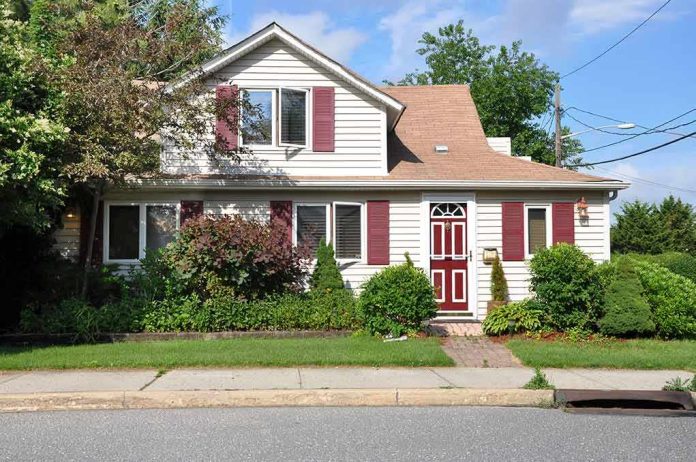
The gap between owning a house and legally controlling it is wider than most homeowners ever discover — and a 76-year-old San Diego woman spent two years trapped inside that gap after hiring a man to fix her pipes.
Key Points
- A City Heights homeowner, recovering from a broken hip, hired an unlicensed man to repair plumbing while she temporarily relocated — he allegedly took over the property instead.
- The man is accused of switching the home’s utility accounts into his own name and renting rooms to roughly 15 strangers, according to the homeowner’s account.
- San Diego police responded to the address more than 30 times over the ordeal, yet could not immediately remove the occupants because the dispute was treated as a civil matter.
- Missing trust paperwork delayed the owner’s ability to prove her legal authority, stretching the eventual eviction to roughly five additional months even after a private recovery firm got involved.
- Sheriff’s deputies and the company Squatter Squad ultimately carried out a formal eviction, and the home was sold afterward.
What Happened in City Heights
The homeowner, identified in reporting as Smith, and her partner Jordy Smith left their City Heights home temporarily after she broke her hip and needed to recover elsewhere. They hired a man to repair the home’s pipes during that absence. By the time they tried to return, the arrangement had collapsed into something unrecognizable. “He just took over and, like, before we knew it, there was like 15 people,” Smith told ABC 10News. What began as a routine repair job became, in her account, a two-year fight to get back inside a house she still legally owned.
The alleged sequence is specific rather than vague: a hired worker, a period of owner absence, a reported takeover, and a documented pattern of occupants cycling through the property. Realtor.com’s reporting corroborates the core outline — strangers moved in, the owners were locked out, and the standoff lasted roughly two years before resolution. That duration matters. A short-term dispute over access is one thing; a two-year loss of control over a privately owned home is a structural failure of the systems meant to prevent exactly this outcome.
How an Unlicensed Repairman Became a De Facto Landlord
The most consequential allegation isn’t physical occupation — it’s administrative. Smith says she later learned the man had changed the home’s utility accounts into his own name and begun renting out rooms, according to ABC 10News. That single act, if accurate, did more to entrench his position than any lock change could have. Utility accounts are one of the informal proofs of residency that landlords, courts, and even law enforcement often use to sort out who belongs somewhere. A name on a gas or water bill doesn’t confer ownership, but it muddies the picture enough to slow down anyone trying to intervene quickly.
Renting rooms to roughly 15 people compounded the problem. Each new occupant added a potential claim of tenancy, however thin, and each one became another body law enforcement would have to individually account for in any removal. This is the mechanism by which an alleged squatter converts a single act of overstaying into something resembling an operating business — and why police, arriving at a noise or trespassing complaint, often leave without resolving anything.
Why the Law Took Two Years to Act
San Diego police responded to the property more than 30 times over the course of the dispute, according to public records cited by ABC 10News. Repeated dispatch to the same address for trespassing and smoke complaints is itself a signal that something was badly wrong — yet patrol officers generally cannot evict occupants on the spot. California, like most states, routes disputed possession through the unlawful-detainer process, a court procedure requiring a complaint, service, and often a hearing before a judge issues a writ of possession. That framework exists to prevent landlords from unilaterally throwing tenants onto the street without due process; it was not built with a plumber-turned-occupant in mind, but it applies regardless of how sympathetic the facts look.
The case carried an added complication: the property was held in a trust, and the paperwork establishing Smith as successor trustee had gone missing. Without it, she could not readily demonstrate the legal authority needed to act against the occupants. That gap was eventually closed when investigators located the relevant filings through the county recorder’s office — but only after it had already cost valuable time.
The Squatter Squad and the Final Eviction
Smith and her partner ultimately turned to Squatter Squad, a private firm that works alongside law enforcement on possession disputes, to help recover the missing trust documents and push the matter through the courts. Once the paperwork surfaced, the eviction process itself still took roughly five more months, reflecting how civil courts treat occupancy disputes methodically rather than urgently, even when the underlying facts suggest an outright takeover rather than a legitimate tenancy. The removal was eventually carried out with the San Diego County Sheriff’s Office, and reporting describes continued friction during the process, including occupants attempting to return to the property immediately after being removed. The home was sold following the eviction.
A 76-year-old San Diego woman says she hired a man to fix her pipes while she recovered from a broken hip. He allegedly locked her out of her own home and turned it into a rental operation for more than a dozen people, many of them appearing to be homeless.
Jordy Smith says the… pic.twitter.com/UhnvlH8xFu
— Fox News US (@FoxUSNews) November 16, 2026
The Broader Pattern Behind the Word “Squatter”
Cases like this sit at the collision point of two very different legal realities that get flattened into a single word. One is outright unauthorized occupation; the other is a disputed possession claim in which an occupant asserts some form of permission or tenancy, however thin. California’s civil courts are built to sort out that second category through evidence and hearings, not through immediate physical removal — which is precisely why law enforcement’s hands were tied despite dozens of calls to the same address. Several states, including California, have passed or considered laws specifically criminalizing squatting in recent years, a legislative response to the recognition that civil process alone often leaves owners exposed for months at a time.
Unlawful-detainer filings are a well-measured category in California — one Bay Area study tracked thousands of such cases and found a writ of possession issued in roughly half of them. What isn’t measured, because no agency tracks it as a distinct category, is how often a hired contractor or repair worker crosses the line into unauthorized occupation. That absence of data doesn’t diminish what happened in City Heights; it simply means this case functions as a cautionary illustration rather than a statistic.
What It Means for Homeowners
Smith’s own conclusion, delivered after getting her house back, was about documentation, not just locks. She urged other homeowners to keep trust and title paperwork current and accessible, precisely because her own missing documents became the single biggest obstacle to reclaiming a property she never stopped owning. The lesson generalizes well beyond this case: legal ownership that cannot be promptly proven is, in practice, ownership that can be contested for months. Anyone handing over keys — to a contractor, a caretaker, or a tenant — is also handing over time, and in a system built on process rather than speed, time is the one thing an owner cannot easily get back.
Sources:
facebook.com, realtor.com, federalisttimes.com, newsfinale.com, yahoo.com, abag.ca.gov, calbar.ca.gov