

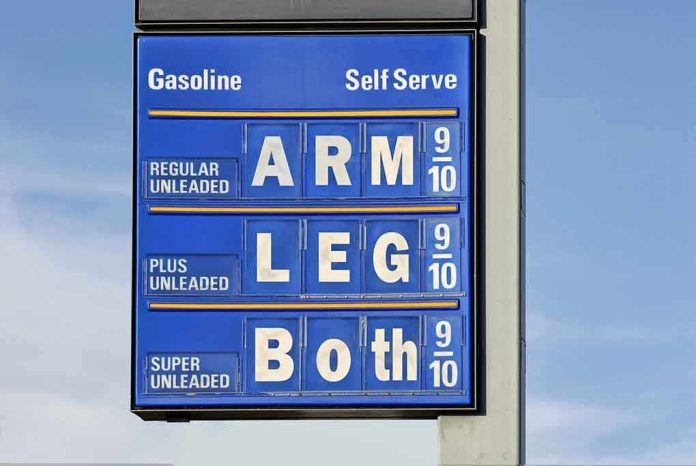
American drivers are celebrating an unexpected Christmas gift as gas prices plummet to levels not seen since the early days of the pandemic, delivering the kind of holiday miracle that actually matters to family budgets.
Story Highlights
- Gas prices have fallen to approximately $2.90 per gallon, the lowest since 2020
- Holiday travelers will save significantly on Christmas road trips nationwide
- The price drop aligns with broader market declines benefiting consumers
- Families can redirect fuel savings toward gifts and holiday celebrations
A Holiday Miracle at the Pump
The timing couldn’t be more perfect. Just as millions of Americans prepare to hit the road for Christmas gatherings, gas stations across the country are displaying prices that would have seemed impossible just months ago. At $2.90 per gallon, drivers are experiencing genuine sticker relief instead of the shock they’ve grown accustomed to over recent years.
This dramatic shift represents more than just numbers on a digital display. For families stretching holiday budgets to cover gifts, travel, and festivities, every dollar saved at the pump translates directly into more resources for what truly matters during the season. The psychological impact cannot be understated—affordable fuel restores a sense of freedom that many Americans thought they’d lost permanently.
The Economics Behind the Christmas Cheer
The current price decline reflects broader market forces working in consumers’ favor. Global oil markets have experienced significant adjustments, with supply chain improvements and reduced international tensions contributing to the downward pressure on crude oil prices. Domestic production levels have remained robust, ensuring adequate supply to meet American demand without excessive reliance on foreign sources.
Refinery operations have also optimized their processes, reducing the margin between crude oil costs and finished gasoline products. Seasonal factors typically associated with higher winter fuel costs have been offset by these market improvements, creating an unusual but welcome scenario where holiday travelers benefit from both timing and economics.
Real Impact on American Families
Consider the mathematics of holiday travel relief. A typical family driving 500 miles to visit relatives—a common Christmas journey—will save approximately $25 to $40 compared to prices from earlier this year. For families making multiple trips or traveling greater distances, these savings compound quickly into meaningful budget relief that can fund additional presents or holiday meals.
The broader economic implications extend beyond individual family savings. Lower transportation costs reduce the expense of shipping goods, potentially moderating prices across retail sectors. This creates a cascading effect where the benefits of cheap fuel permeate throughout the economy, supporting consumer spending during the crucial holiday shopping season.
Looking Beyond the Holiday Season
While Americans rightfully celebrate this Christmas gift, the sustainability of these prices remains the critical question. Market analysts suggest that current conditions could persist into early 2025, though global events and domestic policy decisions will ultimately determine long-term pricing trends. Smart consumers will appreciate the current relief while remaining realistic about future volatility.
The lesson here transcends fuel costs—when market forces operate efficiently without excessive government interference, American consumers benefit directly. These lower prices demonstrate what’s possible when supply meets demand in a competitive marketplace, reminding us that the best economic policies often involve stepping back and allowing markets to function properly rather than implementing heavy-handed interventions that typically backfire.