
As European policies falter, Iranian freedom fighters rally against their regime, sparking a movement for change.
Story Highlights
- Iranian protests demand monarchy restoration amid economic collapse.
- Pahlavi chants reflect generational rejection of 1979 ideologies.
- Security forces struggle to suppress nationwide rallies.
- Protesters reject clerical rule, call for regime change.
Iran’s Youth Demand Change Amid Economic Strife
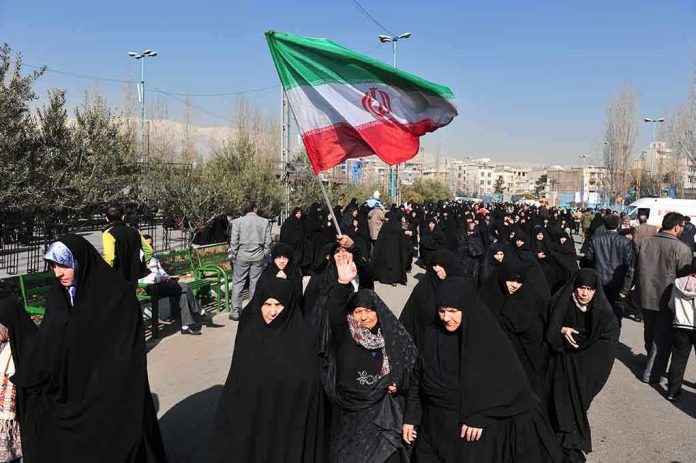
In December 2026, Iran witnessed a resurgence of protests following severe economic downturns, with the national currency, the rial, crashing to unprecedented lows. Protesters, primarily youth, took to the streets demanding the return of the Pahlavi monarchy, a regime change, and the end of the Islamic Republic’s rule. These events signify a profound disillusionment with the clerical leadership established post-1979 Revolution.
This movement, igniting in major cities like Tehran and Isfahan, marks a significant shift from previous gender-focused protests. The youthful demonstrators, motivated by economic despair and a yearning for freedom, chant slogans rejecting the 1979 clerics, signaling a grassroots push for fundamental change.
Security Forces Face Resistance
The protests have not been without confrontation. Security forces employed tear gas and beatings in attempts to quell the rallies, yet they faced significant resistance. In several instances, protesters managed to force retreats, illustrating the growing power and organization of this movement. The chants for the return of the Pahlavi dynasty highlight a nostalgic longing for pre-revolutionary stability and prosperity.
President Masoud Pezeshkian acknowledged the public’s demands by accepting the resignation of the Central Bank head and promising reforms. However, these measures have done little to appease the protestors, who view the current government as incapable of addressing their grievances.
Broader Implications and Continued Unrest
As the protests continue, the potential for significant geopolitical implications grows. The Iranian government’s claims of a “full-scale war” involving the U.S. and Europe add to the tensions, although no direct European involvement has been confirmed. The unrest threatens to destabilize the regime further, especially if the Pahlavi chants unify opposition forces. The impact is not limited to Iran, as it could influence broader regional dynamics and international relations.
With the economy in shambles and the calls for change escalating, the Iranian regime faces a critical juncture. The youth-led movement’s rejection of the 1979 ideological framework poses a severe challenge to the current leadership’s hold on power.
Sources:
Protest in Iran – December 30, 2026
Iranian Protests Expand as Economy Falters, Students Demand Freedom
Iran International Coverage on Protest Developments