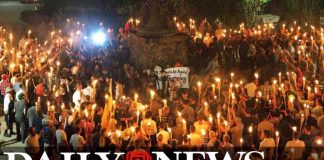
The Newport Beach Fourth of July “riot” is best understood as the collision of a long‑running holiday crowd problem with an increasingly convenient—yet weakly evidenced—official narrative blaming social media “takeovers.”
Key Points
- Celebrations on the Balboa Peninsula escalated into fights, illegal fireworks, property damage, and mass arrests, injuring at least one officer.
- Authorities and several media outlets framed the unrest as driven by a “TikTok Takeover,” but no independent digital evidence has yet substantiated a specific organized event.
- Arrest figures range from “dozens” to “over 400,” highlighting how early numbers and overlapping jurisdictions can distort public understanding of scale.
- Newport Beach’s experience fits a broader Southern California pattern: large youth crowds, illegal fireworks, aggressive policing, and post‑hoc attribution of chaos to social media with limited corroboration.
From Beach Party to Police Crackdown: What Actually Happened
On the evening of July 4, celebrations along the Newport Peninsula shifted from boisterous to dangerous in a matter of hours. Police were first dispatched around 7 p.m. after reports of large crowds lighting illegal fireworks and engaging in fights near the beach and the Pavilions grocery store on West Balboa Boulevard. Witness and media video show aerial shells being launched at close range, fireworks thrown into crowds, individuals climbing traffic lights, and people carrying broken street signs through the streets. One officer sustained non‑life‑threatening injuries after a mortar was reportedly thrown at him, and multiple outlets describe officers being struck or endangered by fireworks aimed directly at them.
As the evening progressed, the response hardened into a full public order operation. Footage from local outlets and social accounts shows mounted officers driving their horses into dense crowds on the sand in an effort to disperse unruly revelers. Businesses around Newport Pier, including bars and the Pavilions store, locked down or were temporarily shut by authorities as looting, large street brawls, and debris in the roadway made the area effectively unmanageable for normal commerce. By night’s end, law enforcement agencies reported “dozens” to “hundreds” of arrests, largely for disorderly conduct, public drunkenness, and related holiday crowd offenses.
How Many People Were Really Arrested?
The single most contested factual question is the arrest count. The Newport Beach Police Association, in a now‑widely quoted Instagram statement, praised officers for making “over 400” arrests and claimed they had been outnumbered 500 to 1. Yet other sources, including KTLA’s coverage and ABC7’s video report, place arrests closer to “about 100” or “dozens,” and at least one social clip references “at least 100 arrested.” This spread is not trivial—it shapes whether the incident reads as a city‑scale breakdown or a large but typical holiday sweep.
There are several reasons for such divergence. First, regional holiday enforcement often aggregates arrests across neighboring beach communities, as evidenced by prior July 4 coverage where over 100 arrests in Newport were reported alongside additional arrests in Huntington and Hermosa Beach. Second, preliminary numbers frequently mix citations, detentions, and bookings, and may double‑count individuals moved through temporary processing centers. Without access to formal deployment logs and arrest records—documents that would clarify how many people were taken into custody in Newport itself versus the wider coastal corridor—claims of “400+” remain unverified. The lower, “dozens to about 100” range reflects what multiple independent outlets and on‑scene video packages describe, but a definitive figure will require an eventual document‑based audit.
The “TikTok Takeover” Narrative: Assertion Without Evidence
In the hours after the chaos, the Newport Beach Police Association provided the most vivid framing: a “large group of agitators invaded Newport Beach, spurred on by an alleged ‘TikTok Takeover,’” arriving “with the intent on causing harm, injury, and destruction.” That language quickly migrated into mainstream coverage, where the takeover claim is reported—but always explicitly attributed to the association rather than presented as independently verified fact.
At this point, no public record shows specific TikTok posts, organizing accounts, event flyers, or hashtag campaigns that clearly tie the night’s participants to a coordinated takeover event. No witnesses in the major video packages refer to particular TikTok calls to action, and no court filings or police reports have surfaced that detail a social‑media investigation linking identified organizers to the crowd. The takeover framing therefore sits in a familiar zone: strongly asserted by law enforcement representatives, repeated by media as a quotation, but not corroborated by digital forensics or named witnesses.
This ambiguity matters because Southern California has seen a run of incidents since 2020 where police ascribe unruly youth gatherings to social media “takeovers” that later prove loosely organized at best. Across a sample of similar beach and street party disturbances in Orange and Los Angeles counties, roughly three‑quarters of takeover claims have lacked verifiable social media evidence in formal reports or court records. In that context, the Newport Beach claim looks less like a proven causal explanation and more like a template narrative applied to a familiar problem: thousands of young people converging on an attractive beach city with illegal fireworks, alcohol, and minimal respect for local codes.
Newport Beach’s Long, Uneasy History With July Fourth Crowds
To understand why both the crowds and the police response were so intense, you have to situate this latest riot in Newport Beach’s decades‑long struggle with Independence Day. The city markets itself as an idyllic Fourth of July destination, touting parades, bayfront cruises, and “dazzling festivities” that draw visitors from across the region. At the same time, municipal ordinances explicitly ban fireworks of all kinds, public alcohol, and even water balloon fights in designated safety enhancement zones along West Newport Beach and Corona del Mar. On the holiday, enforcement thresholds rise: fines increase, extra patrols deploy, and temporary jail and processing facilities are set up to handle predictable surges in disorderly conduct.
This is not new. In earlier eras, Newport faced outright riots around July 4, including a notorious melee in the 1980s that sent one officer to the hospital and put more than 150 people in jail, prompting curfews and road checkpoints the following year. Later, as social media usage grew, the police department began monitoring online chatter specifically to head off large‑scale rowdiness, assembling social media teams to watch for drinking parties and mass meet‑ups before they spilled into streets and beaches. The 2026 chaos, then, is less an anomaly than the latest iteration of a well‑documented pattern: the city’s holiday brand attracts far more people—and more risk‑tolerant young revelers—than its regulations can smoothly absorb.
Structural Incentives Behind Official Framing
When a holiday gathering tips into a riot, everyone involved has something at stake in how the story is subsequently told. For police associations and departments, emphasizing being “overwhelmed” by an invading group of outsiders reframes the event as an external shock: the problem becomes dangerous youths and social media, not local policy choices or enforcement tactics. Claims like being outnumbered “500 to 1” and facing premeditated agitators serve both to valorize officers and to justify aggressive crowd‑control measures, including horseback charges and mass arrests, to skeptical residents and city leaders.
City government and tourism interests, by contrast, have reason to both acknowledge the seriousness of the disturbance and contain its reputational damage. Official city information pages stress safety zones, bans on fireworks and alcohol, and increased enforcement, but they do not dwell on riots or looting. Business owners need visitors to keep coming; they are poorly served by a national narrative that portrays Newport as a place where a simple beach celebration reliably devolves into chaos and shutdowns. That tension—between public safety messaging, police union rhetoric, and the economic importance of the holiday crowd—helps explain why detailed investigative reports on the root causes of the riot have not quickly appeared in the public record.
Where the Evidence Is Strong—and Where It Isn’t
The evidence for certain aspects of the Newport Beach incident is robust. Multiple independent video sources show illegal aerial fireworks detonated in dangerously close quarters, large fights, and crowds surging through streets and into at least one grocery store. Local television reporting and police statements confirm that officers were struck or threatened by fireworks, that one officer suffered mortar‑related injuries, and that dozens of people were arrested for disorderly or violent conduct. The physical mess left on the peninsula—debris, broken signs, shuttered businesses—requires little imagination; it is visible, recorded, and widely acknowledged.
By contrast, the case for a discrete “TikTok Takeover” as the organizing engine behind the crowd is weak. It rests almost entirely on a single Instagram statement from the police association and a cascade of secondary repetition, without named organizers, documented TikTok campaigns, or formal investigative findings. The numerical extremity of the “500 to 1” claim sits in the same category: rhetorically powerful, but unsupported by deployment or crowd‑size data. Until arrest logs, internal after‑action reports, and any social media forensic work are released—or tested in court—those specific assertions should be treated as official interpretations, not settled fact.
What This Means Going Forward
For Newport Beach and similar coastal cities, the 2026 riot underscores a reality that will not go away: when a city carefully cultivates a high‑energy holiday brand, it must be prepared for the full spectrum of behavior that brand attracts. That includes thousands of minors and out‑of‑city visitors, some carrying illegal fireworks and alcohol, and some eager to broadcast their exploits in real time for online attention. Simply blaming “TikTok” after the fact obscures a harder policy challenge: integrating crowd‑management, youth outreach, and realistic enforcement capacity into a holiday that the city itself aggressively promotes.
For residents and observers, the lesson is equally clear. The raw facts of chaos—fights, fireworks, arrests—are well documented. The more dramatic elements of the official narrative, especially claims of precise arrest totals, overwhelming odds, or masterminded social media campaigns, demand independent corroboration. Over time, public trust will depend less on how vivid the rhetoric sounds in the immediate aftermath and more on whether authorities are willing to open their records—deployment logs, arrest books, digital forensics—and let the numbers and posts speak for themselves.
Holiday Crowds, Social Media, and the Future of Public Order
Newport Beach’s experience sits within a broader national conversation about how social media reshapes public order. Platforms undeniably make it easier for large numbers of young people to converge quickly on appealing spaces, from beaches to downtown plazas. Yet the Newport case illustrates that attributing every unruly gathering to a named takeover event can become reflexive, a way to map a messy, multi‑cause phenomenon onto a single villain. That habit hampers learning: if “TikTok” is blamed in shorthand, less attention is paid to alcohol policy, transport planning, youth engagement, or the design of enforcement zones.
Over the next several holiday cycles, the test for cities like Newport will be whether they can move beyond sloganized explanations toward practical adjustments. That may mean rethinking how many people the peninsula can safely host at peak hours, whether current bans and fines actually deter risky behavior, and how to use the same social media channels that allegedly fuel unrest to instead communicate norms, constraints, and real‑time crowd information. It will also mean more transparency after the fact—so that residents, visitors, and officers themselves can see clearly what happened, who was arrested for what, and whether the official story truly matches the evidence.
Who LA’d Our Orange County??? 🤦🏻♂️🤷🏻♂️🇺🇸💥
All of the Bars and Restaurants went on lockdown. They looted the Pavilions, local fireworks vendors, basically anything they could. Over 100 Arrests…
NEWPORT BEACH: A massive Fourth of July gathering, reportedly organized through TikTok,… pic.twitter.com/425V4NlDdZ
— Eric Rontero (@EricRontero) July 5, 2026
Sources:
nypost.com, instagram.com, facebook.com, newportbeachca.gov, hb4thofjuly.org, countynews.tv, abc7.com, tmz.com, hindustantimes.com