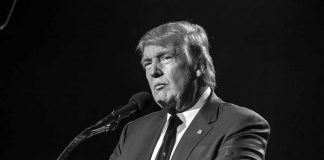
President Trump threatens total trade cutoff with NATO ally Spain after its socialist government blocks American military access to critical bases needed for Iran operations, exposing deep fractures in Western alliance commitments.
Story Snapshot
- Trump vows to “cut off all trade” with Spain after Prime Minister Pedro Sánchez denies US military use of Morón Air Base and Rota Naval Station for Iran strikes
- Spanish leader cites international law and UN charter compliance, refusing to support what he calls “unjustified, dangerous military intervention”
- President suggests US could use Spanish bases unilaterally, stating “Nobody’s going to tell us not to use it,” escalating diplomatic tensions
- Conflict highlights broader NATO spending dispute as Trump pushes 5% GDP defense target while Spain lags behind even the 2% benchmark
NATO Ally Blocks Critical Base Access
Spanish Prime Minister Pedro Sánchez denied the United States military access to Morón Air Base and Rota Naval Station for operations targeting Iran, triggering a fierce response from President Trump at the White House Tuesday. Speaking alongside German Chancellor Friedrich Merz, Trump declared his intent to cut off all trade with Spain and criticized Sánchez’s left-wing government as uncooperative. The Spanish leader justified the restriction by insisting any military operations must comply with the UN charter and international law, characterizing the US-Israeli Iran campaign as unjustified intervention outside legal bounds.
The bases in question have hosted US Air Force and Navy operations since formalized defense agreements in 1988, supporting critical logistics for NATO missions across Europe, Africa, and the Middle East. Morón and Rota serve as strategic hubs for American military power projection, making Spain’s denial particularly consequential for operational planning against Iran. Trump’s public rebuke extended beyond Spain to include UK Prime Minister Keir Starmer, who similarly restricted British base access. This pattern reveals a widening transatlantic divide over American military action, with European allies increasingly unwilling to provide tacit support for unilateral strikes.
Trade Threats Meet International Agreements
Trump’s threatened embargo faces significant practical obstacles given Spain’s integration into European Union trade frameworks and international agreements. Spain ranks as the 23rd-largest source of American imports, creating bilateral commercial ties that would prove difficult to sever unilaterally without violating World Trade Organization rules. Despite the president’s harsh rhetoric, Spanish markets responded with surprising resilience—the Ibex 35 index actually rose following the confrontation. Spain issued a sharp rebuke emphasizing its commitment to existing trade pacts, effectively calling Trump’s bluff on the feasibility of a complete commercial break.
The president’s assertion that the US could simply fly into Spanish bases without permission raised immediate sovereignty concerns and questions about the legal foundation for such action. Defense agreements dating to 1953 establish US military presence in Spain, but unilateral use without host nation consent would constitute a severe breach of international norms governing military installations. This inflammatory suggestion underscores Trump’s frustration with allied restrictions on American military freedom of action. NATO spending disputes compound the tension, as Trump demands member nations reach 5% of GDP in defense expenditures while Spain struggles to meet even the longstanding 2% target.
Alliance Fractures Deepen
The Spain confrontation represents more than bilateral friction—it exposes fundamental disagreements about American global strategy and the limits of alliance obligations. Liana Fix, Senior Europe Fellow at the Council on Foreign Relations, frames the dispute as European pushback against US Iran policy, noting that allied criticism is widening transatlantic divides on Middle East engagement. Sánchez’s stance resonates domestically as sovereignty protection, potentially strengthening his political position despite American pressure. For Trump supporters frustrated with allies who fail to support American security interests while benefiting from NATO protection, Spain’s refusal epitomizes the one-sided nature of these partnerships.
The standoff raises troubling questions about NATO cohesion when member nations disagree on fundamental security threats. If Spain and Britain can block American military operations from bases on their territory, what value do these alliance commitments hold during actual crises? This concern reflects broader frustrations among Americans who question why the United States maintains expensive overseas military infrastructure if host countries impose restrictions during critical moments. The dispute also signals to adversaries that Western unity remains fragile, with European allies willing to publicly break with American military strategy even as Iran threatens regional stability and American interests.
Sources:
Stars and Stripes – Trump US Military Access Spain
Newscord – European Allies Block US Military Access Trump Threatens Spain