

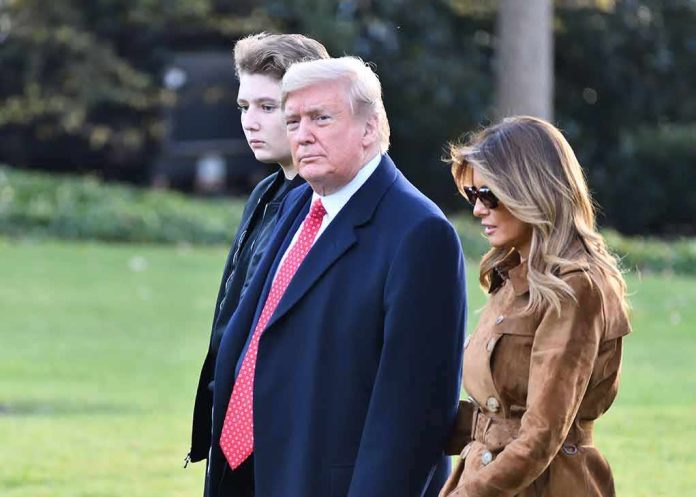
Presidential holiday travel is not just tradition; it is logistics, security, and political theater moving in lockstep—and this Thanksgiving, President Trump’s trip to Palm Beach followed the well-worn playbook that turns a private family holiday into a tightly choreographed operation spanning airspace, highways, and a seaside estate.
At a Glance
- Federal airspace restrictions signaled a planned presidential arrival in Palm Beach for Thanksgiving week, consistent with longstanding practice.
- Local advisories and road-closure preparations in Palm Beach County aligned with the expected Mar-a-Lago stay.
- The holiday move fits a decade-plus pattern of Trump Thanksgivings centered around Mar-a-Lago, balancing personal routine with public duties.
- FAA Presidential Temporary Flight Restrictions protect movements by design; they corroborate planned travel without disclosing operational minutiae.
What happened and why it was expected
President Trump traveled to Florida for the Thanksgiving holiday, continuing an established pattern of spending the long weekend at Mar-a-Lago in Palm Beach. The signals were clear days in advance: Presidential Temporary Flight Restrictions (TFRs) posted by the Federal Aviation Administration indicated a planned presidential presence in the Palm Beach area beginning Tuesday of Thanksgiving week, a standard marker used by flight planners nationwide and a routine form of official corroboration for White House movements. Parallel local preparations—road closures and traffic advisories timed to coincide with the protective envelope that follows a presidential arrival—reinforced the expectation that the president would be in residence for the holiday.
This choreography rarely surprises those who watch the calendar. Thanksgiving has long anchored Trump’s Palm Beach ritual: golf when weather and schedule allow, a curated public-facing message marking the holiday, and a security footprint that flexes with the commander-in-chief’s proximity. That rhythm reasserted itself in his second term after the traditional turkey pardon in Washington—a ceremonial prelude that customarily precedes the First Family’s departure for the holiday break.
How presidential travel works: the security and logistics stack
When a president moves, the national airspace moves with him. The FAA’s standing order governing restrictions in the proximity of the President lays out a playbook that air traffic managers, Secret Service, and military partners execute whenever the White House schedule puts the principal in the air or on the ground outside Washington. The instrument is the TFR: a time-bound, geometry-specific limitation that reroutes general aviation and constrains commercial operations in layers around the protective bubble.
These restrictions are not press releases in disguise; they serve operational control, not public relations. But they are consequential public artifacts. Pilots consult them, local authorities plan around them, and their timing and coordinates reliably indicate when and where a presidential presence is anticipated. In practice, a TFR tells the aviation community that the principal is coming—or present—even if it withholds details such as tail numbers, exact touchdown times, or the composition of the traveling party.
Palm Beach as presidential holiday ground: history and pattern
Palm Beach is not an improvisation but an institutionalized holiday base for Trump, solidified over more than a decade. As a political figure and as president, he has repeatedly used Mar-a-Lago as a seasonal anchor: a home base that accommodates both leisure and the trappings of office. Reporting across years has documented the cadence: arrivals around the Tuesday of Thanksgiving week, motorcades threading familiar routes across Palm Beach, and club-side appearances that blend private celebration with the optics of presidential presence.
Local media and national outlets have chronicled that rhythm, from airport tarmac greetings to the return leg post-holiday. The 2026 cycle mirrored prior years: pre-holiday pardon events in Washington, TFR postings marking the Florida window, and local road and air advisories cued to those federal signals. While specific timetables can shift with weather, global events, or tactical security calls, the throughline—Thanksgiving in Palm Beach—has proven durable.
The signals that matter: what counts as strong corroboration
In the ecosystem of presidential travel, certain indicators carry more weight than others. FAA restrictions are primary among them; they are issued for one reason only—to manage national airspace in support of the President, Vice President, or other protected principals. When those postings align with the calendar of a traditional holiday move, they are strong evidence of planned travel to a specific locale and window. Local government actions—traffic guidance, causeway closures, law-enforcement staging—are secondary but persuasive corroboration when they map precisely to the federal restriction’s timing and scope.
By contrast, social media video snippets or recycled imagery can muddle rather than clarify, particularly when divorced from datestamps or context. The institutional signals that pilots, police departments, and presidential schedulers depend on are the ones the public should weight most heavily when assessing where a president is spending a holiday.
What it means for governance, security, and the public
Presidential holidays are never purely private; they are portable presidencies. Communications infrastructure, secure facilities, and a traveling national security apparatus relocate with the principal so that continuity of government is never in question. Thanksgiving in Florida illustrates how that works in practice. Airspace management keeps risk at bay overhead; layered local security handles the ground picture; White House communications and policy staff maintain tempo so that ceremonial moments—pardons, proclamations, holiday messages—are integrated with briefings and decision-making that continue uninterrupted.
For residents and travelers, the implications are prosaic but real: expect temporary detours, tighter airport procedures in the affected radius, and a heavier law-enforcement presence on arterial roads. For observers of political life, the takeaway is simpler. Across administrations, place becomes part of the office’s ritual calendar—Crawford ranches, Hyannis Port compounds, or, in this case, Mar-a-Lago. The signal value of those places endures because the systems that enable a president to be president anywhere are repeatable, disciplined, and visible if you know where to look.
Sources:
usatoday.com, rmb.reuters.com, palmbeachpost.com, fox17.com, yahoo.com, factcheck.afp.com