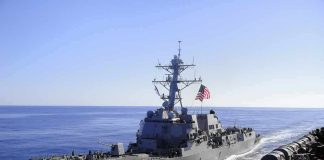
President Trump’s “beautiful armada” message to Iran signals a high-stakes return to deterrence—and it’s happening as Tehran warns the U.S. that any strike means “all-out war.”
Story Snapshot
- President Trump said a U.S. “armada” or “massive fleet” is heading toward Iran, stressing he hopes it won’t be used.
- Reports tied Trump’s warning to two red lines: Iran killing protesters and Iran restarting its nuclear program.
- An Iranian official warned any U.S. attack would trigger an “all-out war” response as the carrier strike group nears the region.
- Israel reportedly raised preparedness amid assessments that a U.S. military option may be more likely than negotiations.
- Commercial aviation is already reacting, with airlines restricting or canceling some Middle East flights due to escalation risk.
Trump’s “Armada” Warning Reframes U.S. Leverage Over Iran
President Donald Trump publicly said the United States has an “armada” or “massive fleet” heading toward Iran, describing the deployment as a show of force he hopes will not be needed. Reporting indicates Trump’s comments were meant to deter Tehran from cracking down on protesters and from restarting nuclear activities. The statement landed in late January 2026, as regional tensions rose and allies watched for signs of imminent escalation.
Trump’s phrasing drew attention, but the operational point was straightforward: a carrier strike group moving toward the Middle East to strengthen deterrence. The available reporting does not confirm any strikes have occurred, and it does not provide a detailed U.S. timeline beyond the late-week sequence of Trump’s remarks followed by Tehran’s response. With limited sourcing in the research, the precise date of Trump’s statement is reported as Thursday, likely Jan. 22–23.
Iran’s “All-Out War” Threat Raises the Cost of Miscalculation
A senior Iranian official, cited in reporting that referenced Reuters, warned that any U.S. attack would be treated as “all-out war,” with Iran responding in the “hardest way.” That warning came as the U.S. naval force approached the region and Iran reportedly moved to high alert. The posture on both sides underlines a familiar risk in the Middle East: once forces surge into theater, accidents, misreads, or proxy actions can trigger rapid escalation.
The research also reflects the propaganda and signaling war that typically runs alongside real deployments. Iran’s warning is designed to deter U.S. action by promising steep costs, while Trump’s statement is designed to deter Iranian actions by demonstrating capability and intent. What is not established in the provided materials is whether there are active negotiations, back-channel messaging, or specific U.S. demands beyond the reported concerns about protester killings and nuclear activity.
Israel’s Readiness and Airline Cancellations Show Real-World Spillover
Israeli media assessments cited in the research described a U.S. attack as potentially coming “in the coming days,” and an Israeli military spokesman reportedly said preparedness was raised for developments tied to U.S.-Iran tensions. The same reporting described airlines adjusting operations, including cancellations and restrictions affecting parts of the region. Those decisions reflect risk management by private actors who have no vote in geopolitics but still pay the price when instability spikes.
For Americans, the practical takeaway is that regional escalation doesn’t stay “over there.” Airline disruptions can ripple into commerce and travel, while any conflict involving Iran can threaten energy transit routes and raise global economic uncertainty. The research does not quantify costs or list specific routes beyond general references to cancellations and restrictions, but it clearly shows a precautionary reaction already underway, before any confirmed kinetic exchange.
Domestic Fallout: Enforcement, Deportations, and Due-Process Questions
One detail in the research that deserves scrutiny is the report of planned deportations of more than 40 Iranian nationals to Iran beginning around Jan. 25 from Arizona. The material attributes the figure to secondary reporting and notes it is less corroborated than other elements. If removals are occurring during heightened U.S.-Iran tensions, policymakers will face competing obligations: enforce immigration law while ensuring due process and evaluating credible fears of persecution.
TRUMP: ‘Beautiful armada floating beautifully toward Iran right now’https://t.co/qbBxWojNvL
— ConspiracyDailyUpdat (@conspiracydup) January 27, 2026
That balance matters to conservatives who want the law applied consistently and the country protected from security threats—without turning government power into a blunt instrument. The available research does not provide case details for the individuals involved, so it is not possible to assess eligibility claims or outcomes. What is clear is that geopolitical escalation often spills into domestic policy decisions, and transparency becomes essential when stakes rise.
Sources:
Iran warns any attack will be treated as ‘all-out war’ as US ‘armada’ heads Middle East
Trump says US ‘armada’ heading toward Iran