The Strait of Hormuz has become the point where a shipping crisis, a military campaign, and a political argument all collide.
Quick Take
- The United States says it has carried out its 10th consecutive night of strikes on Iran.
- U.S. Central Command says the attacks answer strikes on commercial shipping in the Strait of Hormuz.
- Iran denies key parts of the U.S. account and says it is defending its own waters.
- The fight now threatens oil flows, shipping routes, and any chance of a quick calm.
The Strike Campaign and the Shipping Trigger
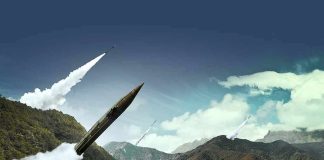
The latest U.S. strikes were aimed at Iranian military targets near the Strait of Hormuz, including air defense systems, command networks, coastal radar, anti-ship missile sites, and small boats used in the area. U.S. Central Command said the operation was meant to weaken Iran’s ability to attack commercial shipping and to raise the cost of striking civilian mariners. That detail matters because it shows the U.S. is not describing these raids as random punishment.
The immediate trigger, according to the U.S. military, was a drone attack on a commercial tanker. Reuters reported that the strikes were part of a broader push to keep international commerce moving through the waterway. The Boston Globe, quoting the Associated Press, said the United States was carrying out its 10th straight night of strikes while trying to reopen the strait. That is a narrow goal with huge stakes.
Why the Strait of Hormuz Matters So Much
The Strait of Hormuz is one of the world’s most important shipping lanes, and the current clash fits a larger pattern of pressure on that corridor. The Council on Foreign Relations says the wider conflict followed the collapse of a sixty-day ceasefire in mid-June 2026, after which the two sides returned to tit-for-tat strikes. The Congressional Research Service also noted 23 attacks on vessels between March 1 and April 29, 2026.
That history explains why both sides talk in the language of control, not just retaliation. U.S. officials say they are degrading the tools Iran uses to threaten shipping. Iran says it is asserting sovereignty over the strait and controlling traffic through safe lanes. Those are not just legal arguments. They are competing claims about who gets to set the rules in one of the world’s most dangerous choke points.
Iran’s Denial and the Counter-Story
Iran’s Revolutionary Guards have denied that commercial ships crossed the strait in the way U.S. officials described, and Iranian state television repeated that denial. BBC reporting also said Iran described the strait as open, but only through routes coordinated by Iranian maritime authorities. In plain English, Iran is not saying the passage is free and unguarded. It is saying Iran gets a say in how that traffic moves.
3/15 🛢️ MIDDLE EAST — Iran War Day 144: US Central Command carried out a 10th consecutive night of strikes on Iranian military targets as Iran struck an oil tanker off Oman in the Strait of Hormuz. Jordan said it downed five drones and three missiles; Iran's central command…
— The Syndicate (@SyndicateRSS) July 21, 2026
That is where the dispute gets sharp. U.S. officials say Iran attacked ships and forced crews to abandon vessels. Iran says the United States is using force to impose its own version of order. The U.S. case is stronger on the public record because CENTCOM has repeatedly tied its strikes to shipping attacks and named the target sets in detail. Iran’s case relies more on denial and political framing than on matching technical proof.
The Stakes Beyond the Battlefield
This is not only a military story. It is an energy story, an insurance story, and a pressure test for Gulf security. CNBC reported that the threat level for ships crossing the strait rose to “severe” after attacks on tankers. CNN said Bahrain and Kuwait activated sirens, a sign that nearby states were bracing for spillover. When freight lanes tighten, oil prices move, shipping costs rise, and every government in the region feels the shock.
That helps explain why the language from Washington has stayed focused on “degrading” Iran’s ability to keep attacking commerce, while Iran tries to cast the fight as defense of sovereignty. Both sides know the same truth: whoever can shape the sea lanes can shape the politics around them. The problem is that every new strike, every new tanker incident, and every new warning makes the next pause harder to trust.
Sources:
facebook.com, jns.org, ajc.com, cnbc.com, cbsnews.com, theguardian.com, aljazeera.com, cnn.com, youtube.com, hudson.org