The Senate’s move on the Russia sanctions bill matters because it shows Congress trying to turn symbolic outrage into an enforceable economic weapon: sanctions on Russia itself, plus tariff pressure on the countries that keep buying Russian energy.
Key Points
- The Senate advanced the measure by an 86-12 procedural vote, not final passage.
- The bill is the product of a long Graham-Blumenthal effort to punish Russia’s war economy and sanctions-evasion network.
- Its sharpest tool is secondary pressure: tariffs and sanctions aimed at major purchasers of Russian oil and gas.
- The core dispute is not whether the bill is serious; it is how much leverage, waiver discretion, and enforcement power it really gives the White House.
What the Senate Actually Did
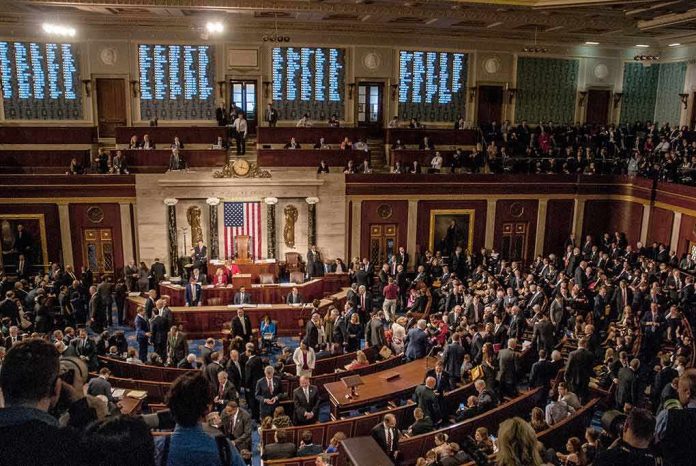
The Senate did not finish the job; it opened the door. Lawmakers advanced the Russia sanctions package in an 86-12 procedural vote, clearing the first major hurdle on the path toward passage. That distinction matters. Procedural advancement signals broad support and momentum, but it is not enactment, and it does not tell you how the final statutory text will look once amendments, negotiations, and House action are complete.
The setting amplified the political force of the vote. Ukrainian President Volodymyr Zelenskyy was on Capitol Hill, and the action came on the day of Sen. Lindsey Graham’s funeral, turning the Senate floor into a stage for both alliance politics and legislative tribute. That symbolism should not obscure the substance, though, because the measure itself is substantial: a sanctions-and-tariffs package designed to make Russia’s war financing more expensive and less reliable.
Why Graham’s Name Is Attached to the Bill
This was not a sudden creation of the moment. Congress.gov shows the earlier legislative vehicle, S.1241, the Sanctioning Russia Act of 2025, with Lindsey Graham listed as sponsor and a first reading on April 1, 2025. The bill’s architecture reflects the long-running Graham-Blumenthal project: if Moscow refuses meaningful peace, violates an agreement, or launches another invasion, the United States can trigger penalties on covered persons and entities. In other words, the bill is meant to be coercive, not ornamental.
By mid-2026, lawmakers had publicly reworked and broadened the package into the Lindsey O. Graham Sanctioning Russia and Iran Act of 2026, but the underlying logic remained the same: deny revenue, punish facilitators, and raise the cost of continuing the war. The public record also shows Graham himself continuing to advocate for sanctions in an official Senate press release, which helps explain why the legislation is treated not just as a policy instrument but as part of his Senate legacy.
The Sanctions Design Is Built Around Revenue Denial
The bill’s center of gravity is economic pressure on the machinery that sustains Russia’s war effort. Reported provisions target Russian officials, oligarchs, banks, financial institutions, energy projects, and the so-called shadow fleet—the aging, reflagged tankers Russia uses to bypass existing sanctions. That last target is crucial. Sanctions regimes often fail not because the headline restrictions are weak, but because traders, shipowners, insurers, and intermediaries learn how to route around them. The shadow fleet is the evasion channel that turns paper sanctions into leaky sanctions.
The other major lever is tariff authority. Reporting says the bill allows the president to impose tariffs of up to 100 percent on major purchasers of Russian oil and gas, with the scope limited to the five largest importers. AP reported that the negotiated version includes exceptions for countries that import less than 15 percent of their natural gas from Russia and are moving to reduce that dependence. That combination—hard pressure on the biggest buyers, carve-outs for partial dependents—shows the bill’s designers were trying to be forceful without being indiscriminate.
👁 majority of the U.S. Senate backed sweeping Russia sanctions legislation on Aug. 7 that would impose tariffs on countries purchasing Russian oil and gas, aiming to cut off a key source of funding for Moscow's war against Ukraine.
The bill had been stalled in Congress since…— laserlike (@Write7Dave) August 7, 2026
What the White House Agreement Changed
The bill did not arrive in the Senate as a purely congressional fantasy. Politico reported in January that Graham said President Trump had “greenlit” the bipartisan sanctions bill after a meeting, and later reporting said the White House had agreed to the bill’s terms. That matters because sanctions legislation of this scale usually lives or dies on whether the executive branch is willing to administer it. Congress can write the threat, but the administration has to execute it.
The public reporting suggests the administration’s backing helped convert a long-stalled idea into a viable floor package. It also explains why the measure reads less like a protest resolution and more like a delegated coercive tool: the president gets discretion, including waiver authority in the negotiated version, and is empowered to decide how hard to press the tariff and sanctions levers. That discretion is politically useful, but it also dilutes certainty. The more flexibility the White House has, the less mechanically automatic the sanctions regime becomes.
Where the Real Debate Lies
The real argument is not about whether Russia should be pressured. There is broad consensus in the reporting that the package is intended to squeeze Russia’s war economy and its support network. The harder question is whether the instrument is precise enough and coercive enough to matter. Sanctions can be rhetorically massive and operationally porous. Their effect depends on enforcement, allied coordination, the willingness to tolerate retaliation, and the ability to police evasive trade routes and financial intermediaries.
That is why the bill’s tariff provisions are so consequential. Secondary tariffs aimed at China, India, Japan, and some European importers are not just a signal to Moscow; they are pressure on third countries whose purchases help keep Russian energy revenue flowing. The attraction is obvious: hit the buyers, and you reduce demand for Russian exports. The risk is equally obvious: if the tariffs are too blunt, they can strain allied relationships, complicate energy markets, and shift the fight from sanctions enforcement into trade conflict.
What the Public Record Supports—and What It Does Not
The public record firmly supports the existence of a real, bipartisan legislative vehicle with a clear target set and a concrete procedural advance. It also supports the conclusion that the bill is designed as a pressure campaign against Russia’s war economy, not a symbolic gesture. What the available material does not yet provide is a full section-by-section statutory text for the final 2026 version, a complete accounting of waiver mechanics, or quantified evidence showing how much Russian revenue the package would actually cut.
That gap is important. Sanctions policy is full of dramatic language about “crippling” or “hobbling” an adversary, but those claims only become meaningful when matched to implementation. Here, the evidence shows a serious, thoughtfully broadened package with bipartisan momentum and executive blessing. It does not yet show a finished enforcement architecture whose real-world effectiveness can be measured with confidence. The measure is consequential because it is plausible power, not because its effects are already proven.
Sources:
facebook.com, axios.com, politico.com, cnbc.com, reuters.com, apnews.com, thehill.com, youtube.com