
One partisan clip seldom proves a sweeping claim about a public figure’s health; what it does reliably expose is how modern politics weaponizes ordinary signs of aging—and isolated visuals—to argue sweeping conclusions about competence and character.
The Short Version
- A single conservative outlet framed Joe Biden as “skeletal and frail” at a Washington event with Al Sharpton, anchored to a purported video.
- The assertion rests on subjective visual interpretation from one partisan source; no independent, event-specific corroboration surfaced in the record collected here.
- Biden allies consistently reject claims of concealed cognitive decline, distinguishing normal aging from incapacity.
- This fight sits inside a broader pattern: short clips become proxies for judgments about fitness, even as experts caution that aging varies widely and demands nuance.
What the claim is—and what the evidence actually shows
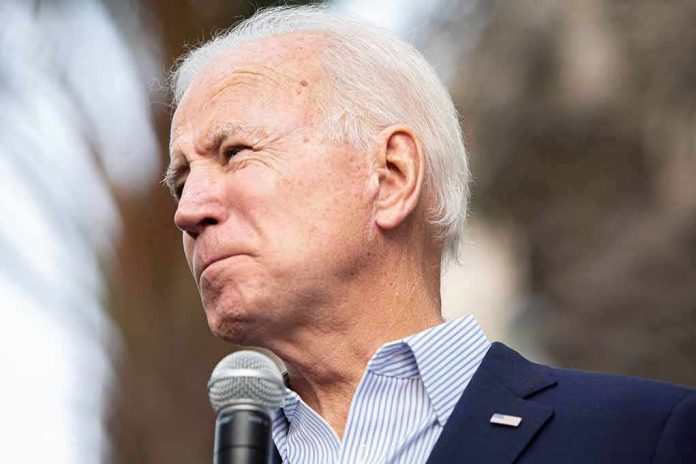
The charge is blunt: a conservative site said Biden looked “skeletal and frail” while greeting Al Sharpton at the Howard Theatre in Washington, D.C., during a tribute to AFSCME’s retiring leader Lee Saunders. The force of the claim comes from the promise of video—visual evidence usually short-circuits debate. Yet in the material collected here, the only substantive description comes from that single outlet and an aggregation that echoes it; the underlying footage and any neutral transcript or third-party account are absent. In other words, we have a strong assertion keys to a purported clip, without the verifiable clip in hand for readers to judge directly. The location and occasion are specific, which helps anchor time and place, but the frailty judgment is subjective and uncalibrated, not a measured clinical observation.
That asymmetry matters. When a claim hinges on appearance—gait, posture, a hug—without multiple independent witnesses, full-length video, or consistent cross-outlet descriptions, the evidentiary floor is low. Visual rhetoric is powerful, but power is not the same as proof. In the current record, this remains one outlet’s interpretive gloss on an appearance rather than an externally corroborated observation with narrow error bars.
How this dispute fits the modern “age as proxy for fitness” dynamic
Presidential age debates now follow a familiar choreography. A clip surfaces; partisan media supply the framing; social feeds amplify; then surrogates and experts counter with context about normal aging, cognitive variability, and the difference between stamina and statecraft. In Biden’s case, even outlets critical of him have featured descriptions of him being “a little older and a little slower,” which primes audiences to view any ambiguous movement through a decline lens. That priming effect can make ordinary stiffness or a conservative gait read as determinative evidence. The result is a high-salience argument built on thin empirical ice.
Geriatric specialists and researchers have long cautioned against collapsing a broad continuum of aging into a binary fit-versus-incapacitated verdict, particularly from short video snippets. Competence—especially decision-making—rests on sustained cognitive function, not a single moment’s posture at a theater doorway. That does not mean age is irrelevant; it means age signals need careful, longitudinal interpretation rather than opportunistic screenshots.
What Biden’s camp concedes—and what it contests
On the counter-side, Biden allies have consistently drawn a line between observable aging and cognitive incapacity. Jill Biden has acknowledged that her husband was “slowing down,” while rejecting claims of cognitive decline; spokespeople and surrogates similarly argue that evidence of aging is not evidence of an inability to perform presidential duties. Their challenge to critics is concrete: point to a specific presidential decision or address where cognitive decline made the work impossible. As to allegations of a cover-up, they argue that the public claims don’t demonstrate operational failure or a conspiracy, and that denial of broad allegations is consistent with the medical assessments they cite. These are rebuttals to the sweeping narrative, not a forensic readout of the Sharpton event itself—but they directly contest the leap from an appearance to incapacity.
None of this transforms a single partisan description into hard proof of anything more than how the described appearance struck one editorial voice. But it does clarify where the true disagreement lies: whether subjective in-person optics should be allowed to carry claims about cognition and duty-performance in the absence of named clinicians, documented impairments, or multi-source accounts tied to specific acts of governance.
What stronger evidence would look like
If the goal is to move from impression to assessment, the evidentiary bar is straightforward. First, the underlying video must be accessible in full context and resolution, not just captioned screenshots or a cut segment. Second, independent recordings or neutral press pool footage would allow frame-by-frame comparison of gait, balance corrections, and interaction timing across angles. Third, contemporaneous accounts from named, on-the-record attendees could establish whether the observed moment was representative or anomalous. Finally, if critics wish to argue cognitive decline rather than momentary frailty, the claim needs either named clinical assessments or a pattern of specific, decision-impairing episodes—assertions that can be weighed, verified, or refuted, not inferred from posture. The present package does not clear that bar.
This is not hair-splitting. In a polarized information market, the cost of lowering our standards is that any inconvenient clip can be inflated into a totalizing diagnosis. The antidote is disciplined sourcing: primary footage, multiple vantage points, and named witnesses. Without them, we are left adjudicating tone and adjectives, not facts.
How to read the next viral “frailty” clip—practically
For readers determined to be evidence-literate in the next cycle, a few practical filters help. Ask whether you are watching the complete interaction, or a cropped five-second loop. Look for neutral press pool or multi-outlet footage rather than a single, branded edit. Distinguish stamina proxies (length of events, travel cadence) from cognitive measures (lucidity, coherence, responsiveness under questioning). And triangulate: do outlets with different priors describe the same scene in similar terms, or do their adjectives diverge while the observable facts remain banal? That cross-check won’t eliminate bias, but it will keep you from mistaking a caption for a conclusion.
Bottom line
As presented, the Sharpton-theater claim is a single-source, subjective characterization keyed to a video that is not independently surfaced in the record here. It establishes that one partisan outlet perceived Biden as frail that evening; it does not, on its own, establish a medical or cognitive conclusion, nor does it demonstrate concealment. In a media environment that habitually turns age into a proxy for capacity, demanding complete footage, multiple attestations, and specificity about what, exactly, is being alleged is not pedantry—it’s the difference between analysis and projection.
Sources:
thegatewaypundit.com, nationalactionnetwork.net, click2houston.com, wbaltv.com, pbs.org, clickondetroit.com, foxnews.com, apnews.com