

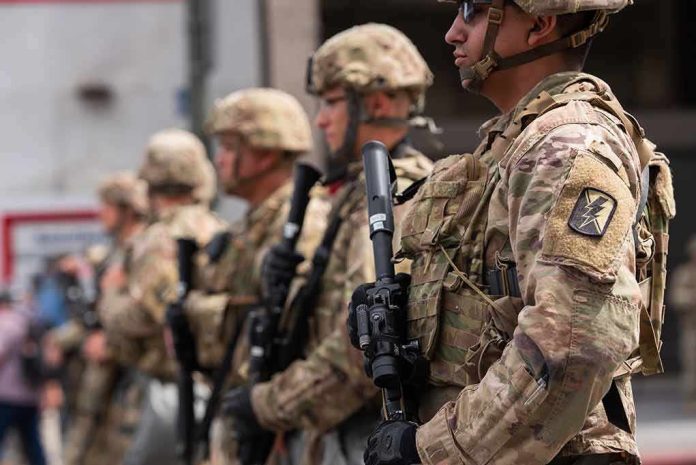
Colombia’s campaign against FARC dissidents matters because the decisive issue is not whether armed groups still exist—they do—but whether military pressure can break their battlefield capacity without simply displacing violence onto civilians and neighboring territory.
Intro Header
- FARC dissident factions remained active after the 2016 peace agreement and continued to mount armed attacks, extract rents, and contest territory.
- Colombian authorities have repeatedly answered those threats with major offensives framed as necessary to protect civilians and security forces.
- The immediate battlefield results have been real in the narrow sense: commanders have been killed, camps hit, and armed structures disrupted.
- The harder question is strategic. The available record does not prove that force alone produces durable security gains, and prior operations show that violence can persist even after major raids.
Why Colombia Keeps Returning to the Offensive Option
The core of the Colombian security problem is structural, not episodic. The original FARC demobilized in 2017, handed over thousands of weapons under UN verification, and re-entered politics as a legal party, but dissident factions refused the accord and remained armed. Those splinters never had the coherence of the old insurgency, yet they inherited its geography, its armed culture, and in many cases its criminal financing. That is why they remain dangerous: they are not a romantic rear-guard of a vanished revolution, but flexible armed enterprises moving through drug corridors, border zones, and rural strongholds.
Reuters, BBC, ACLED, and Human Rights Watch all describe the post-accord landscape as one in which dissident groups continue to attack soldiers, intimidate civilians, and enforce local control in multiple regions. The security state’s response has been equally durable. Defense and military officials have justified repeated offensives on the grounds that camps and armed structures pose an immediate threat, and President Petro has said operations will continue until armed groups show a genuine willingness to negotiate. In practical terms, Colombia has treated FARC dissidents not as a single enemy to be “ended,” but as a recurring insurgent-criminal problem requiring periodic force.
What “Major Offensive” Means on the Ground
A major offensive in this context is usually a combined air-and-ground pressure campaign: intelligence-driven strikes, troop movements into contested municipalities, raids on suspected camps, and an effort to seize or stabilize key terrain before the dissidents can disperse. Reuters described one such bombardment in Arauca that killed 23 members of armed groups, including a leader identified as Arturo, as part of an effort to seize control of an area on the Venezuelan border. BBC similarly reported an airstrike on a suspected rebel camp that killed 19 people, underscoring how the state’s tactics are designed to hit command nodes rather than merely chase foot soldiers.
That is the logic of counterinsurgency when the enemy is fragmented. You try to reduce the group’s ability to coordinate, finance itself, and terrorize civilians by hitting commanders, camps, logistics, and sanctuaries. Colombia has used this logic before. In earlier operations, the government deployed large security formations against dissident areas, including a reported 7,000-person force in a campaign against rebels financed through drug trafficking and ex-FARC fighters. The state’s message is simple: if an armed faction can still ambush soldiers, coerce villages, and move narcotics, then it remains a live military target.
The Evidence for Immediate Battlefield Success Is Stronger Than the Evidence for Strategic Victory
On the narrowest measure, offensives do produce results. Reuters reported that 23 members of armed groups were killed in Arauca in a single bombardment, and later reporting described continued strikes against dissident camps and leaders. BBC reported another military attack that left 19 dead. Those are not symbolic gestures; they are material blows to armed formations. In the short run, they can remove commanders, interrupt planning, and force fighters to scatter. For a government under pressure to show it can still govern remote territory, that matters.
But immediate tactical success is not the same as durable security. The record supplied here does not show that these operations permanently reduced dissident recruitment, revenue, or territorial reach. That absence matters because Colombia’s conflict has repeatedly demonstrated an ugly pattern: the state raids, the armed group adapts, and the underlying market for violence—cocaine, illegal mining, extortion, territorial brokerage—remains intact. Human Rights Watch documented serious abuses by dissident groups in Tumaco even as a large security operation was underway, and later analysis noted that violence there did not simply disappear after the state surged forces into the region. The lesson is not that offensives are useless. It is that they rarely solve the problem by themselves.
Why the Civilian-Harm Question Never Goes Away
Every Colombian offensive against dissidents is judged twice: first by the body count or leader kill count, and then by what happens to civilians living in the same operating environment. That second judgment is where the state often loses the argument. Conflict-monitoring and human-rights reporting describe dissident violence as persistent and pervasive, but they also make clear that large-scale security operations can fail to produce lasting civilian relief. In Tumaco, for example, the government launched a powerful campaign to curb abuses, yet abuses continued and the security environment remained unstable. In other words, military pressure can suppress a group without restoring ordinary life.
This is the central policy trap in Colombia. The state is not inventing the threat; the threat is real, armed, and lethal. But if an offensive is judged only by what it destroys in the first week, it can obscure what it fails to change over the next year: the availability of armed replacements, the persistence of illicit economies, and the fragility of civilian protection in zones where the government’s presence arrives primarily as firepower. That is why outside observers keep returning to the same uncomfortable conclusion. Force can clear a zone. It does not automatically govern it.
🚨🇨🇴 BREAKING: Intense clashes are reportedly underway between Colombian Army units and FARC dissident groups in rural El Tambo, near the border with Cajibío.
In a separate incident, FARC dissidents reportedly carried out a drone attack targeting the mayor’s office in Rioblanco,… pic.twitter.com/MlCSuMXBtK
— WorldNewsRank (@WNewsRankX) August 10, 2026
The Political Meaning of the Offensive
Offensives against FARC dissidents also function as political language. They tell domestic audiences that the state is not passive, that armed groups will be punished, and that the government is willing to use coercive power when negotiation fails or is refused. That rhetoric resonates strongly in a country where the post-2016 settlement never produced a clean peace. The original FARC stopped being a unified armed group, but dissident factions carried on, and the state has since oscillated between talks, suspension of talks, and force. The result is a security narrative in which each new offensive is sold as a corrective to prior restraint.
The problem is that this frame encourages a false binary: peace talks versus hard power, as if one must choose only one tool forever. Colombia’s own history says otherwise. It has tried demobilization, verification, reintegration, targeted military operations, and repeated negotiations with breakaway groups. None of those instruments has eliminated the armed actors that emerged from the peace process. That is why the most honest reading of a major offensive is both simpler and more sobering than the slogan suggests: the state can damage FARC dissident structures, sometimes severely, but it has not yet shown that bombing and raids alone can end the system that keeps them alive.
Sources:
zerohedge.com, bbc.com, democrata.es, thecitypaperbogota.com, aljazeera.com, en.wikipedia.org, youtube.com, casebook.icrc.org