
Rhetoric about Cuba’s “failure” and imminent “freedom” makes sense only when you see the machinery behind it: U.S. policy has long fused sanctions pressure with the promise of political change, and Cuba’s present crisis is the product of that leverage colliding with an aging, fuel-dependent system that keeps breaking.
The Short Version
- President Trump framed Cuba as an “absolutely failed state,” predicting it “will fall,” and pledged his administration is pursuing a fundamental change on the island.
- Cuban officials staged a walkout and rejected Washington’s framing as coercive punishment of a sovereign country.
- Cuba’s blackouts and fuel scarcity are real; they stem from decrepit infrastructure and heavy reliance on imported fuel, which sanctions now constrain.
- U.S. law structurally links sanctions relief to Cuban political transition, so crisis language and regime-change signaling recur by design.
What was said, and why it mattered in the room
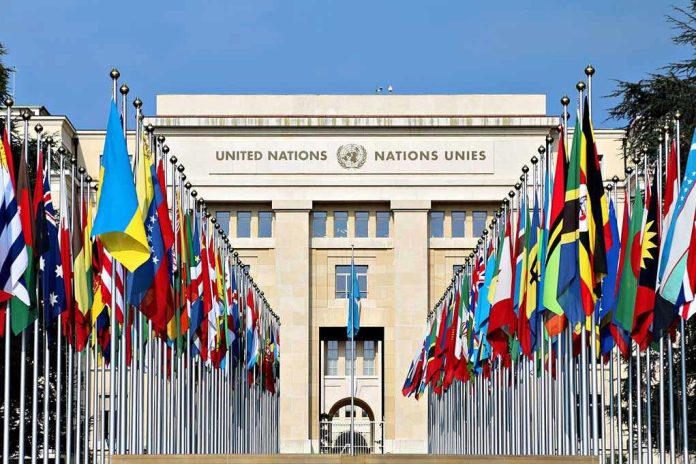
From the podium of the United Nations, President Trump called Cuba “an absolutely failed state,” asserted it “will fall,” and vowed that “freedom will be coming to Cuba,” pairing the language with a claim that his administration is seeking a “fundamental change in the situation in Cuba.” Major outlets documented both the phrasing and the immediate diplomatic consequence: the Cuban delegation rose and walked out. For a global audience, this was not just a war of adjectives; it was a signal of U.S. intent to intensify pressure and to define Cuba’s crisis as terminal rather than cyclical.
Havana answered on two tracks: a symbolic protest in the chamber and an explicit counter-narrative online. President Miguel Díaz-Canel accused Washington of waging a “genocidal economic war” and punishing the Cuban people, while Foreign Minister Bruno Rodríguez insisted Cuba is sovereign and not a threat to the United States. Their rebuttal did not dispute the existence of shortages or outages; it contested the premise that external pressure is justified or that collapse is inevitable.
Inside the crisis: fuel, machinery, and a grid past its design life
Cuba’s electric system is old, oil-heavy, and brittle. A series of nationwide and near-nationwide blackouts have left millions without power in recent months, a pattern rooted in three reinforcing stresses: deteriorated conventional generation assets, chronic fuel scarcity, and a slow, underfunded energy transition. When transmission failures cascade across an already supply-constrained grid, restoration becomes an exercise in rationing rather than recovery. Independent and Cuban sources alike describe a system where most plants run hard at the edge of maintenance windows, scrounging parts and diesel; when fuel tightens, so do outages.
Fuel dependence is the decisive vulnerability. The island imports most of the hydrocarbons that run its power sector, and when those flows constrict—whether because a supplier falters or shipping is deterred—available generation collapses. Over the past year, Cuba’s power supply has swung with the rhythm of arrivals and delays, a dynamic that makes each weather event or line fault more consequential than it should be in a resilient system.
Pressure by policy: how U.S. sanctions shape the energy squeeze
Here is the policy mechanism many casual observers miss. U.S. sanctions on Cuba are not a generic trade spat; they are structured to drive political change. The Helms-Burton Act codified that architecture three decades ago by tying the lifting of sanctions to the emergence of a transition or democratically elected government in Havana. Energy, shipping, and financial restrictions aimed at curbing fuel flows and access to parts are therefore not incidental—they are deliberate tools intended to raise the cost of the status quo for Cuba’s leadership.
Independent UN experts recently criticized new U.S. measures that target energy companies and further restrict fuel imports, describing them as coercive attempts to force change in a sovereign state. The critique aligns with what Cuba’s diplomats allege and with the operational reality of maritime sanctions: when insurers, banks, and shipowners see legal and reputational risk, cargoes do not load, and even willing sellers struggle to deliver. In a grid that already runs on fumes, those missing barrels translate directly into blackouts.
Assessing the “failed state” label against observable conditions
Does the evidence support the claim that Cuba is an “absolutely failed state”? The power sector’s performance is consistent with systemic distress: multiple nationwide blackouts, rationing, and the knock-on effects on water, sanitation, and healthcare supply chains. Reporting has documented total or near-total outages that left millions in the dark and emphasized the compounding role of U.S. restrictions in choking off oil shipments. That combination—aging assets plus constrained inputs—produces failure-like outcomes in daily life even if state institutions continue to function in other domains.
Yet “failed state” is not an engineering term; it is a political judgment. The more precise, defensible description is that Cuba is experiencing a layered infrastructure and energy crisis that increasingly destabilizes basic services, with external sanctions amplifying internal fragility. On that factual backbone, Trump’s forecast that “freedom will come to Cuba” reads less as a prediction derived from internal opposition strength and more as a statement of policy intent: keep tightening until the system yields.
What the walkout signaled—and what it did not
Diplomatic walkouts are theater with a purpose: to register a boundary and rally sympathizers. The Cuban delegation’s exit did both; it created a visual rebuke and fed a counternarrative of sovereignty under siege. It did not, however, contest the reported text of the speech or the reality of the outages. On the core factual claims—what was said in New York and whether Cuba faces material energy shortfalls—the evidentiary record is one-sided. Where there is genuine dispute is over causation and legitimacy: Are sanctions an ethical, effective lever toward democratization, or collective punishment that hardens authoritarian reflexes while immiserating civilians?
Trump Hints America Will TAKEOVER Cuba at U.N. Speech, Communists Rage in Audience..
The President told the truth and said that Cuba is a failed state that is ready to fall.
The Cuban delegation stood up and stormed out.
All the signs are there that a U.S. takeover is… pic.twitter.com/A1bidRMO75
— Benny Johnson (@bennyjohnson) September 22, 2026
Implications: leverage, limits, and the risks of miscalculation
Sanctions can degrade a state’s capacity to repress by starving it of fuel and funds; they can also degrade the population’s trust in any alternative if daily life only gets worse. The energy sector is where these contradictions manifest fastest. When power fails, everything else—hospitals, refrigeration, transit—slows or stops. If Washington’s goal is negotiated political opening, energy strangulation must be paired with clear, credible off-ramps tied to specific reforms; otherwise, it becomes a siege without an exit. The statutory scaffolding for such conditionality exists but is rarely communicated in operational, time-bound terms the other side believes.
For Havana, the engineering imperatives are brutal and apolitical: diversify fuel sources, triage the most failure-prone generators, accelerate distributed renewables where they can displace diesel, and find hard currency for parts. None of that is quick, and all of it is harder under sanctions. For Washington, the strategic calculation is whether visible hardship accelerates elite fracture or entrenches it. History, in Cuba and elsewhere, counsels humility. Systems bend; they also learn to ration, repress, and wait out pressure. Clear ends, calibrated means, and honest accounting of human costs are the difference between leverage and wishful thinking.
Sources:
military.com, en.cibercuba.com, reuters.com, bbc.co.uk, nytimes.com, cnbc.com, thehill.com, news.un.org, cubastudygroup.org