
In the United States, the object an officeholder touches at a ceremonial swearing-in has no legal force; the only binding promise is to the Constitution. That simple constitutional architecture explains both why a Muslim senator-elect would consider a Quran for a photo-op reenactment and why treating that choice as a loyalty test gets the issue exactly backward.
At a Glance
- The Constitution binds federal officers by oath or affirmation to support the Constitution and forbids any religious test for office.
- Abdul El-Sayed said he would likely use a Quran for a ceremonial Senate swearing-in, while emphasizing his allegiance is to the Constitution.
- Congressional precedent exists: multiple House members have used Qurans in ceremonial reenactments without legal controversy.
- Claims that a Quran at a ceremony signals deference to religious law conflate symbol with substance and lack corroborating evidence.
What the Oath Actually Binds: Constitution First, Not a Book
Article VI of the Constitution requires Senators, Representatives, and federal officers to pledge support to the Constitution and pointedly bars any religious test for public office. The oath can be taken as an oath or an affirmation—language that was drafted to accommodate conscience and faith diversity from the founding era forward. The object one may hold at a staged, post-ceremony photo reenactment—Bible, Quran, Tanakh, Bhagavad Gita, a family heirloom, or empty hands—does not alter that legal obligation. The Constitution Annotated, Congress’s own explanatory reference, is explicit on both points: the duty runs to the Constitution; no religious prerequisite can be imposed for office.
Understanding that framework is the prerequisite to making sense of today’s debates. It also situates modern practice within a long American tradition of broad religious liberty in public life—and of keeping the legal oath secular and uniform.
El-Sayed’s Stated Plan: Personal Symbol, Civic Allegiance Unchanged
In an NPR interview, Michigan Senator-elect Abdul El-Sayed said he would likely swear on a Quran at his Senate swearing-in and was weighing which volume—Thomas Jefferson’s Quran or a historic edition held by the University of Michigan. He simultaneously drew a bright line between symbol and substance: the oath is allegiance to the Constitution, not to a religious text. His phrasing was direct: it is “not the book that you swear on. It’s the book you swear allegiance to,” meaning the Constitution. The core facts here are uncontested: he voiced an intention (not yet a finalized logistical choice) to use a Quran and grounded his civic duty in the constitutional text.
This approach aligns with how many officeholders pair an official, legally binding oath with a separate ceremonial reenactment arranged for constituents, family, and press. The latter is a platform for personal meaning—religious, familial, historical—layered atop a uniform legal act. Reporting on congressional practice has long made that distinction plain: religious texts are optional at ceremonies, but irrelevant to the oath’s validity.
Precedent and Practice: A Familiar Congressional Pattern
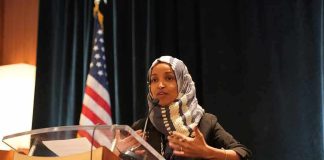
Congress has seen this before. In 2007, Representative Keith Ellison used Thomas Jefferson’s Quran for his ceremonial swearing-in photographs; later, Representatives Ilhan Omar and Rashida Tlaib did likewise. No legal dispute followed because there was none to be had; the Constitution does not require any sacred text, and congressional offices have treated these objects as personal or historical markers. El-Sayed’s anticipated Senate ceremony extends that existing pattern into the upper chamber, making it more visible but not more legally significant.
The choice also coheres with El-Sayed’s public idiom. In his victory remarks he used Inshallah—“God willing”—as he often had during the campaign, then pivoted to the work ahead. That blending of tradition and public purpose is not unusual in American political rhetoric; it is a staple across faiths and parties, from invocations to benedictions at civic events.
Where Critics Go Wrong: Conflating Symbol with Sovereignty
Some adversarial commentary asserts that placing a hand on a Quran signals ultimate loyalty to sharia rather than the Constitution, framing the ceremonial object as a proxy for legal sovereignty. That argument is speculative and misstates the mechanics of the oath. First, El-Sayed has explicitly affirmed the Constitution as the binding object of allegiance. Second, linking a ceremonial Quran to an intent to impose religious law ignores his public position that faith-derived rules should not be written into U.S. law—reported contemporaneously even in critical outlets. Finally, the Constitution’s no-religious-test rule forecloses using a candidate’s ceremonial symbol as a litmus test for office; the legal system binds all senators to the same constitutional constraints regardless of what book appears in a photograph.
To be clear, critics are free to interrogate policy positions. But the claim that a ceremonial Quran by itself evidences a competing legal allegiance lacks evidentiary support and collapses upon contact with constitutional design and the official’s own stated commitment.
Mechanics of the Senate Oath and the Photographic Reenactment
How does this work in practice? The official oath is administered on the Senate floor by the Vice President to all senators. This is the binding act, and it follows the statutory oath text derived from the Civil War era. Afterward, senators often take individual ceremonial photographs—sometimes in the Old Senate Chamber or another formal setting—where family can join, a camera is present, and a personal object might be held. That second moment is the setting in which members choose texts or mementos meaningful to them. It is not where the legal obligation is created. Distinguishing those two moments resolves most apparent confusion about “swearing on” anything at all.
Because El-Sayed spoke prospectively, details such as which Quran and the exact staging remained unsettled at the time of his remarks. That does not change the legal architecture or the public meaning he attached to his choice: religious identity acknowledged, constitutional allegiance affirmed.
History and Meaning: Religious Diversity Within a Secular Oath
Americans have always argued over the public meaning of religious symbols; Article VI was drafted precisely to keep those arguments from turning into legal barriers to office. In the two centuries since, the republic has successfully absorbed waves of religious minorities into civic leadership without rewriting the oath for each group. That is the point of a secular, uniform oath—one that binds an official to a single text that governs us all. The Constitution Annotated traces that continuity from the founding through the modern era, emphasizing the bar on religious tests as a structural safeguard of pluralism in public service.
Seen through that lens, a Quran in a Senate ceremony is not a departure; it is a confirmation that a plural people can pledge the same constitutional loyalty while honoring different traditions in the realm of personal symbol and ceremony.
Michigan Senator-elect Abdul El-Sayed says his full name is as American as Donald Trump: “Abdulrahman Mohamed El-Sayed is my name.”
On NPR’s Newsmakers, the Democrat who defeated Republican Mike Rogers told Leila Fadel: “Abdulrahman Mohamed El-Sayed is as American as Mike… pic.twitter.com/ekQhXg5LYk
— Upward News (@UpwardNewsHQ) November 13, 2026
The Real Stakes: Policy, Not Props
For voters, the durable question is not which book appears in a photograph; it is whether a senator’s votes, oversight, and coalition-building serve the public interest within constitutional bounds. El-Sayed has anchored his language to that standard—Constitution first, personal faith expressed as symbol, not statute. That is how the system is designed to work. When the line between ceremonial identity and legal obligation is kept clear, Americans can evaluate their representatives on governing choices, not on the prop table at a photo-op.
Sources:
lifesitenews.com, npr.org, wionews.com, newagebd.net, the-express.com, detroitnews.com, ground.news, nrsc.org, 1010wcsi.com, constitution.congress.gov