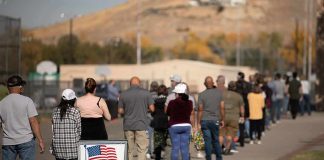

California built an election system so loose on the front end and so tight on the back end that both fraud fears and “nothing to see here” claims can be true at the same time.
Story Snapshot
- California mails a ballot to every active voter and lets almost anyone collect and return it.
- Chain of custody from kitchen table to county office is the weakest link in the whole system.
- Officials lean on signature checks and secure drop boxes to say the process is safe and legal.
- Conservatives see a system “working as designed” to favor one side, even if crimes are rare.
California’s universal mail ballot system changes the whole playing field
California does not just allow mail voting; the state builds the entire election around it. The California Secretary of State says any registered voter may vote using a vote-by-mail ballot instead of going to the polls on Election Day, and counties mail ballots out broadly to active voters.[4][7] For busy, older, or car-free voters, that sounds great. For anyone who worries about loose rules, it raises a blunt question: who really controls that ballot once it leaves the county office?
Ballots do not all have to be back by the close of polls on Election Day. California law allows mailed ballots to count if they are postmarked by Election Day and received within a set window afterward.[2] That delay helps people whose mail runs slow, but it also guarantees a slow count and days of “ballots still coming in.” Those late waves of votes often break hard one way, which feeds suspicion even when every step follows the law.[1][5]
How ballot harvesting turns a convenience into a political weapon
Ballot collection, often called ballot harvesting, is where California truly stands apart. A House Administration Committee Republican report describes ballot harvesting as letting any individual pick up any voter’s ballot for any reason and deliver it to a polling location, with no real tracking.[1][5] That same report warns that California allows unlimited ballot collection without basic safeguards like logging who dropped off how many ballots or how they got them.[5]
The report describes “ballot brokers” who go into targeted communities, push mail voting, even help voters fill out ballots, then haul stacks of them to drop sites.[1][5] In 2018, several Republican candidates led on election night, only to lose weeks later as harvested mail ballots were counted.[1] The report does not prove illegal fraud in each case, but it makes a strong case that the rules invite aggressive partisan ballot chasing that most ordinary voters never see at all.[5]
Security checks exist, but they start late in the chain
California officials answer fraud concerns by pointing to security steps once ballots reach their hands. The Secretary of State’s “trusted information” page states that mail ballots use signature verification to confirm the voter’s identity, and that mismatched signatures mean the ballot is set aside until the voter is confirmed.[2] The state also highlights secure drop boxes made of heavy metal, bolted down, often covered by video, and sealed to show tampering.[2]
We live in California all our lives and we’re 75. We noticed in last ten years have been the worst. We do not like illegal immigrants nor camping and drugs on our streets. We need one day voting & ID and proving citizenship. No mail in ballots We need Spencer Pratt & Steve Hilton
— Loretta Conway (@LorettaC98855) June 10, 2026
Those back-end safeguards matter, and they are real. The problem, from a conservative and basic common sense view, is timing. Signature checks and steel drop boxes only protect ballots after a collector delivers them. They do not protect a confused senior whose ballot is “helped” at the kitchen table. They do not protect a homeless person whose ballot is traded for a sandwich. They do not protect the ballot that never gets turned in at all. The chain of custody gap is where trust leaks out.
What other states do differently and why it matters
Many states let family members or a small number of designated people help return absentee ballots, but they cap how many ballots one person may handle or limit who qualifies.[3][7] Ballotpedia’s review of ballot collection laws shows that restrictions on third-party collection are common across the country, and California stands out as the major exception that went the opposite way.[7] That choice was not an accident; it reflects a political preference for maximum access, even at the cost of weaker controls.
The Cato Institute’s analysis of ballot harvesting notes that California legalized broad ballot collection in 2016 and that one party used it very effectively.[3] The same piece points out that there is no evidence of a massive, proven ballot harvesting scheme dumping huge numbers of illegal votes in California, which defenders lean on.[3] But absence of a proven criminal case is not the same as a tight system. It usually means the behavior falls inside the wide lane the legislature already paved.
Risk, reality, and what reform would look like
From a small-government, rule-of-law perspective, California’s design mixes real voter conveniences with obvious temptations. Universal mail ballots, long receipt windows, and unchecked third-party collection create what House Republicans call a system “ripe” for abuse, because massive ballot handling happens away from public view and outside standard poll watching.[1][5] At the same time, state officials can honestly say they check signatures, secure drop boxes, and remove dead voters from rolls.[2]
The result is a strange kind of two-step. When critics say the system is broken, defenders answer that it works exactly as the law intends. On that point, they are right. The deeper question is whether that law reflects the balance most Americans want between access and integrity. Common sense reforms are not hard to picture: limit who can return ballots, cap how many one person can carry, tighten chain-of-custody records, but keep the option for people who truly need help. Until lawmakers choose that path, California will remain the national case study in how to build an election system that invites doubt, even when no one can prove exactly what went wrong.
Sources:
[1] YouTube – California’s Perfect Recipe for Fraud
[2] Web – Arguments for and against no-excuse absentee/mail-in voting
[3] Web – Voting FAQ | California Voter Foundation
[4] Web – The debate over California’s election system is heating up. President …
[5] Web – Vote By Mail – California Secretary of State – CA.gov
[7] Web – “Claims of election fraud are nonsense,” says Times columnist Mark …