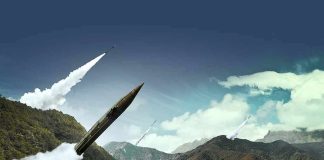
A Russian ballistic missile hit an open-air weapons show near Kyiv in broad daylight, killing at least 10 people and wounding around 100 more, and now Ukraine’s own prosecutors are investigating whether the event should have happened at all.
Story Snapshot
- A Russian ballistic missile struck a defense-industry exhibition near Kyiv on July 24, killing at least 10 people and injuring close to 100.
- Ukraine’s prosecutor-general opened two criminal investigations, one into the strike itself and one into possible negligence by event organizers.
- President Volodymyr Zelensky publicly said the exhibition should not have been held under wartime conditions.
- Officials are also probing how the event’s location was publicized, amid claims the coordinates were leaked online.
Missile Strike Hits Crowded Arms Show
Russia launched a ballistic missile strike on Kyiv on July 24, hitting a training ground where a defense-industry exhibition was underway. Valery Borovik, founder of one of the companies attending, told national television the strike hit “one of the military training grounds” packed with vendors and visitors. At least 10 people died and nearly 100 were injured, according to Ukrainian officials.
The Ukrainian Council of Defense Industry confirmed its own representatives were present at the location when the missile hit, showing this was not a hidden military site but a publicly known industry gathering. Emergency crews scrambled to the scene as rescue operations stretched into the evening, with officials warning the number of injured could still climb.
Zelensky Admits Event Should Not Have Happened
President Zelensky condemned the attack but also broke from pure blame-Russia messaging. He acknowledged publicly that holding an arms exhibition in the open, during wartime, was a mistake. That admission by Ukraine’s own leader is unusual and points to a deeper worry: even allied nations sometimes let public visibility outweigh basic safety planning.
Ukraine’s prosecutor-general, Ruslan Kravchenko, said his office opened two separate criminal investigations. One targets the missile strike as a possible war crime. The second examines “possible negligence in organizing and holding the event,” a direct signal that Ukrainian authorities themselves question whether proper precautions were skipped.
Who Approved the Location and Why It Was Public
Investigators are now trying to pin down who chose the site, the timing, and the security measures, according to multiple reports. That effort suggests officials do not yet have a clear paper trail showing anyone signed off on a formal safety plan before the event went forward, leaving basic questions about accountability unanswered so far.
Reporting also raises the possibility that the event’s coordinates were leaked or promoted too openly online, which could have helped Russian forces target the strike with such precision. Ukrainian authorities have since imposed stricter rules on how future defense-related gatherings can be advertised to the public.
A Pattern Bigger Than One Strike
This is not an isolated case. Publicly announced defense and industrial gatherings sit at a dangerous crossroads between military necessity, civilian safety, and basic information security. When such events are hit, the debate almost always splits between blaming the attacker and questioning whether organizers took reasonable precautions, and this strike fits that pattern closely.
Regarding yesterday's Russian Iskander-M ballistic missile strike on arms exhibition for the "ARMADA" company in Kyiv.
I've been told that the total number of people attending the event was between 200 and 1,000, and that Ukrainian authorities are downplaying the true number of… https://t.co/h3on3FW1st pic.twitter.com/l6erR7pKgP
— AMK Mapping 🇳🇿 (@AMK_Mapping_) July 25, 2026
For ordinary citizens watching from afar, the episode reinforces a familiar frustration: officials on both sides of a conflict often prioritize appearances, funding pitches, or public messaging over the basic safety of the people who show up. Whether in Kyiv or Washington, the instinct to ask “who was actually in charge of protecting people” resonates across the political spectrum.
Ukrainian emergency services say cleanup and medical response continued for hours after the strike, with dozens still receiving treatment. As investigators dig into the negligence probe, the outcome could shape how Ukraine handles public defense events for the rest of the war, and whether accountability reaches beyond Moscow’s missile.
Sources:
thegatewaypundit.com, bbc.com, pravda.com.ua, kyivindependent.com, youtube.com, channelnewsasia.com