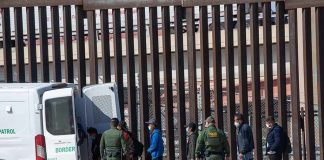

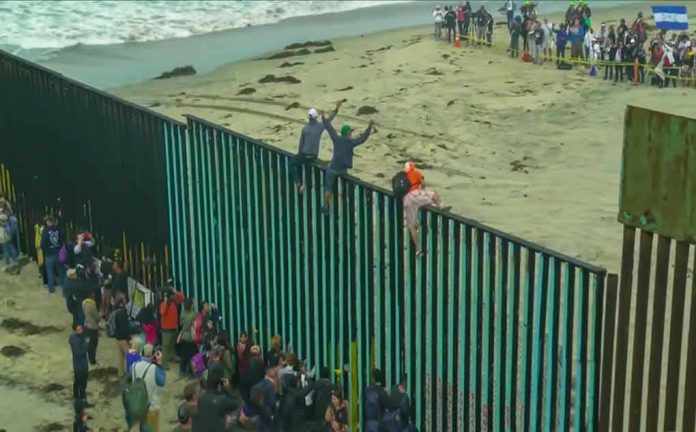
Border crises are rarely single-incident failures; they are stress tests of a system in which geopolitics, local capacity, and humanitarian law collide, and Ceuta has become a recurring case study in how quickly that collision can spill from a shoreline into national politics.
At a Glance
- Ceuta’s rapid-onset influx exposed how small enclaves can be overwhelmed in hours, forcing military-backed order restoration and emergency returns.
- Spain’s leadership framed the response around territorial integrity and swift border control while acknowledging a parallel humanitarian emergency.
- The surge’s trigger was entwined with Morocco’s border posture and diplomatic friction, not simply Spanish policy design alone.
- Minors and reception conditions became the long tail of the crisis, outlasting the initial security response and shaping public backlash.
Why Ceuta Became a Flashpoint Rather Than a Routine Border Event
Ceuta is small, densely urban, and logistically constrained; when a border flow turns from steady to sudden, throughput assumptions collapse. In May 2021, roughly 8,000 people reached the enclave within two days—many by sea—which rapidly exceeded ordinary reception capacity and prompted a security-led stabilization: troops deployed, returns accelerated, and border perimeters hardened. Prime Minister Pedro Sánchez’s government publicly prioritized “restoring order,” guaranteeing border control, and simultaneously addressing the acute humanitarian dimension—language that reflected both legal obligations and political imperatives. That dual framing matters: a government cannot suspend asylum law during a surge, yet it cannot cede operational control of a border either.
Scale alone, though, does not explain why Ceuta tipped into crisis. Contemporary reporting linked the inflow’s velocity to Morocco loosening controls amid bilateral tensions, a dynamic Madrid later characterized as coercive pressure—what analysts often call the “weaponization of migration”. When an upstream state modulates enforcement, a downstream enclave like Ceuta has hours, not days, to absorb consequences. In that window, even well-designed reception plans will look brittle.
Mechanics of a Rapid-Onset Border Surge: From Shoreline to Statecraft
Three mechanisms convert a border surge into a political crisis. First is operational saturation: reception sites hit capacity, identification and triage slow, and public order assets are repurposed as first responders. That sequence was visible in Ceuta as troops patrolled, police managed shoreline recoveries, and expedited returns began under bilateral accords with Morocco. Second is policy collision: expedited return practices must be reconciled with protections for asylum seekers and, especially, unaccompanied minors. Spain conducted large-scale immediate returns while still facing the non-fungible duty of sheltering minors—around 1,000 remained in Ceuta days after flows ebbed, a logistical and legal commitment that cannot be short-circuited by policing alone.
Third is strategic signaling. Sánchez emphasized Spain’s territorial integrity and the guarantee of security while activating diplomatic channels, a playbook designed to dissuade further opportunistic crossings and to shift incentives in Rabat. In parallel, Spanish officials alleged Moroccan “blackmail,” an attribution meant to reset the deterrent environment as much as to describe causation. In border politics, messages to three audiences—the upstream partner, the domestic public, and would-be crossers—travel in the same sentences.
Humanitarian Strain Was Not an Afterthought; It Was the Constraint
Large mixed flows contain people with profoundly different legal claims and vulnerabilities. That complexity surfaced quickly in Ceuta: reports described hundreds to thousands of minors among arrivals and immediate pressure on food, sanitation, and safe shelter—conditions that complicate everything from screening to public order. Even after flows subsided and returns advanced, authorities were still housing and feeding unaccompanied children in facilities never designed for prolonged care, a structural mismatch guaranteed to inflame local resentment and national scrutiny.
Critics pointed to testimonies describing inadequate hygiene access for women, harassment risks, and meager rations inside ad hoc camps. Anecdote is not a system audit, but it often signals the very gaps that formal records eventually confirm or refute. The durable lesson is administrative, not rhetorical: if contingency planning does not pre-stage gender-safe sanitation, surge catering, and child-protection staffing, every hour of delay will be paid back in disorder and public outrage.
Diplomacy at the Border: Why Attribution Matters More Than Blame
It is tempting to read Ceuta as a referendum on Madrid’s competence. The evidence supports a different hierarchy. Spain’s response—troop deployment, accelerated returns under existing agreements, leadership vows to restore order—followed the standard European crisis script because the proximal driver was external modulation of the upstream border, not a novel Spanish policy experiment. That does not absolve Madrid of responsibility for reception conditions or minors’ care; it does locate the event’s ignition point in interstate bargaining rather than in a discrete domestic failure.
For readers trained by daily politics to demand villains, this may be unsatisfying. But deterrence, burden-sharing, and humanitarian protection are all multi-actor functions in the Western Mediterranean. Where Morocco’s enforcement slackens, Spain’s edge cases multiply, and the European Union’s policies on returns, relocation, and financing become either buffers or accelerants. In that ecosystem, “who failed?” is less predictive than “which interdependencies snapped, and how fast can they be restrung?”
Thousands Protest Migrant Crisis in Ceuta
Thousands marched in Spain’s enclave of #Ceuta to protest the government's handling of over 10,000 stranded migrants. Demonstrators demanded stronger border security and Prime Minister Pedro Sánchez’s resignation. #Spain #MigrantCrisis pic.twitter.com/JfQxLxtfFK— IUDHR NEWS (@IUDHRNEWS) September 3, 2026
What Durable Preparedness Looks Like for the Next Ceuta
If Ceuta is a pattern, not an anomaly, resilience demands three investments. First, modular capacity: rapidly deployable reception units with gender-segregated sanitation, scalable catering, medical triage, and child-protection teams trained for mixed flows. These assets should be pre-contracted and logistics-tabled for 48-hour arrival horizons. Second, lawful speed: protocols that marry expedited screening with rigorous pathways for asylum and special protection, particularly for unaccompanied minors, so that legal compliance is not sacrificed to throughput. Spain’s experience—with mass immediate returns alongside a residual cohort of minors—shows why parallel lanes are essential rather than aspirational.
Third, upstream incentives: diplomatic frameworks that reduce the value of migration as leverage. Attribution matters here because it guides instrument choice—financial compacts, joint patrols, readmission guarantees, and crisis hotlines. When Spain’s defense minister publicly called out Moroccan pressure, it was as much a policy nudge as a press quote; sustainable deterrence is built on credible promises and penalties, not on episodic indignation.
Politics Will Follow the Optics; Policy Must Outlast Them
Mass protests and partisan recriminations are the political aftershocks of border surges, but they neither manage the next boat nor care for the next child. The record from Ceuta shows a government asserting control, leveraging security forces, and engaging diplomatically while facing a humanitarian constraint that policing cannot solve. Those are compatible, not contradictory, imperatives. The lesson for policymakers and citizens alike is to judge responses by their dual fidelity: did they reestablish border order quickly and uphold obligations to vulnerable people effectively? On that standard, success will never be defined by a single day on the beach—but by the quiet competence of what follows.
Sources:
youtube.com, aljazeera.com, en.wikipedia.org, barrons.com, reuters.com