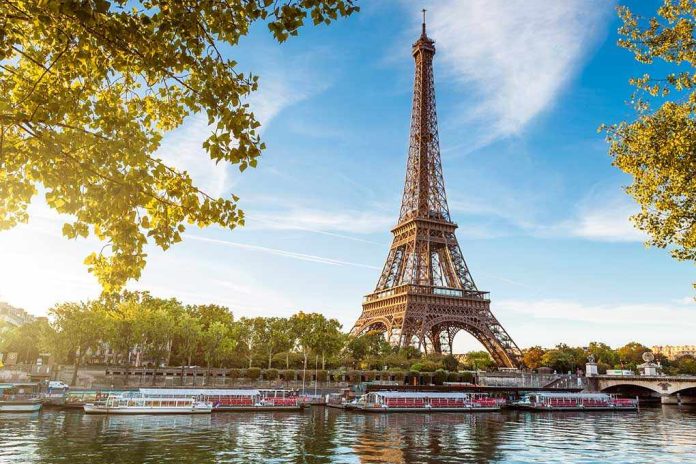
France’s most famous landmark shut down after unions said female workers were told to step aside during a private visit by a Hindu delegation.
Story Highlights
- Unions say women were pulled from posts during a delegation’s tour; Paris opened an investigation.
- Operator admitted a request to limit contact with women was accepted and called that a mistake.
- Hindu group said no one was denied access and denied gender intent, while expressing regret.
- Strike forced a temporary closure; the tower later reopened after apologies and review steps.
What Triggered the Eiffel Tower Walkout
Union leaders at the Eiffel Tower said managers told female staff to leave posts or avoid contact as a Hindu religious delegation moved through the site over the weekend. A union representative said women stepped aside while men filled those roles, and called the order discriminatory. Workers walked off the job on Monday, shutting the monument. Paris city officials launched a formal probe into who approved the conditions and why they were allowed inside a public-facing workplace.
The company that operates the tower said the visiting group asked to limit “interactions with women,” and acknowledged those terms were accepted. Management later said that decision should never have been made and offered an apology to anyone hurt by the situation. That admission reinforced staff anger, since it confirmed a special protocol was arranged for one group that changed normal staffing. The strike aimed to force clear rules that prevent similar requests in the future.
How the Delegation and City Responded
The religious group, Bochasanwasi Akshar Purushottam Swaminarayan Sanstha, known as BAPS, pushed back on the claims. The group said the visit was set early to avoid crowds due to its size, not to exclude women, and that, to its knowledge, no one was stopped from access. In a separate statement to media, the group said it never intended any request based on gender and expressed regret for any pain caused by the visit arrangements.
Paris city leaders moved quickly once the strike began. They said investigators would review emails, schedules, and directives to see whether the operator or city staff approved limits tied to gender. City officials stressed that public services must treat workers and visitors equally. They also signaled that partners who host private events must follow these standards without exception, even for high-profile guests or cultural protocols.
Why This Flashpoint Matters Beyond Paris
This dispute highlights a wider tension in France: how workplaces handle religion without clear accommodation rules. French employers often manage faith issues indirectly, by making them “invisible,” which can turn into sudden staffing shifts or quiet routing changes rather than open policies. Research shows managers often balance flexibility against perceived risks. That can lead to ad hoc choices that cross into unequal treatment, especially when gender and religion intersect in public roles.
https://t.co/jpatPe8bbV
Eiffel Tower was closed after its staff staged a walkout and strike. The action followed anger over the directive during the BAPS Swaminaryan visit when female employees were ordered to step away from their workstations, stay out of sight. 6 min read.— Independent Ink (@Independentink9) September 12, 2026
The tower reopened after apologies from the operator and steps to review procedures. Still, staff said trust was damaged. For many on the right and left, this looks like elites bending rules for select visitors, while everyday workers bear the cost. People worry that powerful groups can nudge public institutions to ignore basic equal-treatment norms. When that happens at a global symbol like the Eiffel Tower, it fuels a shared belief that systems protect influence first, and principles second.
Sources:
youtube.com, reuters.com, france24.com, ici.radio-canada.ca, eutoday.net