

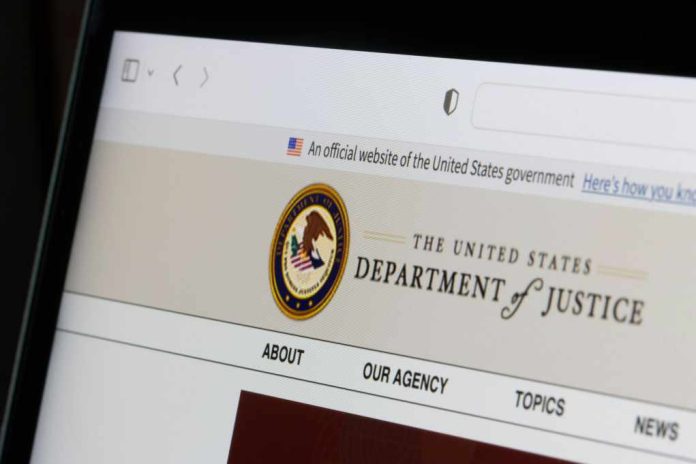
A secret Google warrant tied to the January 6 pipe bomb probe shows how fast ordinary searches can become government targets.
Quick Take
- The Justice Department sought Google user data tied to searches for the National Committee headquarters during the January 2021 pipe bomb investigation.
- Bloomberg Law reported that Google first complied with earlier warrants, then fought a broader request for user identities.
- Privacy advocates say these “reverse warrants” can sweep in people who were never suspects.
- Supporters of the warrant say it was tied to a real criminal case, not a fishing expedition.
Why This Warrant Matters
The fight over this warrant is bigger than one case. It goes to the heart of how much power the federal government should have over search data kept by big tech. Google was asked to identify 311 users who searched for the Republican or Democratic National Committee headquarters in January 2021, after pipe bombs were placed near those offices on January 6, 2021[12]. That kind of demand can feel narrow to law enforcement and alarming to anyone who values the Fourth Amendment.
The concern is not just the bomb plot itself. It is the method. Reverse warrants work backward from a place or search term and ask a company to help name the users first, then sort out who matters later. Legal and policy researchers describe geofence and keyword warrants as tools that can capture many innocent people when police do not yet know who committed the crime[18][23]. That is why civil liberties groups keep warning that broad data demands can look like modern general warrants.
Google’s Role In The January 6 Probe
Bloomberg Law reported that Google had already complied with earlier warrants in the same investigation before contesting the broader 2023 request for identities[12]. That matters because it shows the company did not object to every order, only to the more expansive one. The Justice Department has also defended lawful warrants in other data cases, including one involving records stored outside the United States, which shows prosecutors view these tools as part of standard criminal process[11].
Still, the public record here is incomplete. The warrant itself and the supporting affidavit were not released in the materials provided, so outside readers cannot verify the full scope or exact limits. That leaves room for two views at once: one side sees a tailored order tied to a violent attack, while the other sees a secret digital dragnet that pulled in users who were never under suspicion. The facts provided do not settle that fight.
Why Thomas Drake’s Name Keeps Coming Up
Thomas Drake, the National Security Agency whistleblower often linked to Edward Snowden-era surveillance debates, appears in the privacy argument because he has long warned about overreach and secrecy in government data collection[1][6]. A legal article cited in the research argues that public accountability can matter when the government has not shown clear and convincing evidence of imminent harm[9]. That idea fits the anti-overreach case, but it is still an argument, not a court ruling on this warrant.
For conservatives, the core issue is simple. Secret process, broad data demands, and weak public explanation always deserve skepticism. The Constitution does not protect only the popular or the guilty. It protects everyone, including people who merely typed a search term. At the same time, the January 6 bomb threat was real, and law enforcement had a duty to investigate it. The unresolved question is whether Google’s data was gathered with proper restraint or with too wide a net.
The Broader Pattern Behind Reverse Warrants
This case fits a larger trend that legal scholars have tracked for years. Reverse warrants, including geofence and keyword warrants, have spread across federal and state investigations as police use company databases to identify unknown suspects[17][18]. Some scholars and courts call them unconstitutional general warrants, while others say they are valid tools when tied to a criminal probe[19][20][23]. The split itself is the story: the law has not caught up with the speed of digital surveillance.
That gap leaves the public with an uncomfortable choice. Either trust agencies to use broad search powers wisely, or demand tighter limits before those powers become normal. The research here supports both the need for serious crime investigations and the warning that broad data collection can swallow innocent users[18][23]. Until the warrant, affidavit, or a clear court ruling is released, the strongest honest answer is that this is a live Fourth Amendment fight, not a closed case.
Sources:
[1] YouTube – NSA Whistleblower Who Inspired Edward Snowden EXPOSES How Your …
[6] Web – ISP List and LE Guides – Search.org
[9] Web – Search Data Security Breaches | State of California
[11] Web – Geofence Warrants and Google’s Sensorvault
[12] Web – An Important Court Opinion Holds Lawful Warrants Can Be …
[17] Web – Judge, Jury…Service Provider?
[18] Web – Geofence Warrants: A Model State Policy
[19] Web – Geofence Warrants and the Fourth Amendment
[20] Web – Bloomberg Law, “Counsel Have Toolbox to Fight Geofence …
[23] Web – Thousands of Geofence Warrants Appear to Be Missing …