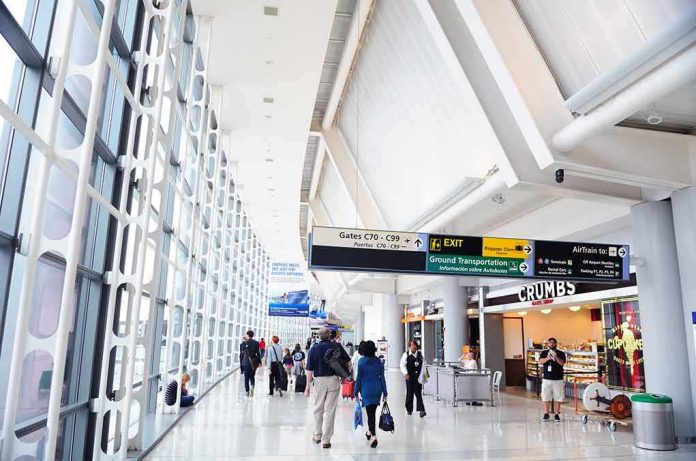
The central fact is simple: a strong earthquake in western Colombia turned Pereira’s Matecaña International Airport into one of the most visible scenes of panic and damage, forcing officials to suspend operations while engineers inspected the facility and other airports across the region.
Intro Header
- The quake struck western Colombia with enough force to rattle airports, damage infrastructure, and send travelers ducking for cover.
- Matecaña Airport in Pereira was among the hardest-hit public spaces in the first wave of reporting, with ceiling damage visible in multiple accounts.
- Colombia’s civil aviation authority suspended operations at several western airports while structural checks were carried out.
- The early reporting cycle mixed official aviation notices, wire-service accounts, and social video, which is normal in the first hours of a disaster.
What Happened at Matecaña Airport
The earthquake struck on Monday morning and quickly produced the kind of raw, public-facing damage that makes a disaster feel immediate: travelers inside Pereira’s airport taking cover, debris falling from the terminal, and airport staff trying to restore order while the building continued to shake. Reuters reported that Colombia’s civil aviation authority suspended operations at Pereira and other western airports while engineers carried out structural inspections. EFE, as reproduced by Infobae, reported that part of the roof came down in an area where several people were present, though it said authorities did not yet have information on injuries or deaths at the airport.
That distinction matters. In disaster coverage, visible damage is often confirmed first, while casualty counts and the full engineering picture lag behind. The early evidence here strongly supports the narrower but more important claim: Matecaña suffered real physical damage and a frightened passenger scene, and the airport was serious enough for authorities to halt operations pending inspection.
Why Airports Are So Vulnerable in the First Minutes of a Quake
Airports are not fragile in the everyday sense, but they are unforgiving under sudden seismic loading. A terminal is full of suspended ceilings, glass, lighting systems, signage, ducts, and long spans designed for open circulation rather than brute shock resistance. When the ground moves sharply, the first failures are often non-structural: ceiling panels, fixtures, façade elements, and contents that become hazards long before the building itself is known to be compromised. That is exactly the kind of damage described in the reports from Pereira, where ceiling material fell into occupied areas and passengers were forced to move for safety.
Operationally, the response is also predictable. Civil aviation authorities do not wait for dramatic certainty; they shut down or restrict movement, then bring in inspectors, firefighters, and search-and-rescue teams. In this case, reporting indicated temporary suspensions at multiple airports in western Colombia, not just Pereira, because the question was not only whether one terminal looked damaged, but whether runways, control zones, and supporting infrastructure could safely continue to function.
The Broader Earthquake Was Larger Than the Airport Story
Pereira’s airport became the visual emblem, but it was only one node in a much wider shock. Reuters said at least 111 people were killed across western Colombia after the quake toppled buildings, damaged hospitals and infrastructure, and trapped people beneath rubble. Al Jazeera reported that the mayor of Pereira said 18 people died there, underscoring that the city’s damage extended well beyond the airport footprint. In other words, Matecaña was not an isolated event; it was one highly legible piece of a regional emergency.
The quake’s impact across multiple airports also explains why aviation authorities moved so fast. Reuters and other reporting described suspensions at six airports serving Pereira, Manizales, Quibdó, Armenia, Cartago, and Buenaventura, with some accounts noting additional disruptions elsewhere. That tells you the earthquake was not merely a local tremor that happened to rattle one terminal. It was a regional infrastructure event, and airports are among the first systems where safety concerns force a public, measurable pause.
How the First Reports Should Be Read
The first hours of earthquake coverage are almost always noisy. Social clips travel faster than engineering assessments, and dramatic language often outruns official verification. Here, though, the core of the story does not depend on the most sensational framing. The essential facts are already solid: a magnitude 7.4 earthquake struck western Colombia; Matecaña Airport in Pereira suffered visible damage; travelers were seen sheltering; and aviation authorities suspended operations pending inspections.
That is the right level of certainty. The airport damage was significant enough to halt service and warrant inspection, and the airport footage was vivid enough to circulate widely because it captured the emotional truth of disasters: people instinctively know, before any official statement arrives, when a building has crossed from inconvenience into danger. The longer-term question is not whether the quake rattled Pereira airport. It clearly did. The question is how much deeper the structural damage went, how quickly repairs can be certified, and what the region’s infrastructure resilience looks like the next time the earth moves.
What This Event Reveals About Disaster Response in Practice
Matecaña’s moment under stress shows how modern disaster response actually works. A quake hits; social video appears almost immediately; aviation officials suspend flights; inspectors are dispatched; and the public gets a sequence of partial truths that gradually solidify into a reliable account. That process can feel messy, but it is the correct one. The purpose of the early shutdown is not to produce a polished narrative. It is to keep damaged infrastructure from compounding a natural disaster into an avoidable man-made one.
For travelers, the practical lesson is blunt. Airports are built to keep people moving, not to remain transparent about hidden damage after a major seismic event. When a terminal drops ceiling panels or roof elements into occupied space, the system’s first obligation is to stop, assess, and only then reopen. Pereira’s airport became the public face of that rule on a day when western Colombia needed it most.
Sources:
techtimes.com, facebook.com, en.wikipedia.org, publimetro.co, instagram.com, x.com, agenciapi.co, timesnownews.com, reddit.com