A 4-year-old boy was found dead in a hot car on a quiet Valley Village block, and what happened in those missing hours should worry every parent, neighbor, and policymaker who thinks “that could never be us.”
Story Snapshot
- A preschool-age boy was discovered dead in a hot vehicle in Valley Village, triggering a Los Angeles Police Department child abuse investigation.
- Police and fire crews responded within minutes of a 911 call, but officials have not announced any arrests or charges.
- Reporters describe a devastated neighborhood and an investigation still wide open on whether this was crime, negligence, or tragic accident.
- The case exposes how fast blame spreads while the medical and forensic facts often lag days or weeks behind.
A Hot Car, A Quiet Street, And A Question No One Can Answer Yet
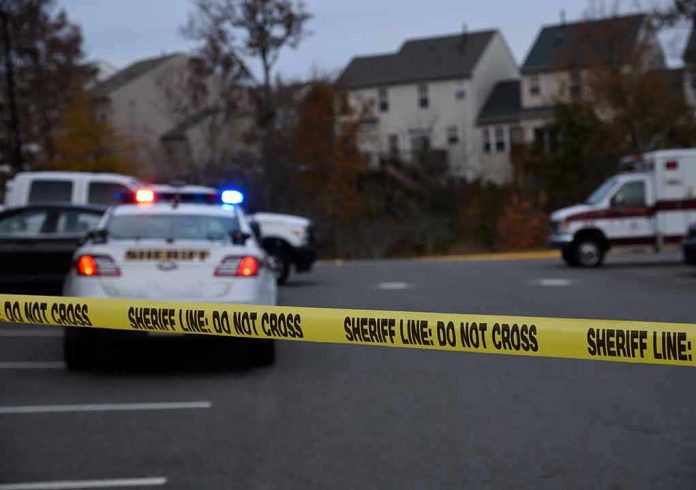
Los Angeles Police Department officers say they found a 4-year-old boy dead inside a hot car in a Valley Village neighborhood one Tuesday afternoon, after a call for medical aid around 3:40 p.m. on McCormick Street.[3] The Los Angeles Fire Department arrived to a scene that, from the street, looked ordinary: a parked vehicle, crime-scene tape, stunned neighbors. News footage shows officers surrounding a car covered with a white sheet as the death investigation began.[1]
Police told local reporters they believe the child may have been left inside the vehicle, and they quickly opened a child abuse investigation.[3] Yet as cameras rolled, officers had not taken the parents into custody. That detail says as much as the yellow tape. Detectives appear to be holding back from the reflex to criminalize before they know how long the boy was in the car, who last saw him alive, and what the coroner eventually finds.
When Emotion Runs Ahead Of Evidence
Local television coverage quotes the Los Angeles Police Department saying the boy was “possibly left inside a vehicle,” careful language that signals uncertainty rather than a definitive story. Residents gathered nearby with their own private verdicts. Some assumed monstrous neglect. Others whispered about medical conditions or mechanical failure. Common sense, especially through a conservative lens, says the law must wait on facts: cause of death, timeline, and responsibility. The community’s grief is certain; the narrative of exactly what happened is not.
Reporters at the scene describe an emotional neighborhood, children milling around, adults consoling each other and trying to make sense of a four-year-old’s body in a family car. That picture has repeated across America in similar tragedies for years. Nationally, dozens of children die in hot cars in many recent years, most under five years old. Many cases turn out to be horrifying lapses by otherwise loving parents; some reveal deeper patterns of neglect or abuse. From the sidewalk, those categories look identical.[4]
What Investigators Still Need To Know
Detectives now face a checklist that will not fit into a thirty-second news clip. They need the Los Angeles County Medical Examiner’s autopsy: body temperature, signs of heatstroke, any trauma, toxicology. They need dispatch logs, 911 recordings, and the first fire and police reports to reconstruct when the boy was last seen, when someone noticed something was wrong, and how long the vehicle sat.[1][3] Without that, no one can say whether this child died from heat alone or from something that started earlier.
Investigators will also want surveillance video from surrounding homes, schools, and businesses to learn who parked the car, at what time, and whether anyone opened a door during the day. If the vehicle has a connected app or onboard data, they may be able to pinpoint location and even interior conditions over time. Those details matter. A deliberate abandonment in a sealed car on a blazing afternoon is one story. A series of smaller human failures stacking up into catastrophe is another.
The Rush To Blame Versus The Duty To Be Fair
Media outlets have accurately reported that the Los Angeles Police Department labeled this a child abuse investigation, but that phrase does heavy emotional lifting before a single charge is filed.[3] Many viewers hear “child abuse” and mentally skip past “investigation” straight to guilt. A more disciplined approach remembers that police often open the highest-scope investigation first, then scale down once the coroner and evidence narrow the possibilities. That is not softness; it is how equal justice is supposed to work.
Child found dead in car in Valley Village, LAPD investigating https://t.co/a8uROC3UlO
— Whittier Daily News (@WhittierNews) May 20, 2026
American culture understandably recoils at any child death and defaults to “someone must pay.” Yet American conservative values also demand restraint: the state should not destroy a family’s name or liberty without solid evidence, no matter how furious social media becomes. The parents in Valley Village may ultimately face serious charges, or the record may show an agonizing but non-criminal accident. Until the medical examiner speaks and detectives release more facts, both outcomes remain on the table.
What This Case Should Teach The Rest Of Us
While Valley Village waits for answers, everyone else faces a harder question: what would have prevented this? Technology already exists that can sense movement or weight in rear seats and alert drivers or even contact emergency services. Car makers and regulators have debated mandates for years. Families and caregivers can build low-tech habits: putting a phone or shoe in the back seat, requiring daycare check-in calls, teaching neighbors to speak up when they see a lone child in a car. Each step respects personal responsibility more than it expands government.
When the final report on this boy’s death arrives, it will not quiet the grief on that block. But it should sharpen the lesson. The worst thing the community could do is freeze the story today, based on a few camera shots and the words “child abuse investigation,” and never revisit it when the facts are complete. The boy’s short life, and the reputations of the adults around him, deserve more honesty than that.
Sources:
[1] Web – 4-year-old boy found dead in hot car by LAPD officers – CBS News
[3] Web – 4-year-old boy found dead inside hot car parked in Valley Village …
[4] YouTube – Valley preschool teachers remember 4-year-old boy killed by car in …