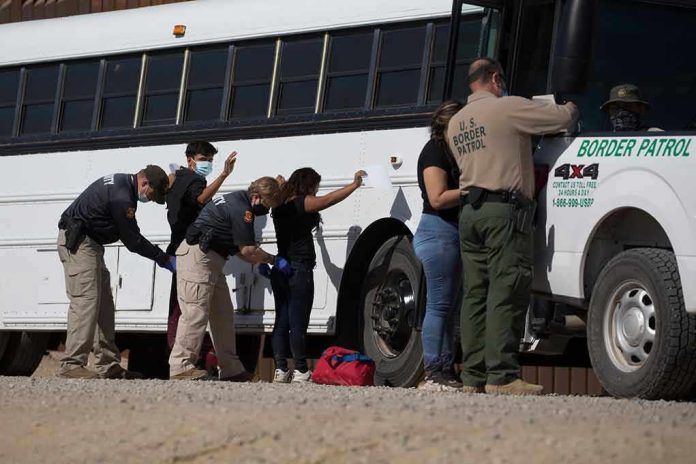
The Trump administration’s family separation policy at the U.S.-Mexico border remains a contentious issue, reflecting the complexities and challenges in balancing immigration enforcement with humanitarian concerns.
Story Overview
- The Trump administration separated over 5,500 children from their families at the U.S.-Mexico border.
- Audio recordings of sobbing children triggered international outrage in June 2018.
- Policy remained in effect from April to June 2018, with separations continuing post-official policy.
- Lack of adequate tracking systems complicated family reunifications.
- Legal and political fallout prompted judicial interventions and executive orders.
Policy Implementation and Impact
The family separation policy, part of a broader immigration enforcement strategy, was officially implemented in April 2018. It aimed to deter illegal immigration by prosecuting all who crossed the border unlawfully. The policy resulted in over 5,500 children being separated from their families, including infants and toddlers.
This enforcement strategy sparked national and international outrage, especially after audio recordings of separated children crying for their parents were released in June 2018.
The policy was initially tested as a pilot program in the El Paso, Texas sector in July 2017, reportedly leading to a 64% drop in apprehensions. However, the lack of a systematic tracking system for separated families resulted in logistical challenges. This failure significantly complicated efforts to reunite children with their families, as there were no adequate protocols in place for such reunification.
Judicial and Political Responses
Amid mounting public pressure and legal challenges, President Trump signed an executive order on June 20, 2018, halting the family separations except in cases where a parent was deemed a risk to the child. A week later, U.S. District Judge Dana Sabraw issued a preliminary injunction requiring the government to reunite separated families within 30 days. This judicial intervention underscored the inadequacies of the policy and highlighted constitutional concerns regarding family unity.
Despite the official end of the zero-tolerance policy, separations continued for months, reflecting systemic issues within the immigration enforcement framework. The continued separations prompted ongoing legal battles and advocacy efforts, with organizations like the ACLU and KIND playing pivotal roles in representing affected families and ensuring compliance with court orders.
Long-Term Consequences and Lessons
The long-term impacts of the family separation policy are significant. The psychological trauma experienced by the separated children, many of whom were under the age of four, has been well-documented. The policy also exposed severe flaws in government infrastructure and interagency coordination, ultimately leading to a reevaluation of immigration enforcement strategies.
Efforts to reunite families have persisted for years following the policy’s termination, with new cases of separated children being identified as late as January 2022. This ongoing challenge highlights the need for robust tracking and reunification systems to prevent similar issues in the future and to uphold the values of family unity and humanitarian concern.
Sources:
Timeline of Family Separation and Reunification
Trump Administration Family Separation Policy
American Oversight Document Analysis