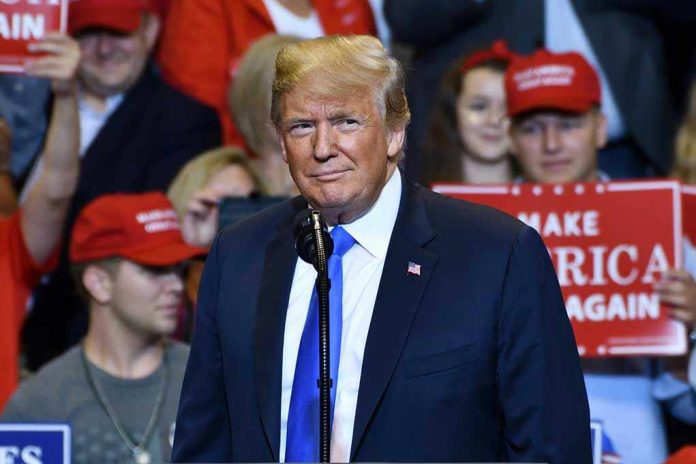
When President Trump leaned toward Kevin Warsh at the swearing-in and essentially said, “You’d better lower rates” while praising his “independence,” he turned a dry monetary-policy ceremony into a live test of who really runs the American economy.
Story Snapshot
- Trump wrapped a clear push for lower interest rates inside gracious praise of new Federal Reserve Chair Kevin Warsh.
- Warsh insists Trump never asked him to promise rate cuts and vows to follow the data, not politics.
- Bond markets and inflation realities suggest there is little room for easy money, no matter what the White House wants.
- The episode revives the old question: can the Federal Reserve stay independent when presidents want cheap money fast?
Trump’s applause line that sounded like a rate-cut order
President Trump used Kevin Warsh’s swearing-in not just to celebrate his new Federal Reserve chair, but to send a pointed message about interest rates. Cameras caught Trump praising Warsh as “the best” while reminding the country he had long pushed for lower borrowing costs and faster growth.[1][3] The setup gave Trump plausible deniability: he spoke the language of independence on paper while his tone, history, and timing told markets exactly what he wanted.
Investors heard the subtext immediately. Commentators noted that Trump’s track record with Jerome Powell showed how he blends public flattery with relentless pressure for easier money when markets wobble.[1][3] The ceremony framed Warsh as the man who could finally deliver what Trump never got from Powell: a central bank that “gets it” on growth, stocks, and debt. That framing matters, because it quietly turns every future rate decision into a loyalty test in the public mind.
Warsh’s denial and the fine line between input and interference
Kevin Warsh pushed back hard on any notion of a prearranged rate-cut deal. In Senate Banking Committee testimony, he stated plainly that “the president never asked me to commit to any particular interest rate decision, period,” and repeated that no such promise was ever requested or offered. He emphasized that Federal Reserve decisions must rest on inflation, employment, and financial-stability data, not political demands, positioning himself as a defender of central-bank independence.
Warsh also drew a key distinction often lost in the noise: elected leaders are free to express strong opinions about interest rates, but expression is not the same as coercion. This distinction aligns with the long-standing American conservative view that the Federal Reserve should be insulated from short-term political cycles, even when a friendly president is in office. The strength of Warsh’s on-record denial, combined with his formal oath, carries more weight than speculative claims that he secretly agreed to be Trump’s rate-cut machine.
Markets, inflation, and the reality that limits any president
Bond markets have already begun testing the gap between Trump’s desire for cheap money and the economic reality Warsh now faces. Yields on longer-term government bonds climbed as Warsh took office, sending a blunt message that traders see “no space for rate cuts” without risking even higher inflation.[3] Rising yields mean investors demand more compensation to hold U.S. debt, which usually happens when inflation fears or fiscal concerns increase, not when the economy cries out for easier policy.
Today, Kevin Warsh takes the oath as the new Federal Reserve Chair.
The 30-year bond yield just hit a 19-year high.
Every word Warsh says at the White House could move markets. A new Fed chair, a new rate regime, and a bond market already under pressure.
The dollar story just… pic.twitter.com/j3zwL4NIMK
— するめいか – Surumeika (@rakerakediadora) May 24, 2026
That market verdict intersects with a tricky backdrop: elevated inflation, a large federal debt stock, and global tensions driving up energy prices.[3] Cutting rates aggressively under those conditions could weaken the dollar, fuel more price pressure, and punish savers and retirees living on fixed income. From a common-sense conservative perspective, that is exactly how you undermine the credibility of the currency and reward leverage over prudence. Warsh must weigh all that against the obvious political attraction of lower mortgage costs and a frothier stock market.
The recurring clash between presidents and the Federal Reserve
The Trump–Warsh dance fits a long American pattern. Presidents of both parties lean toward looser money when growth slows or elections loom, because lower rates tend to lift credit, asset prices, and short-term activity.[1][2][3] Central bankers, by contrast, guard their inflation-fighting reputation even when tighter policy is unpopular. That structural tension explains why the country keeps cycling through headlines about presidents “pressuring” the Federal Reserve and chairs “defying” them.[1][2][3]
The Trump era amplifies that pattern by moving the pressure from closed-door meetings to live microphones and social media feeds. Public scolding raises legitimate concerns about whether future chairs might self-censor to avoid presidential attacks. Yet Warsh’s early stance suggests another possibility: a Fed that listens, nods, and then does what its mandate requires. If he follows through, the lasting story will not be one more president demanding easy money, but whether an institution designed for independence still has the backbone to say no.
Sources:
[1] YouTube – Trump Praises Kevin Warsh While Pressuring Fed Over Interest Rates
[2] YouTube – ‘No Pressure From Trump To Cut Rates’ Says Fed Chair …
[3] Web – Trump finally gets his Fed chair. Bond investors are already testing …