Trump vows that “the Islamic Republic of Iran will no longer exist” if Tehran breaks faith again—raising sharp legal fights at home while signaling zero tolerance for a nuclear-armed Iran.
Story Highlights
- Trump ties threats to Iran’s nuclear and missile programs, citing lawful self-defense.
- Critics warn strikes on civilian sites could violate the laws of war.
- White House frames pressure as leverage to reopen Hormuz and force a deal.
- Pentagon planning weighs dual-use targets and civilian harm limits.
Trump’s Objective: Block Iran’s Path to a Bomb
President Trump says the mission is simple and firm: Iran will never get a nuclear weapon. The State Department’s legal adviser says Operation Epic Fury responds to Iranian attacks and missile threats under the global law of self-defense. The statement argues the United States acted within established rules and is targeting military capabilities, not civilians, to end the danger and restore deterrence [7]. The policy aims to raise costs on Tehran until it stops aggression.
Trump has warned that if Iran refuses to reopen the Strait of Hormuz and make a deal, the United States will expand strikes. He has said Iran’s energy network and key nodes, like Kharg Island, could be hit if needed. He also claimed the Iranian people want freedom and would accept temporary pain to break the regime’s grip, while insisting the real war crime is letting Iran get a nuclear weapon that endangers millions [4].
Legal Crossfire: What Counts as a Lawful Target
International law experts and some lawmakers argue attacks on bridges, power plants, and water systems could be war crimes if aimed at civilian life or carried out without strict target-by-target review. They point to rules that protect works holding dangerous forces and ban terrorizing civilians. They also stress proportionality and the need for a concrete, direct military gain from any strike, not just political pressure or morale effects [2].
Military law guidance says power infrastructure can be a lawful target if it directly powers military operations and the strike avoids excessive civilian harm. Commanders must assess each site’s use, the expected military advantage, and options that reduce risk, like hitting distribution nodes instead of generation plants. These standards demand proof and precision, not blanket lists or broad punishments of a population [23].
Pentagon Planning and the “Dual-Use” Dilemma
Defense planners face the hard line between hitting Iran’s war machine and sparing civilians. Reports describe internal debate over dual-use facilities like desalination plants, which also sustain troops, but are vital for civilians. The White House says the Pentagon builds options so the commander in chief can choose the narrowest lawful tools. That includes timing, aim points, and target sets that limit knock-on harm while keeping pressure on Tehran to yield [4].
The administration says Iranian actions forced this standoff by blocking shipping and firing on partners. The State Department’s legal memo adds that United States forces have stayed within law since strikes began, focusing on missiles, production sites, and naval assets. The stated end goal is to stop attacks, reopen trade lanes, and deny Iran any nuclear breakout path, while keeping choices open if Tehran returns to talks [7].
Critics’ Red Lines and What Comes Next
Opponents warn that threatening countrywide blackouts risks crossing into unlawful coercion. They cite provisions that forbid spreading terror among civilians and highlight special protections around nuclear plants, dams, and water systems. Some say the scope of threats, if carried out, would be unlawful by design. Others concede a narrow strike could pass legal tests if the target’s military value is proven and civilian harm is kept below proportionality limits [2].
LIVE NEWS REPORT — SATURDAY, JUNE 27, 2026
U.S. AND IRAN TRADE STRIKES AS HORMUZ TANKER IS HIT
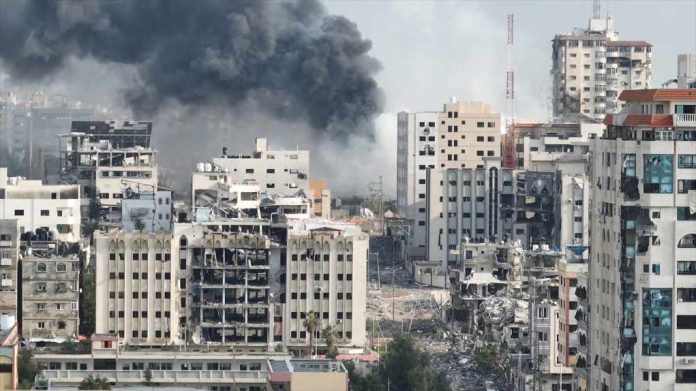
The U.S.–Iran ceasefire came under its worst pressure Saturday after a tanker was struck by a projectile in the Strait of Hormuz.
Britain’s UKMTO maritime security agency said the… pic.twitter.com/ABc9s3QbNv
— Ernie Milleur (@ErnieMilleur) June 27, 2026
For conservatives, the stakes are clear. Iran has armed proxies, hit tankers, and sought the bomb for decades. Trump’s message tells Tehran there is a hard stop, backed by American power. The test now is execution. Every strike must meet the law, protect our troops, and deliver leverage without needless harm. If Tehran reopens Hormuz and agrees to verifiable limits, pressure will have worked. If not, the president says the regime will face consequences it cannot endure [4].
Sources:
[2] Web – What international law says about Trump’s threats to bomb Iran’s …
[4] YouTube – Do Trump’s threats to strike Iran’s infrastructure cross into war …
[7] Web – Addressing Threats to the United States by the Government of Iran
[23] YouTube – War with Iran: Trump threatens to destroy civilian infrastructure