When federal agents use deadly force during a street arrest, the law does not turn on who the target is but on what actually happened in the seconds before the shots; in New York’s Marble Hill shooting, the public record supports that an ICE agent fired at least seven rounds during a targeted arrest of Oscar Belgal, a man with a prior grand-larceny conviction and multiple arrests, while his five-year-old child sat in the back seat—yet the decisive facts about vehicle movement, officer positioning, and perceived threat in those seconds remain unresolved.
At a Glance
- DHS described the operation as a targeted arrest of a Dominican national with a prior conviction and multiple arrests; police identified the man as 28-year-old Oscar Belgal.
- NYPD says one ICE agent fired at least seven rounds; Belgal was hit in the neck and survived, and the child in the car was physically unharmed.
- Surveillance video shows agents approaching as Belgal backed into a spot, then the car moved forward out of view before the gunfire—leaving the shooting itself off camera.
- Officials and witnesses dispute justification; the core questions hinge on vehicle dynamics, officer placement, and policy-governed threat assessment.
What we know happened: a targeted arrest turned into a shooting
Federal officials framed the operation as a routine but targeted enforcement action. According to DHS statements reported by multiple outlets, ICE officers were attempting to arrest a “criminal illegal alien” from the Dominican Republic with a prior conviction for grand larceny and several prior arrests involving assault, robbery, drugs, and weapons possession; NYPD and law-enforcement sources identified the target as Oscar Belgal, 28. DHS also asserted that Belgal rammed ICE vehicles as agents sought to box him in—if corroborated by video and physical evidence, that detail bears directly on threat assessment in a vehicle-based encounter.
What is not in dispute is the gunfire. NYPD Commissioner Jessica Tisch said scene evidence indicated at least seven shots were fired and that Belgal was struck in the neck below his left ear; the child in the back seat was uninjured. The NYPD was not part of the operation and arrived after a 911 call, which means the contemporaneous record is split between federal participants and later scene processing.
The unresolved seconds that will decide justification
Surveillance footage reviewed by the NYPD shows a plainclothes federal agent approaching the driver’s window with a gun as Belgal backed into a parking spot. A second agent moved toward the front of the vehicle. The car then moved forward outside the camera’s view; the shooting itself was not captured. That sequence—movement backward, approach, then forward motion off camera—has become the fulcrum for competing narratives about necessity and reasonableness of force.
Under the Supreme Court’s vehicle-shooting jurisprudence, what matters is the objective threat at the moment rounds were fired. In Plumhoff v. Rickard, the Court upheld deadly force where a fleeing driver posed a grave risk to the public; justification turned on the vehicle’s conduct and danger to others, not the suspect’s criminal history. The Court also held officers need not stop shooting until the threat ends once deadly force is justified. Those principles cut both ways here: ramming or accelerating toward officers can justify fire; shots at a car that is no longer an imminent threat cannot.
Criminal history and alleged gang ties: relevant background, not a legal trump card
DHS highlighted a 2023 grand-larceny conviction and prior arrests for violence and weapons. Those facts explain why ICE sought Belgal and why federal supervisors might have greenlit a higher-risk pickup. But they do not, by themselves, justify shots fired in 2026; the Fourth Amendment analysis is temporally precise—was there an imminent threat when the trigger was pulled? That is why investigators focus on vehicle speed and direction, officer positions, warnings, and whether any officer was in the car’s path at each shot.
Some coverage and surrogates also asserted Belgal’s ties to the Trinitarios gang. The principal DHS statement quoted in mainstream reports did not include documentary support for a gang designation in this case; without a validated gang record, the claim remains background allegation rather than a load-bearing fact in the force analysis.
Competing accounts and the current evidentiary posture
Local officials condemned the shooting as unjustified and emphasized the child’s presence. Mayor Zohran Mamdani called the incident unconscionable and demanded a full accounting; witnesses described masked officers, construction-style vests, an agent with a rifle, and a rapid escalation. Bystander video showed Belgal handcuffed on the ground afterward; NYPD footage released publicly has shown only the aftermath. None of that resolves the split-second question that governs the lawfulness of deadly force, but it underscores the need for transparent release of body- and dash-camera video to settle the mechanics of the encounter.
Federal authorities stated the case remained under investigation by HSI and the FBI. That leaves a familiar vacuum: sharply divergent narratives harden before the underlying video, ballistics, and collision reconstruction become public. In the interim, the presence of a child and the residential setting predictably dominate public reaction, while federal officials center alleged criminality. Both frames are incomplete without the missing seconds on video.
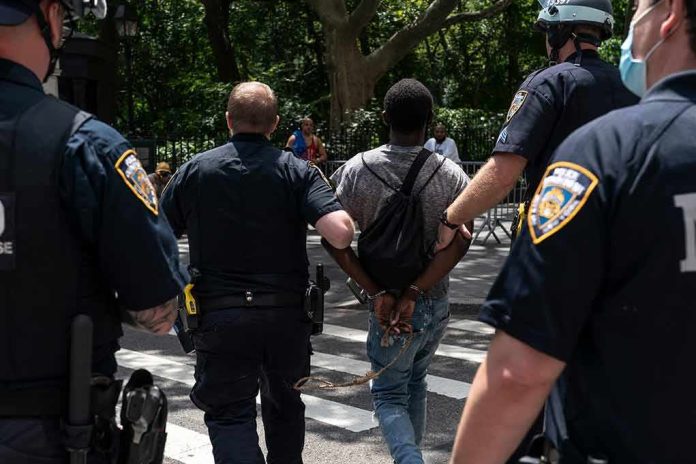
On Friday nearly 1k people gathered in NYC to protest the ICE shooting of Oscar Belgal and the violent repression of protesters and Bronx residents by the NYPD Thursday night.
Abolish ICE. Disband SRG. Full rights for all immigrants. pic.twitter.com/ZrkBf89kpw
— Left Voice (@left_voice) October 10, 2026
How these cases are adjudicated: video, forensics, and policy
Expect the investigative grind to focus on three domains. First, movement analysis: surveillance, body cameras, possible in-car systems, nearby business cameras, and event-data recorder downloads will be synchronized to reconstruct the car’s path, throttle/brake inputs, and officer positions. Second, firearms forensics: cartridge-case mapping, impact angles, glass and sheet-metal deformation, and wound ballistics will show where the shooter stood and whether rounds were fired into a moving or stationary vehicle. Third, policy compliance: investigators will compare ICE’s firearms and vehicle-interdiction policies to the shooter’s actions—especially prohibitions on shooting at vehicles absent an imminent threat to life, which many agencies adopt to prevent officers from creating their own peril by stepping into a car’s path.
Why vehicle shootings recur—and where the real reform levers sit
Federal immigration operations increasingly occur in mixed-use urban spaces—curb lanes, parking lots, school blocks—where vehicles are both conveyances and potential weapons. Recent reporting cataloged more than twenty shootings involving immigration agents since President Trump’s second term began, most involving people in vehicles, reflecting this operational geometry. The dispositive factor in nearly all is officer-created jeopardy: did tactics box the car in effectively, or did agents approach in ways that invited acceleration risk? Training, pre-arrest surveillance, and coordination with local police are the levers that reduce split-second shoot/no-shoot dilemmas at the window frame.
What would settle this case for the public
A credible, transparent resolution requires release of the full video record and a reconstruction that addresses seven questions with specificity: whether the car rammed agents’ vehicles and where; the vehicle’s direction and speed at each shot; the shooter’s exact position and backdrop; warnings given; the presence of bystanders in the line of fire; whether alternative tactics (containment, delay, NYPD coordination) were feasible; and how policy authorized or forbade firing once the vehicle cleared any officer’s path. Until those are answered, commentary will outpace facts.
Bottom line
The uncontested record supports this much: ICE set out to arrest a convicted felon with multiple arrests, shots were fired by at least one agent, Belgal survived with a neck wound, and a child in the car was physically unharmed. The lawfulness of those shots turns entirely on moment-to-moment threat—vehicle movement and officer placement—not on the charged politics of immigration or the target’s record. That is why the next public document that matters is not a press release but the synchronized video and forensic timeline.
Sources:
twitchy.com, nbcnews.com, nbcnewyork.com, yahoo.com, abc17news.com, aljazeera.com, bronx.news12.com, supreme.justia.com