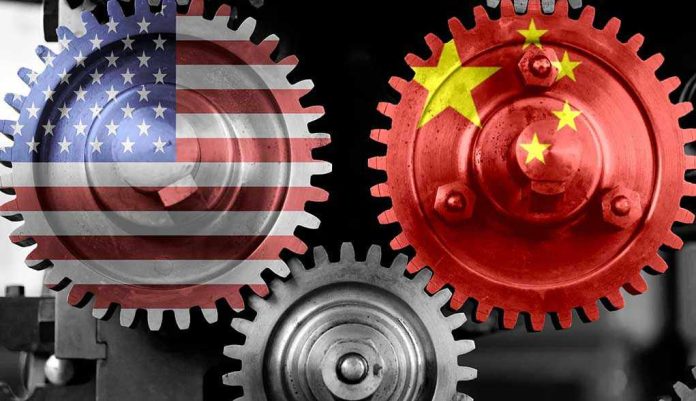
China’s second-in-command just claimed Trump’s tariffs dealt a “severe blow” to the world economy, accidentally admitting how much leverage America now has when it finally stands up to Beijing.
Story Snapshot
- Chinese Premier Li Qiang blamed Trump-era tariffs for harming the global economy, signaling real pain inside China’s export machine.
- Tariffs were designed to counter Beijing’s unfair trade, intellectual property theft, and dependence on America’s consumers.
- Trump’s return to the White House in 2025 has revived a tougher, America-first economic stance after years of Biden-era softness.
- Li’s remarks show global elites still prefer a weak, dependent America over a strong, sovereign one.
China’s Premier Signals Pain From America-First Tariffs
Speaking at an international forum in Beijing, Chinese Premier Li Qiang alleged that tariffs, implicitly those launched under Donald Trump, had delivered a “severe blow” to the world economy. By shifting blame to U.S. trade policy, Li effectively acknowledged that China’s export-driven model has been squeezed when Washington finally stops acting as a passive cash machine. His complaint fits a long pattern of Beijing using globalist language about “world stability” whenever American leaders push back on unfair Chinese practices.
Trump’s original tariff strategy targeted structural abuses, not free trade itself. Tariffs were applied to hundreds of billions in Chinese goods to answer decades of intellectual property theft, forced technology transfers, currency manipulation, and heavily subsidized state industries that undercut American workers. Rather than negotiate serious reforms, Beijing retaliated and leaned on sympathetic global elites to frame U.S. actions as reckless. Li’s latest remarks simply recycle that narrative, hoping Washington will again prioritize cheap imports over national security.
Globalists Call It a ‘Blow’—Americans Call It Leverage
When Li Qiang says tariffs “hurt the world economy,” he means they disrupted a system where U.S. consumers absorbed endless cheap imports while China accumulated power. Under this old model, multinational corporations enjoyed low labor costs, Wall Street chased profits in China, and American manufacturing towns hollowed out. Tariffs disrupted that comfortable arrangement. By raising costs on targeted imports, they encouraged reshoring, diversified supply chains, and reminded Beijing that access to the U.S. market is a privilege, not a right.
During Trump’s first term, the broader America-first agenda emphasized deregulation, tax relief, and energy independence, which helped spur job growth and record market performance before COVID disruptions. Stronger trade enforcement fit that blueprint by pairing domestic reforms with external pressure on adversaries like China. Li’s comments now arrive in a different environment: Trump has returned to office and again stresses national sovereignty over globalist consensus. For conservatives, that continuity matters because it shows Beijing still fears a Washington willing to use tariffs as a policy tool.
Lessons From the Biden Interlude and the 2025 Reset
The Biden years tilted back toward softer rhetoric on China, climate-focused regulation, and international institutions that often criticize U.S. toughness more than Chinese abuses. While some tariffs remained on the books, enforcement and messaging frequently signaled hesitancy. That ambiguity pleased global elites but did little for American factory workers, small manufacturers, or communities competing with subsidized imports. By contrast, Trump’s 2025 return brought a reset: tighter borders, revived energy production, and a restoration of unapologetic America-first language on trade and security.
Current White House messaging now links economic strength directly to national security, treating China as a strategic rival rather than a partner in some managed global order. Policies that protect supply chains, block hostile investment in critical sectors, or pressure allies to reduce dependence on Beijing complement tariffs rather than replace them. When Li complains about “severe blows,” he is reacting to that combined pressure. For readers worried about inflation, the administration now argues that long-term resilience and domestic production guard against future shocks created by hostile or unstable foreign suppliers.
What Li’s Warning Really Means for American Families
For American families who watched factories close, wages stagnate, and communities fray during decades of offshoring, Li Qiang’s statement should be read as confirmation, not condemnation, of tougher trade policy. If tariffs were harmless to Beijing, Chinese officials would not be denouncing them on global stages. Their complaints highlight how dependent China remains on unfettered access to U.S. consumers and how much leverage a confident Washington still wields. That leverage can be used to defend jobs, technology, and national independence.
Conservatives who value limited government and free markets can still support targeted tariffs as a self-defense measure when foreign states rig the game. The alternative is not “pure” free trade; it is submission to Beijing’s state-capitalist system and rule-making through unaccountable global bodies. Li’s remarks show the debate clearly: either America accepts permanent dependency in a fragile, China-centered supply chain, or it uses lawful tools like tariffs to secure its own prosperity. The renewed Trump agenda signals which path Washington has chosen.
Sources:
Chinese premier cites damage from US tariffs, as China’s surplus surpasses $1 trillion