A little-known Texas Democrat just reintroduced America to one of the ugliest political ideas in history: building a special prison for her ideological enemies and calling it “justice.”
Story Snapshot
- Texas congressional candidate Maureen Galindo vowed to turn an immigration detention center into a “prison for American Zionists.” [1][2]
- Her comments recycled classic antisemitic conspiracy claims about “Zionist Jews” controlling banks, media, and politicians. [1][2]
- Democratic leaders and Jewish organizations quickly condemned her rhetoric as antisemitic and disqualifying. [1][2][3]
- The episode exposes how extremist fringe ideas can slip into mainstream primaries in the social media era. [1][2][3][4]
A Congressional Runoff Turns Into A Test On Antisemitism
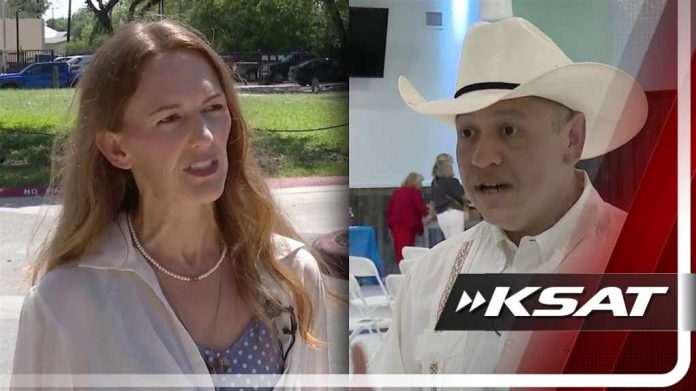
Texas’ 35th Congressional District was supposed to host a routine Democratic runoff. Instead, it became a referendum on whether a candidate can flirt with internment-camp politics and still call herself progressive. Maureen Galindo, a housing activist turned candidate, finished first in the primary and headed into a runoff against Johnny Garcia, a former public information officer and hostage negotiator from Bexar County. Then her own words detonated her campaign’s image. [2][3]
On Instagram, Galindo pledged to “write legislation so that all Zionism and support of Zionism is undoubtedly antisemitic” and to turn the Karnes County Immigration Processing Center into “a prison for American Zionists and former Immigration and Customs Enforcement officers for human trafficking.” She added a grotesque flourish: it would be “a castration processing center for pedophiles, which will probably be most of the Zionists.” These lines did not come from anonymous trolls; they came from a would-be member of Congress. [1][2]
From Policy Critique To Punishment Fantasy
Americans can and do debate Israeli policy, foreign aid, and the meaning of Zionism. That is normal politics. Galindo marched far past that line. She accused “billionaire Zionists” of running human trafficking networks in San Antonio and South Texas, and linked her claims to “evidence” supposedly hidden in the Jeffrey Epstein files, a move straight from the conspiracy-theory playbook. She did not offer proof. She offered a target list. When a candidate targets categories of people for imprisonment based on ideology, Americans should hear alarm bells. [1][2]
In a Texas Public Radio interview, Galindo tried to draw a distinction: “I’m not antisemitic. In fact my last serious relationship was with a Jewish man. I’m against Zionist Jews.” Then she stepped on her own defense, insisting “the Zionist Jews own our media, our banks and all of our politicians.” That is not careful policy criticism; that is textbook scapegoating, echoing 20th century propaganda that said Jews secretly controlled everything and needed to be stopped. Labels do not change the underlying pattern. [1][2]
Democrats Scramble To Contain The Damage
Party leaders did not shrug this off as a mere gaffe. The Jewish Federation of San Antonio condemned Galindo’s remarks as antisemitic. The head of Democratic Majority for Israel, Brian Romick, slammed her “vile, hateful views” and pointed out her talk of Jews owning Hollywood, worshipping the “synagogue of Satan,” and running trafficking networks. National Democrats, including rising Texas figure James Talarico, publicly distanced themselves and refused to campaign with her. For a party that brands itself as a defender of minorities, tolerating this rhetoric would be political and moral malpractice. [1][2][3]
A Democratic frontrunner in a Texas congressional runoff is getting ripped by members of her own party after making shocking antisemitic remarks online.
Maureen Galindo posted on instagram saying she would turn an ICE detention center into a “prison for American Zionists” and… pic.twitter.com/lMJTR2RFVB
— Brooke Taylor (@Brooketaylortv) May 20, 2026
Galindo’s response was to blame the press and semantics. She said her Instagram proposal had been “misworded,” that she meant “Zionists,” not Jews, and that critics were collapsing anti-Zionism into antisemitism. The problem is not a missing footnote; it is the content. When a politician claims “Zionist Jews” run banks, media, and politicians, and pairs that with fantasies about locking “American Zionists” in a special prison, the defense that she only opposes an ideology rings hollow. The pattern, not the disclaimer, carries the weight. [1][2]
What This Episode Reveals About Modern Politics
This saga reveals four uncomfortable truths. First, extremist rhetoric does not stay relegated to anonymous forums; it now rides into primaries on the back of social media virality. Second, the old antisemitic conspiracy template—shadowy Jewish power, control of finance and media, secret trafficking networks—remains alive, now dressed in “anti-Zionist” language. Third, party brands matter: Democrats could not afford to ignore this without confirming every conservative critique about selective outrage. Fourth, voters must still act as the final guardrail. [1][2][3][4]
Common-sense American values reject the idea of government building prisons for political or religious enemies, whether they are called Zionists, Christians, Muslims, or atheists. The Constitution protects belief, association, and speech, not just for people we like. Galindo’s rhetoric did not just cross taste lines; it crossed lines that earlier generations of Americans bled to draw after real camps and real pogroms scarred the last century. Voters in Texas’ 35th District now face a simple question: do they reward that, or retire it? [1][2][3]
Sources:
[1] Web – Talarico won’t campaign with Democratic House candidate who …
[2] Web – Democratic runoff in Texas’ 35th Congressional District roiled by …
[3] Web – Dems slam Maureen Galindo comments as antisemitic in TX-35 runoff
[4] Web – Dem candidate’s Zionist castration rant sparks firestorm as party …