When Congress trains its subpoena power on private law firms over deals they struck with the White House, the issue is not just partisan trench warfare; it is a stress test of two American guardrails at once—congressional oversight of executive conduct and the profession’s duty to preserve independent legal judgment in the face of government pressure.
The Short Version
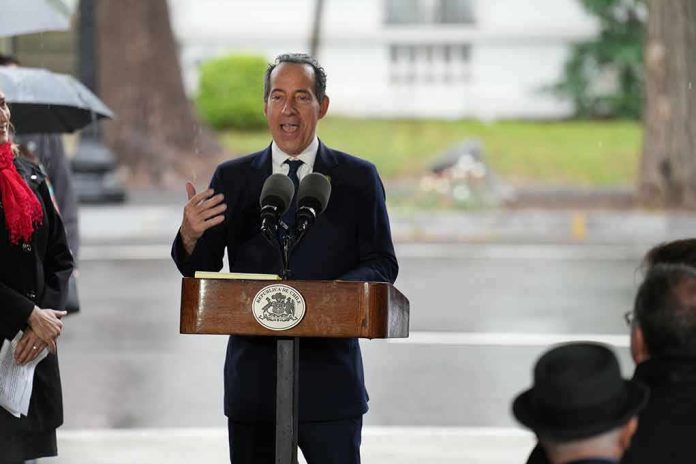
- House Democrats, led by Rep. Jamie Raskin, have identified large law firms that entered into early-2025 agreements with the Trump administration as concrete investigative targets, signaling subpoenas after prior information requests were rebuffed.
- At issue are nine firms’ reported commitments—valued around $940 million—to provide pro bono work within categories aligned with White House priorities, and whether those commitments followed coercive executive-branch tactics.
- The committee has outlined specific, documentable asks: the agreements’ terms, communications about any pressure or threatened orders, and the scope of work performed.
- Congress has broad investigative authority to seek information relevant to legislation, but attorney-client privilege, confidentiality, and accusations of partisan overreach will shape the fight.
What Democrats say they are investigating—and why it matters
Democrats now controlling key House committees have moved beyond rhetoric to a defined evidentiary target set: agreements that nine major law firms reportedly struck with President Trump’s team in early 2025, laying out extensive pro bono contributions in White House-favored categories. Bloomberg Law reported those commitments totaled roughly $940 million, a figure that, if accurate, would make the episode one of the largest coordinated shifts in pro bono posture by elite firms in memory. Committee leaders have previewed formal process—subpoenas—after earlier letters to firms such as Kirkland & Ellis, Skadden, Paul Weiss, A&O Shearman, Cadwalader, Latham & Watkins, and Simpson Thacher met resistance or incomplete responses. The information sought is specific: the agreements themselves, a description of any White House requests, and communications about potential coercion or threatened executive orders. This is not a fishing expedition in the abstract; it is an inquiry pegged to particular instruments and documented categories of work.
Why the urgency? Because the line between ordinary—and laudable—pro bono commitments and coerced realignment of a firm’s docket is not academic. If government pressure reshaped whom firms represent or which policy work they decline, that has downstream consequences for access to counsel, civil-rights litigation, and the durability of independent legal advocacy. Reporting and commentary over the past two years described a climate in which the administration castigated firms for cause-based work it disliked, prompting industry controversy about whether some deals reflected capitulation rather than choice. The committee’s theory is straightforward: gather documentary facts to determine whether legislation is warranted to protect legal independence or deter executive-branch coercion.
How congressional subpoenas to private entities work
Congress’s power to inquire is broad, rooted in its Article I responsibilities and implemented through standing committee rules. When a committee issues a duly authorized subpoena, recipients generally face a legal obligation to comply unless a recognized privilege—attorney-client, work-product, or constitutional defenses—applies. The Congressional Research Service (CRS) has long summarized the framework: oversight is essential to legislation; enforcement options include contempt, civil enforcement suits, or negotiations narrowing disputes; and privileges can constrain, but not nullify, the power to demand information germane to legislative purposes. Applied here, firms can assert privilege over client confidences and legal advice. But not every category of the committee’s ask implicates privileged content. Identities of counterparties to agreements with the Executive, high-level terms, valuation metrics, and general categories of assigned pro bono work typically can be described in non-privileged form—particularly where a firm’s counterparty is the federal government and not a private client.
The mechanism will likely follow a familiar playbook. First, letters seeking voluntary production; second, subpoenas defining custodians, date ranges, and categories; third, meet-and-confers to scope privilege logs, confidentiality stipulations, and rolling productions. If stalemate persists, committees can seek judicial enforcement. The result seldom turns on maximalist claims; most oversight standoffs resolve through negotiated narrowing, redactions, and tailored access arrangements—review rooms, in camera inspections—balancing congressional need with legitimate protections.
The evidentiary record to date: specific targets, unresolved legality
On the public record, Democrats have articulated who and what they want, and why. They say at least nine firms pledged enormous in-kind value on causes the White House prioritized and that some agreements followed an environment of White House pressure against disfavored firm activities. They sent letters to named firms and warned that subpoenas would follow lackluster cooperation. One letter to Kirkland’s chair reportedly pledged to use “every tool” after noncompliance—evidence that the dispute is active, not hypothetical. What the record does not yet contain are adjudications or independent findings that any agreement was unlawful. No court has ruled on the merits; no inspector general report or admitted documentary proof has been made public establishing coercion or quid pro quo. That absence does not undercut the case for oversight—investigations exist to determine facts—but it does set the boundary between allegation and conclusion.
Any fair reading should keep two propositions in view at once. First, Congress is on firm institutional ground to ask for non-privileged documents and testimony to inform legislation protecting legal independence. Second, the existence of large, category-bound pro bono commitments—even ones aligned with administration priorities—does not by itself prove corruption. The inquiry rises or falls on the underlying paper: drafts, emails, call logs, and the actual agreements. That is where coercion, if present, leaves fingerprints; and where claims of independent decision-making can be substantiated.
Democrats may be celebrating their victory, but unless America changes course, we could ALL end up paying the price. https://t.co/zKjG1kyTvU
— TrueTruth (@TrueTruthToday) November 5, 2026
The professional-ethics lens: pro bono as independence, not instrument
Pro bono programs are a defining feature of large firms; at their best, they expand access to justice and cultivate a culture of service. The controversy here is whether the Executive Branch turned that tradition into a lever—nudging or driving firms to channel resources away from certain civil-rights or immigration work and into White House-aligned matters. Reporting during President Trump’s second term chronicled a chilling effect on some cause-based representations and described the “reshaping” of pro bono under political pressure, a shift that critics argued undermined defenses for vulnerable clients. If documentary evidence corroborates those patterns, Congress will have more than political theater on its hands; it will have a legislative record for reforms that insulate legal-aid ecosystems from partisan retaliation, perhaps by clarifying procurement conflict rules, barring certain conditional threats tied to firms’ protected representations, or mandating transparency for government–firm “public interest” compacts.
Partisan overreach or necessary oversight? Where the real disagreement lies
Opponents frame the planned subpoenas as payback against businesses that worked with a sitting administration and warn of scope creep toward a broader corporate target list. One report described a 181-page roster of potential corporate lines of inquiry circulating among senior Democrats, spanning technology, AI, nursing homes, and fossil fuels—evidence, critics say, that the effort risks morphing from discrete oversight into generalized political punishment. Those optics are not trivial. The timing—subpoena talk at the moment of regained majority—invites the charge that power, not principle, is the motive. Yet the strongest counter to that critique is precision. The more the committees hew to documentable questions tethered to identifiable agreements, the easier it is to distinguish principled oversight from partisan spectacle. The record so far tilts toward specificity: named firms, defined asks, and a valuation claim grounded in trade-press reporting rather than conjecture.
What to watch next: the documents, the privileges, the legislative endgame
Three developments will determine whether this becomes a durable oversight success or another performative stalemate. First, whether committees obtain the agreements and contemporaneous communications—emails, drafts, calendars—sufficient to test the coercion hypothesis. Second, how the privilege fights resolve. Expect firms to protect client confidences; expect committees to argue that agreements with the government and aggregate pro bono accounting are not privileged and can be produced with redactions and logs. Third, whether hearings build toward legislation rather than headlines. CRS has long counseled that the legitimacy of oversight rests on a plausible legislative purpose and respect for institutional boundaries. If the output is a measured bill—on transparency of government–pro bono compacts, guardrails against retaliatory procurement threats, or reporting requirements on large pro bono commitments—the process will have served Congress’s role.
Bottom line
The terrain here is crowded with rhetoric, but the architecture is simple. Congress is entitled to the facts it needs to legislate; law firms are entitled to protect their clients and confidences; and the public is entitled to an independent bar that is not bent by political pressure. The next phase—subpoenas, productions, and testimony—will show which principle has been honored, and which needs the law’s reinforcement.
Sources:
huffpost.com, politicalwire.com, ground.news, news.bloomberglaw.com, newrepublic.com, levernews.com, freespeechforpeople.org, congress.gov