

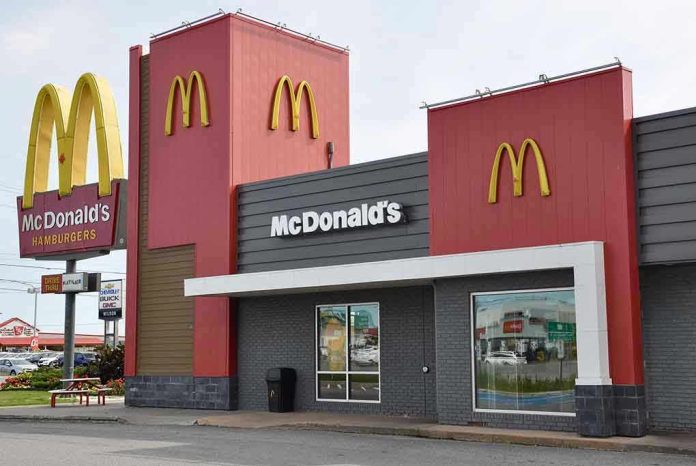
McDonald’s faces a class-action lawsuit accusing the fast-food giant of false advertising by selling the McRib as “rib” meat when it contains no actual ribs, potentially deceiving loyal customers who expect premium cuts.
Story Snapshot
- Four plaintiffs sue McDonald’s in federal court, claiming the McRib uses cheap ground pork shoulder, heart, tripe, and stomach instead of real rib meat.
- The lawsuit targets the sandwich’s name and bone-shaped patty, filed right after its November 2025 menu return amid cult-favorite hype.
- McDonald’s denies the allegations, insisting the McRib is made with 100% U.S. pork, no hearts or tripe, and always transparent.
- Case pending in U.S. District Court for Northern District of Illinois, seeking damages and marketing changes.
Lawsuit Details Emerge
Four plaintiffs filed a class-action lawsuit in late December 2025 in the U.S. District Court for the Northern District of Illinois. They accuse McDonald’s of misleading consumers through the McRib’s name and rib-shaped patty. The suit alleges the sandwich uses lower-grade pork products like ground pork shoulder, heart, tripe, and scalded stomach rather than premium rib meat. Real pork ribs cost more due to higher fat content and flavor, creating false expectations among buyers. This formal challenge seeks unspecified damages and an end to deceptive marketing practices.
McRib’s Long History of Scrutiny
The McRib debuted in 1981 as a boneless pork patty formed using restructured meat technology, shaped like ribs and sauced with barbecue on a bun. It gained cult status through limited-time offerings after removal from regular menus in the early 2000s. A 2011 Chicago Magazine investigation revealed its composition included restructured products from supplier Smithfield Foods, such as heart, tripe, and scalded stomach, plus additives. McDonald’s has consistently described it as seasoned boneless pork on its website, avoiding direct rib meat claims. The November 2025 return reignited ingredient debates into legal action.
McDonald’s Firm Response
McDonald’s spokesperson stated the lawsuit distorts facts and lacks merit. The company emphasizes the McRib contains 100% pork from U.S. farmers with no hearts, tripe, or scalded stomach. Transparency has always been key, they claim, protecting brand loyalty for this high-margin item. As a global fast-food leader with stock around $307, McDonald’s holds strong market power. Plaintiffs aim to amplify consumer voices through class-action, but no court rulings or settlements appear as of January 2026 coverage. Federal judges now oversee the pending case.
Stakeholders include unnamed plaintiffs motivated by perceived overpayment, McDonald’s defending sales and integrity, and historical supplier Smithfield Foods facing past welfare critiques. Media outlets like Inside Edition, Fox Business, and Fortune amplified the story in early January 2026.
Potential Industry Ripples
Short-term effects include a potential PR hit during McRib hype and legal costs for McDonald’s, with a minor stock dip of 0.51% noted. Long-term, the suit could set precedents for fast-food naming practices, forcing label changes amid rising consumer scrutiny on evocative terms like “rib.” U.S. pork ribs command premium prices, highlighting marketing tactics in the quick-service restaurant sector. McRib fans may question the hype, while broader debates on food transparency grow. No direct political ties exist, but it aligns with labeling regulations. Older reports support non-rib composition claims, though current recipe remains unverified independently.
Plaintiffs call it a deliberate sleight of hand; McDonald’s insists on full disclosure. The case tests consumer protection laws for misleading product names in a competitive market.
Sources:
Fox Business: McDonald’s hit with lawsuit claiming McRib contains no real rib meat
Delishably: Five Disturbing Facts About the McRib