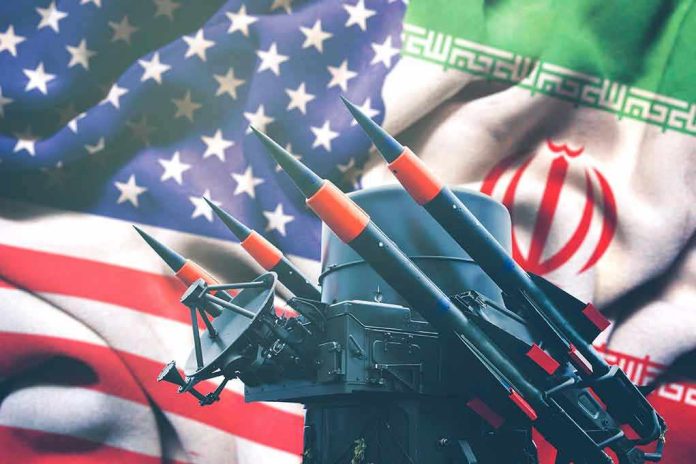
Hezbollah has signaled it may sit out a US-Iran conflict if American strikes remain limited, exposing cracks in Iran’s terror network and raising questions about Tehran’s ability to rally its proxies against American strength.
Story Snapshot
- Hezbollah Secretary General Naim Qassem says the group will choose whether to intervene in US-Iran conflict, distinguishing between limited and extensive strikes
- Iran pressured Hezbollah in January 2026 when Foreign Minister Abbas Araghchi visited Beirut demanding commitment to any upcoming confrontation
- Israel warned Lebanon it will strike civilian infrastructure including airports if Hezbollah joins conflict against US forces
- President Trump indicated on February 19 he would decide within ten days whether to strike Iran, with Geneva negotiations scheduled for February 26
Hezbollah Hedges Its Bets Amid Trump’s Iran Showdown
Hezbollah Secretary General Naim Qassem stated his organization will choose whether to intervene in any US-Iran conflict and expressed concern about confronting American forces. This conditional stance marks a significant departure from blanket commitments to Iran, suggesting the Lebanese militant group recognizes the catastrophic costs of direct engagement with US military power. The organization’s leadership emphasized it is “not neutral” but stopped short of guaranteeing automatic participation, revealing internal calculations about military capacity and strategic priorities. This hesitation comes as President Trump has deployed a massive naval and air armada to the region at levels not seen since the 2003 Iraq invasion.
Tehran Pressures Its Primary Proxy to Commit
Iranian Foreign Minister Abbas Araghchi visited Beirut in January 2026 specifically to pressure Hezbollah into participating in any upcoming confrontation with the United States. This diplomatic mission underscores Iran’s concern that its most capable regional proxy may not automatically support Tehran in a direct conflict with American forces. Despite decades of ideological alignment and military training from Iran’s Islamic Revolutionary Guard Corps, Hezbollah maintains operational autonomy and appears to be calculating whether its commitment to Iran’s revolutionary agenda is worth risking annihilation by American airpower. The organization faces a strategic dilemma: maintaining credibility with Tehran while avoiding the destruction that US military engagement would bring to Lebanon.
Israel Threatens Lebanese Civilian Infrastructure
Israel sent an indirect warning to Lebanon that it would strike the country hard, including civilian infrastructure such as airports, if Hezbollah becomes involved in any war between the United States and Iran. This threat creates a powerful deterrent against Hezbollah escalation by putting Lebanese civilians and national assets at risk. The Israeli warning exploits Lebanon’s fragile economic and political situation, where the state can ill afford further destruction after years of crisis. Lebanese government officials are actively negotiating with Hezbollah to prevent military involvement, recognizing that any escalation would expose the nation to devastating Israeli retaliation. This dynamic demonstrates how Israel’s military superiority and willingness to target infrastructure creates consequences that even Iran’s primary proxy cannot ignore.
Hezbollah’s conditional stance reveals the organization’s present weakness following previous conflicts and Israeli operations. According to Critical Threats analysis, Hezbollah does not seek to fight Israel or the United States directly at this time due to diminished military capacity. The group has historically used the narrative of “defending Lebanon” to justify refusing disarmament, but this rhetoric now serves to explain why it may not automatically support Iran. Since August 2025, Hezbollah has rejected Lebanese government disarmament plans by citing continued Israeli operations, but now faces a scenario where joining an Iran conflict would invite far more devastating Israeli strikes than anything previously experienced.
Trump’s Decision Timeline and Military Options
President Trump stated on February 19 that he would likely decide within ten days whether to strike Iran, putting the decision timeline around early March 2026. Reports indicate Trump is favoring a limited strike to compel nuclear concessions, though advisors have presented broader regime change options if Iran refuses to comply. The Defense Department has outlined various military plans including options to eliminate key Iranian figures. This range of options directly impacts Hezbollah’s calculation, as the organization’s conditional stance suggests it is awaiting clarity on the scope and nature of American military action before committing to a response that could bring destruction to Lebanon.
The Geneva negotiations scheduled for February 26 represent a final diplomatic opportunity before potential military action. An Iranian representative indicated to Reuters a possibility of reaching an interim deal, though an Iranian Foreign Affairs Ministry spokesperson dismissed such likelihood. The uncertainty surrounding diplomatic progress leaves Hezbollah in a holding pattern, unable to commit until the scale of any US military operation becomes clear. Other Iranian proxies including the Houthis have indicated readiness for conflict, but Hezbollah’s hesitation suggests Tehran’s most capable ally may not follow through if American strikes remain limited in scope and duration.
Sources:
Understanding War: Iran Update February 23, 2026
Critical Threats: Iran Update February 19, 2026
Wikipedia: 2026 Iran–United States Crisis
Iran International: Lebanon Warned About Potential Hezbollah Intervention
Los Angeles Times: Iran Accuses Trump of Big Lies Ahead of Geneva Talks