Trump says Iran suddenly wants negotiations again—right after U.S.-Israeli strikes—and that whiplash is forcing the world to ask whether Tehran was ever serious about a deal.
Story Snapshot
- President Trump told The Atlantic he’s willing to reopen talks because Iran “want[s] to talk,” while arguing they delayed too long.
- U.S. negotiators reportedly demanded Iran end uranium enrichment, surrender enriched material, and dismantle key nuclear sites as a condition for limited sanctions relief.
- U.S.-Israeli strikes hit Iranian nuclear and military targets; reports also claim senior Iranian leaders were killed, while Iran’s government remains intact.
- Iran retaliated with missile and drone attacks aimed at Israel and multiple U.S. bases across the region, widening the risk of escalation.
Trump’s Post-Strike Message: Talks Are Back on the Table
President Donald Trump said Iran is seeking to resume negotiations following U.S.-Israeli strikes, telling The Atlantic, “They want to talk… They should’ve done it sooner. They played too cute.” Reports describing the strikes also say key Iranian figures connected to the regime and its security apparatus were killed, though some claims—especially about the supreme leader—remain unconfirmed. Trump’s posture blends deterrence with diplomacy: pressure first, talks second.
Trump Says Iran Wants to Reopen Talks: 'They Should've Done it Sooner. They Played Too Cute.' https://t.co/2g0yM8xgjc
— Mediaite (@Mediaite) March 1, 2026
Prime Minister Benjamin Netanyahu echoed the view that Iran used negotiations to buy time, calling past engagement “fruitless and deceitful” in the reporting. Iran’s foreign minister, Abbas Araghchi, publicly disputed that characterization and accused Washington of blowing up diplomacy even as discussions were underway. That dispute matters because it signals a core problem for negotiators: each side is trying to define who sabotaged the process, and that framing shapes what concessions are politically possible.
What the U.S. Reportedly Demanded in Geneva
Reporting on the Geneva track describes a U.S. negotiating team led by Jared Kushner and Steve Witkoff meeting Iranian diplomats led by Araghchi. The American position was described as maximalist: Iran would end uranium enrichment, surrender enriched uranium, and destroy major nuclear facilities at Fordow, Natanz, and Isfahan. In exchange, the U.S. would offer limited sanctions relief. The structure of that offer highlights Washington’s priority: verifiable dismantlement over incremental pauses.
The timeline presented in the research suggests diplomacy was moving through Omani mediation even as pressure escalated. Oman reportedly signaled a possible breakthrough on uranium stockpiling, while Trump remained dissatisfied and pressed for full nuclear dismantlement. Iran, for its part, publicly stated a deal was within reach if diplomacy was prioritized. Those parallel signals—talks progressing in one channel, escalating threats in another—help explain why both sides now claim the other acted in bad faith.
Strikes, Civilian Claims, and the Fog of War
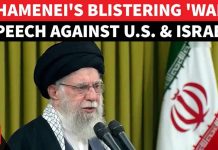
Early Saturday, Feb. 28, U.S.-Israeli strikes targeted Iranian nuclear sites and military installations and reportedly killed senior security leaders, including IRGC commander Mohammed Pakpour and Defense Minister Amir Nasirzadeh. Reports also claim Ayatollah Ali Khamenei was targeted or killed, but confirmation is lacking and Iranian leadership structures appear to be functioning. Iran also claimed a strike hit a school in Minab, with casualty figures reported inconsistently, underscoring the uncertainty that follows major strikes.
Iran’s Retaliation and the Regional Tripwire for U.S. Forces
Iran responded with missile and drone attacks aimed at Israel and U.S. bases across Bahrain, Jordan, Kuwait, Qatar, Saudi Arabia, and the UAE, according to the research summary. Iran cited self-defense under Article 51 of the UN Charter in communications around the crisis. This is where the stakes become immediate for Americans: every additional volley increases the chance U.S. service members and allied civilians get pulled deeper into a broader regional war, even if Washington’s stated goal remains nuclear dismantlement.
Trump Says Iran Wants to Reopen Talks: ‘They Should’ve Done it Sooner. They Played Too Cute.’ Mediaite https://t.co/4C2PQH4Z0w
— #TuckFrump (@realTuckFrumper) March 1, 2026
At the United Nations, an emergency Security Council meeting was convened under the “Situation in the Middle East” agenda, with Secretary-General António Guterres condemning escalation and warning it undermines peace. Meanwhile, international reactions split along familiar lines: Russia described U.S. strikes as “unprovoked aggression,” China raised sovereignty concerns, and France, the U.K., and Germany criticized Iran’s nuclear and proxy behavior while urging renewed talks. The diplomatic pushback illustrates a reality Trump supporters recognize: American force draws immediate scrutiny, but Iranian escalation often gets contextualized rather than decisively deterred.
What’s Confirmed, What Isn’t, and What Comes Next
The research points to major uncertainties that should shape how Americans interpret the headlines. Khamenei’s status is unconfirmed, Iran’s foreign minister has denied that talks are restarting even as Trump says they are, and the long-term effectiveness of strikes is debated, especially given prior claims that key sites were destroyed in 2025 yet still appeared central in 2026 demands. For constitutional-minded voters, the key takeaway is accountability: Congress and the public deserve clear, verified facts as events unfold and risks rise.
Sources:
Emergency Meeting on the Military Escalation in the Middle East
Trump says Iran wants to reopen talks: ‘They should’ve done it sooner. They played too cute.’
Trump says he agreed to talk to Iran amid strikes: Report