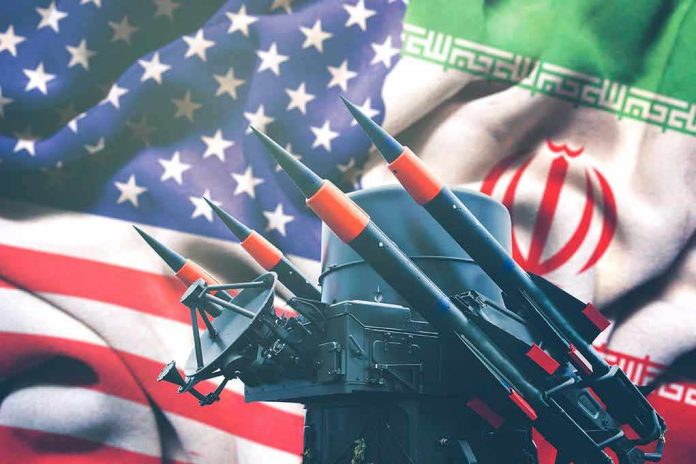
A new military strategy against Iran underscores a decisive shift from diplomacy to direct action, raising questions about its long-term impact on America’s domestic and global standing.
Story Highlights
- Trump’s aggressive stance towards Iran marks a return to military action.
- Operation Midnight Hammer demonstrates U.S. military capabilities but fails to permanently halt Iran’s nuclear program.
- The ceasefire remains fragile, with unresolved diplomatic tensions.
- Domestic implications include potential inflation due to energy market disruptions.
Trump’s Bold Military Strategy Against Iran
In 2025, President Trump reinstated a “maximum pressure” campaign on Iran, including sanctions and military threats. This approach culminated in Operation Midnight Hammer, a direct military strike on Iranian nuclear facilities in June 2025. While these actions disrupted Iran’s nuclear activities temporarily, U.S. intelligence reports suggest the program could be quickly reconstituted, highlighting the operation’s limitations.
Despite diplomatic efforts in early 2025, significant disagreements over uranium enrichment led to a breakdown in negotiations. The administration’s decision to shift from diplomacy to military action reflects Trump’s commitment to preventing Iran from developing nuclear weapons. However, the absence of a long-term diplomatic framework remains a critical issue.
Domestic and International Repercussions
The military strikes against Iran have broad implications beyond the immediate conflict. Domestically, the sustained military operations require ongoing defense spending, affecting the allocation of resources for domestic priorities. Additionally, potential disruptions in oil supplies could lead to increased gasoline prices and inflation, impacting American consumers.
Internationally, Trump’s aggressive approach has set a precedent for unilateral military action against nuclear programs. This raises concerns about global nonproliferation efforts and could influence other nations’ strategies regarding nuclear development.
Unresolved Issues and Future Implications
While the ceasefire declared in June 2025 has held, many unresolved issues persist. Iran’s nuclear capabilities remain a threat, and regional tensions are high. The lack of a diplomatic solution leaves the door open for future conflicts, and the potential for Iranian retaliation continues to loom large.
Domestically, the U.S. faces challenges in balancing military commitments with economic stability. The ongoing military engagements in other regions like Iraq, Nigeria, and Venezuela further stretch resources and highlight the need for clear strategic objectives.
Sources:
Fox News: Trump Has Timeline in Mind for Iran Nuke Deal
Wikipedia: 2025 Iran–United States Negotiations
Council on Foreign Relations: Guide to Trump’s Second Term Military Strikes and Actions
White House Fact Sheet: President Donald J. Trump Restores Maximum Pressure on Iran