

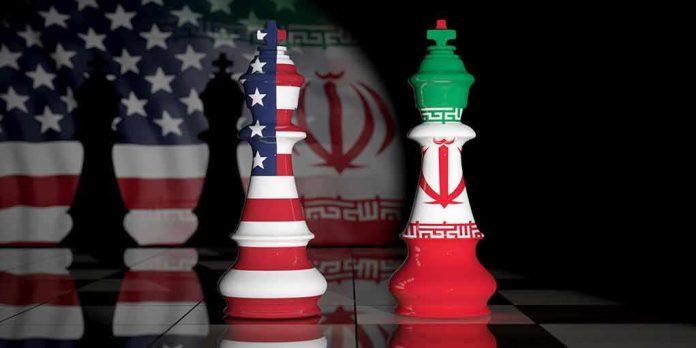
Leverage at a maritime chokepoint is perishable; preserving it often means passing on an attractive-sounding deal that cashes out pressure too early for uncertain promises later.
The Short Version
- Iran floated a seven-day path to reopen the Strait of Hormuz, but tied it to front‑loaded U.S. concessions; President Trump rejected it, keeping maximum pressure intact.
- Tehran’s proposal made reopening conditional on lifting a U.S. naval blockade, easing oil sanctions, and releasing frozen funds before Iran delivered on navigation and wider de-escalation.
- In coercive diplomacy at chokepoints like Hormuz, sequencing is the substance: who moves first determines whether leverage endures or evaporates.
- History at Hormuz shows partial disruptions move markets and invite escalation; durable arrangements require verification, enforceability, and balanced sequencing, not just timelines.
What Trump Rejected, and Why Sequencing Was the Hinge
Reports from U.S. and regional outlets align on the core exchange: Iran conveyed, via mediators, a plan to reopen the Strait of Hormuz in roughly a week if Washington first lifted the naval blockade on Iranian ports, waived oil sanctions, and released frozen assets. In public and through attributed sourcing, President Trump declined, judging the terms inadequate and strategically inverted—concessions up front, performance later. The Iranian side has been explicit that reopening was conditional, not a unilateral goodwill gesture; their timetable placed U.S. relief in days one through five, with the strait opening only on day six and follow-on talks on day seven. In a contest centered on a maritime chokepoint, that sequence matters more than the calendar. If the United States surrenders its principal levers first, it trades tangible control for promises in a setting where rapid verification is difficult and rollback is politically and militarily costly.
The logic of the rejection is coherent within classic coercive bargaining. Blockade authorities and sanctions access are the currency of pressure; once spent, they are hard to reconstitute quickly. A phased roadmap can be viable, but only if obligations are reciprocal, verifiable in real time, and designed so that a breach by either side restores leverage automatically. The Iranian proposal, as described by multiple outlets, put the burden of early, high‑value moves on Washington while deferring Tehran’s most consequential deliverable—free navigation through the world’s narrowest major oil artery—until the end of the first week.
Hormuz as a Coercive Chokepoint: Mechanism and History
The Strait of Hormuz is a two‑lane maritime funnel with no practical bypass for much of the Gulf’s crude and LNG; even partial disruption raises freight rates, insurance premia, and risk appetite across energy markets. International law affirms transit passage in straits used for international navigation, but that legal baseline doesn’t police low‑grade harassment, mining threats, or ambiguous “inspection” regimes that produce the same chilling effect on shippers without a formal closure. That is why the historical record—from the 1980s Tanker War to episodic seizures and sabotage since—shows that short of total shutdown, intermittent pressure has been sufficient to move markets and trigger military responses. In 2026, the dynamic was similar: a declared “closure,” maritime hazards, and escort operations stranded or deterred traffic and catalyzed acute bargaining.
Because Hormuz is an archetypal chokepoint, both “deal‑first” and “pressure‑first” arguments sound plausible. The former promises rapid de‑risking of global flows; the latter insists that relief without enforceable reciprocity rewards brinkmanship and invites repetition. Serious arrangements at straits hinge on traffic-management schemes, predictable security presence, and mechanisms akin to traffic separation schemes under the International Maritime Organization—technical, dull, but enforceable. Sequencing that restores navigational confidence stepwise while preserving snap‑back leverage is the tested template; anything that front‑loads relief without immediate, inspectable changes on the water tends to unwind under stress.
The Iranian Position: Conditional Reopening, Not a Free Concession
Tehran framed its seven‑day proposal as a realistic offramp: lift the blockade, ease sanctions, release funds, pause fighting—including in Lebanon—and Iran would reopen Hormuz and return to talks. Iranian officials, on the record through major wire services and state media, emphasized that reopening was contingent and phased, with navigation restored after U.S. moves were completed and only then followed by broader negotiations. From Iran’s vantage, Washington started the economic war; any path back must begin with relief. That logic is internally consistent, but it collides with the core design problem of coercive diplomacy: once a sanction or blockade is lifted, reimposing it quickly (legally and operationally) in response to noncompliance is rarely as simple as flipping the original switch. This asymmetry explains why U.S. negotiators habitually resist front‑loaded concessions at chokepoints.
Markets and mediators nonetheless took the offer seriously because, in theory, it traded immediate maritime stability for steps Washington controls administratively. But theory competes with the realities of verification at sea and the politics of re‑escalation. The President’s calculation—keep pressure intact rather than trade it for a short timeline and conditional promises—fits the pattern of past Hormuz bargaining cycles in which premature relief has struggled to produce durable restraint.
Pressure, Leverage, and the Economics of Time
Time favors the side with more resilient logistics and finance. Reporting in the same period underscored that Iran’s ability to sustain a full closure was limited, and that the combination of sanctions and interdiction measures was “really hitting” Iran’s economy—diminishing Tehran’s leverage the longer the standoff persisted. This is not absolute; energy markets are nimble but not infinitely so, and allies exposed to Gulf flows press Washington to de‑risk quickly. Still, in bargaining terms, mounting economic strain on Iran amplifies the strategic value of patience for the United States. Accepting a deal that spends leverage up front when the trend line favors your position is, at best, a high‑variance bet.
Conversely, sustained pressure carries risks: escalation ladders are steep at sea, and a misread signal or a mine strike can erase months of incremental gains. That is why a pressure‑preserving pathway to a deal has to be explicit about milestones: immediate, auditable steps on navigation safety; joint demining or lane‑clearing operations; verified cessation of interdictions; and modular sanctions relief that can snap back automatically upon breach. None of those elements appeared, in public reporting, as hardwired features of the seven‑day proposal. The timeline was crisp; the enforcement scaffolding was not.
What a Durable Hormuz Arrangement Requires
The precedent set by other straits regimes and by successful de‑escalations at sea points to a few non‑negotiables. First, reciprocal sequencing with “give‑get” symmetry—every step by one side is matched by an immediately inspectable step by the other. Second, embedded verification: visible maritime posture changes, AIS compliance, neutral observers, and agreed incident‑reporting channels. Third, technical governance: traffic separation adherence, salvage and demining protocols, and pre‑filed routing for state escorts that avoids ambiguity. Fourth, sanctions relief designed as reversible valves, not ruptured pipes. When deals are built on these pillars, they can survive political weather; when they are not, they become invitations to brinkmanship.
Seen through that lens, Trump’s refusal tracks with the core craft of coercive diplomacy. The offer on the table promised speed but not structural assurance. In a theater where leverage rests on control of risk, not on aspirational timelines, declining a front‑loaded trade is less an aversion to peace than a demand for an architecture that can enforce it.
Trump rejects Iran’s proposal, U.S. official confirms: constructive talks with Tehran continue through mediators
*axios
Axios reported that despite President Donald Trump’s rejection of Iran’s seven-day proposal, “positive and constructive” discussions are still underway…
— mahmoud khalil (@sahel2212) September 26, 2026
Bottom Line
The United States did not reject reopening Hormuz; it rejected a sequencing that would have surrendered its principal levers before Tehran delivered the only outcome that matters to shippers and allies—safe, sustained passage. At chokepoints, leverage is the policy. Preserving it until there is a verifiable, enforceable framework is not obstinacy; it is how durable maritime stability is actually bought.
Sources:
redstate.com, reuters.com, iranintl.com, wsj.com, ksl.com, x.com