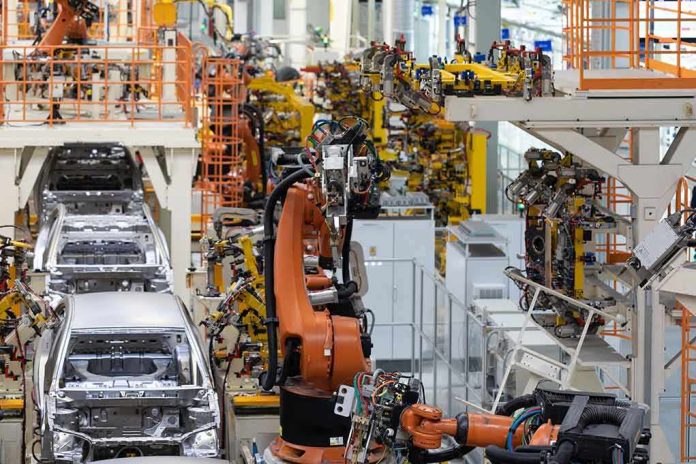
Toyota’s $3.6 billion move to shift Tacoma truck production from Mexico to Texas hands President Trump a headline “America First” manufacturing win that brings real jobs and real trucks back onto U.S. soil.
Story Snapshot
- Toyota will invest $3.6 billion to expand its San Antonio truck campus with a new Tacoma assembly line.
- Most Tacoma production is moving from Baja California, Mexico, to Texas over about four years.
- The expansion will add around 2,000 jobs and boost output by about 150,000 Tacomas a year.
- Tariff pressure and Texas tax breaks help make U.S. production a smart “America First” business choice.
Toyota Brings Tacoma Jobs and Production Back to Texas
Toyota Motor North America said it will spend $3.6 billion to expand its San Antonio manufacturing campus and build a second vehicle assembly line dedicated to the Tacoma midsize pickup truck. The campus already builds larger Tundra pickups and Sequoia sport utility vehicles, so adding the Tacoma turns the site into a full truck hub in the heart of Texas. The new building will add roughly 2.5 million square feet and is expected to open by 2030.
The company explained that this major expansion is part of its plan to deepen its commitment to American manufacturing and support high quality vehicles for U.S. customers. Toyota’s president for North America said the investment will create “meaningful and sustainable jobs” and strengthen the local production system. Markets liked the move; Toyota’s stock jumped more than three percent after the announcement, a sign that investors see value in building more trucks in the United States.
From Baja California to San Antonio: How the Tacoma Comes Home
For years, Toyota built the Tacoma at plants in Baja California and Guanajuato, Mexico, as part of a broader trend that shifted most new North American vehicle production growth south of the border. Now Toyota says it will transition Tacoma assembly from its Baja California factory to the expanded Texas plant over about four years, with full-scale domestic output planned for 2030. When the shift is complete, roughly half of all Tacomas will roll off lines in San Antonio.
USA Today reports that after the new line is fully ramped up, Toyota expects to build about 150,000 Tacomas a year in San Antonio, on top of nearly 200,000 Tundra and Sequoia models already produced there. The company will still build some Tacomas at its Guanajuato plant, but the Baja California site loses the truck as work moves to Texas. This reverses a 2020 decision when Toyota moved Tacoma work out of an older Texas line into Mexico, chasing lower costs and looser trade rules.
Jobs, Tariffs, and Tax Breaks: Why “America First” Now Makes Business Sense
Toyota and Texas leaders highlight the 2,000 new jobs expected by 2030 as a key win for the San Antonio region and for American workers. Those jobs fit a long shift of auto manufacturing away from the old Midwest “auto belt” into Sunbelt states like Texas, where business rules are clearer and workers still value skilled trades. Local news outlets say the expansion could lift total employment on the campus to around 6,000 workers. That scale matters for families and small businesses across the area.
Toyota investing $3.6 B to expand its San Antonio, TX facility, moving production of the Tacoma pickup truck from Mexico to the US. This major manufacturing move is permanent, rolling out over the next four years & expected to be fully completed by 2030.https://t.co/PQeBDNc8Wo
— Insightful Hawk (@InsightfulHawk) July 8, 2026
Behind the scenes, tough new tariffs on foreign-made vehicles and parts, including a 25 percent border tax on imported cars, changed the math for global companies. Reports on the wider auto industry show that changes in tariffs can quickly move where factories get built or expanded inside the United States. In this case, making Tacomas in Texas instead of Mexico helps Toyota avoid those extra costs and fits better with Trump’s “America First” pressure on companies to bring critical production back home.
Texas JETI Incentives and the Fight to Keep Manufacturing American
The investment is helped by the Texas Jobs, Energy, Technology, and Innovation program, a property tax abatement tool created under House Bill 5 that cuts local taxes for approved projects. Some analysts at Yahoo Finance argue that Toyota’s expansion is “not about jobs” but about those tax breaks, suggesting the incentives are the main driver of the move. Even if tax relief plays a big role, the end result still lines up with core conservative goals: more U.S. jobs, more U.S. production, and stronger state-led competition.
Research on the North American auto industry shows that since the 1990s, Mexico captured over 90 percent of the growth in light vehicle production, while many U.S. communities lost factories and paychecks. Bringing a high volume truck like the Tacoma back to Texas breaks that long pattern and proves the United States can win manufacturing back when tariffs, smart state policy, and White House pressure all point in the same direction. For conservative readers who care about jobs, borders, and strong families, this is one global trade story that finally moves our way.
Sources:
insiderpaper.com, pressroom.toyota.com, wsj.com, finance.yahoo.com, facebook.com, x.com, cnbc.com, usatoday.com, bloomberg.com, reuters.com, instagram.com