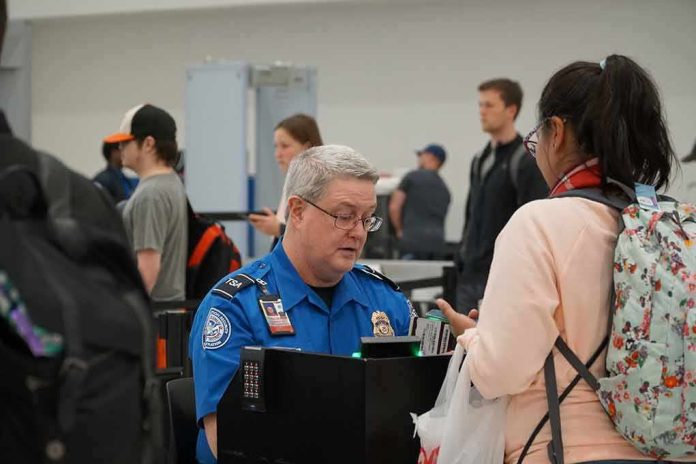
American airports are not constitutional voids: the Fourth Amendment applies at ports of entry, but it applies through the border-search doctrine’s reasonableness lens, which is generous to the government for routine inspections and far more contested for digital devices.
The Short Version
- The Fourth Amendment governs airport searches; international airports are treated as the “functional equivalent of the border,” where the government’s authority is broader but not limitless.
- Routine border inspections generally proceed without warrants or individualized suspicion; more intrusive, “nonroutine” searches may require at least reasonable suspicion.
- Smartphones complicate the doctrine: courts and policymakers increasingly distinguish a quick look from a forensic deep-dive, and different circuits have adopted different rules.
- Agency policy acknowledges gradations too; CBP’s 2018 directive demands reasonable suspicion for the most invasive device searches, even as it defends suspicionless manual checks.
What the Fourth Amendment actually protects at airports
The Constitution’s search-and-seizure baseline does not stop at terminal doors. The Fourth Amendment protects “papers, and effects” against unreasonable searches and seizures; international airports simply sit within a specialized corner of that law. For more than a century, courts have recognized a border-search exception that allows agents to examine persons and goods entering or leaving the country without a warrant or probable cause. Critically, that is not a declaration that “the Fourth Amendment doesn’t apply.” It is a statement about what counts as “reasonable” at the border, where sovereign interests in interdiction and admissibility are at their zenith. Congress’s nonpartisan research arm summarizes the framework succinctly: routine border searches are suspicionless; heightened, nonroutine intrusions can require reasonable suspicion.
Airports matter because doctrine treats certain locations as the functional equivalent of the border. International airports in the United States plainly qualify, which is why inspections there are analyzed under border-search principles rather than as generic police encounters. That classification expands government latitude at primary and secondary inspection but leaves the touchstone—reasonableness—intact. The Constitution Annotated makes both points: officers may generally conduct warrantless border searches, and airports can be the functional equivalent. Neither point erases limits when a search becomes qualitatively more intrusive.
Why phones test the border-search doctrine’s limits
Smartphones are not just “containers.” They bundle diaries, photo albums, medical files, business communications, and location histories into a palm-sized archive. That matters doctrinally. Modern scholarship and litigation press the view that digital devices resemble the “papers” the Framers singled out for special care and should therefore trigger tighter scrutiny than a bag check or pat-down. Courts and commentators increasingly distinguish between a manual, cursory review—say, scrolling through a few screens—and a forensic examination that copies or indexes vast stores of data. Several circuits maintain that basic, manual device checks at the border fit within the traditional suspicionless rule, while suggesting or holding that forensic deep-dives require reasonable suspicion or more. The Congressional Research Service tracks this split and its practical consequence: the more a device search looks like a comprehensive data extraction, the stronger the Fourth Amendment brake.
Agency policy has moved, if unevenly, in the same direction. In 2018, Customs and Border Protection issued a directive that distinguishes “basic” from “advanced” electronic-device searches—requiring reasonable suspicion (and supervisory approval) for the latter. That internal rule does not settle constitutional questions, but it is telling: even the agency that benefits most from the border exception acknowledges that not all device searches are equal.
International airports as the “functional equivalent of the border”
Labeling an airport the border’s functional equivalent carries concrete legal consequences. The Supreme Court’s border-search jurisprudence has long allowed inspectors to open luggage, question travelers, and even conduct pat-downs without individualized suspicion during routine processing. The Constitution Annotated makes explicit that this logic carries over to international airports. Yet “functional equivalent” is not a magic phrase that green-lights everything; when a search becomes especially invasive—body cavity searches, prolonged detentions, or, increasingly, comprehensive digital extractions—courts have required at least reasonable suspicion and, in certain contexts, probable cause with a warrant. The doctrine’s fulcrum remains reasonableness in light of the sovereign’s border interests and the individual’s privacy interest.
That balance looks different for a suitcase than for a smartphone. A bag is finite; a phone can expose years of life. As a result, across circuits you now see a sliding scale: suspicionless for routine baggage and identity checks; suspicion (and sometimes a warrant) for digital extractions that function as de facto general searches. Congress’s analysts underscore the point: border authority is broad, but bounded.
The case study lens: multiple intrusions and custodial cues raise the bar
Recent reporting on a high-profile Atlanta airport encounter illustrates how facts drive doctrine. According to detailed coverage, officers searched a traveler’s luggage and paper diary and then turned to his phone, which ultimately wiped after a passcode entry. Defense counsel say requests for a lawyer were denied and Miranda warnings withheld—facts that, if borne out, nudge the episode away from a routine screening and toward a custodial, targeted investigation. That shift matters; the deeper or more targeted the search, the more reason courts demand to justify it. The underlying report quotes an officer asserting authority to examine the phone without a warrant under border authority—an accurate description of the government’s position, but one that now collides with the device-specific limits many courts and policies recognize.
None of this erases the baseline: ports of entry enable robust, suspicionless screening. It does clarify the fault line. When inspections stack—bags, papers, and then a phone—and when the setting starts to resemble an interrogation rather than customs processing, reasonableness analysis tightens. The line between a valid border inspection and a nonroutine, investigative search is fact-intensive, and in digital cases, contested.
Where the law actually disagrees—and where it does not
There is wide agreement on three propositions. First, the Fourth Amendment applies at airports. Second, the border-search exception allows warrantless, suspicionless routine inspections at the border and its functional equivalent. Third, not every border search is routine; some intrusions require more. The hard part is classifying electronic-device inspections—especially their scope and method. CRS’s synthesis captures the state of play: circuits diverge on whether manual phone reviews are “routine” and whether forensic extractions require reasonable suspicion, a warrant, or something in between. The practical takeaway for travelers is unglamorous but honest: outcomes vary by jurisdiction, the search’s intrusiveness, and whether agents act within or beyond their own policy guardrails.
Legal scholarship has pressed for a principled anchor: treat smartphones like repositories of “papers,” not like suitcases. That framing draws power from the Supreme Court’s broader digital-privacy reasoning and has begun to reshape border cases by forcing courts to justify any deep device inspection, not assume it. While the Constitution Annotated affirms airports’ border-equivalent status, it equally affirms that the exception is bounded by reasonableness—a standard that changes as the nature and quantity of data change.
Practical implications for travelers, agents, and courts
For travelers, the doctrine means two things at once. Expect routine airport screening without warrants; do not expect that “border” means “no rights.” The more an officer seeks to pry into the substance of your digital life, the more the law demands—by way of suspicion, approvals, and sometimes judicial process. CBP’s own rules now reflect that split, even as the agency defends broad authority at the threshold. For agents, the lesson is operational: stay within the 2018 directive’s lanes, document reasonable suspicion for advanced device searches, and calibrate scope to mission. Courts have rewarded process discipline and punished mission creep.
For judges, the task is to keep the center of gravity where doctrine puts it: reasonableness at the border is not static. Phones are sui generis; treating a terabyte archive like a dopp kit is analytically lazy and constitutionally suspect. Expect continued convergence on a two-tier framework—suspicionless for basic checks; heightened thresholds for deep dives—while appellate courts resolve remaining splits. That trajectory is already visible in the careful way Congress’s analysts, the Constitution Annotated, and agency policy carve up the field.
Bottom line
No, there is no “Fourth Amendment-free zone” in American airports. There is a border-search regime that presumes routine inspections are reasonable without warrants and that increasingly treats digital searches as a different animal—sometimes permissible on a quick look, often constrained when they become comprehensive. International airports live at that intersection: functional equivalents of the border, yes, but still constitutional ground.
Sources:
zerohedge.com, nap.nationalacademies.org, scholarlycommons.law.northwestern.edu, cnn.com, uscourts.gov