

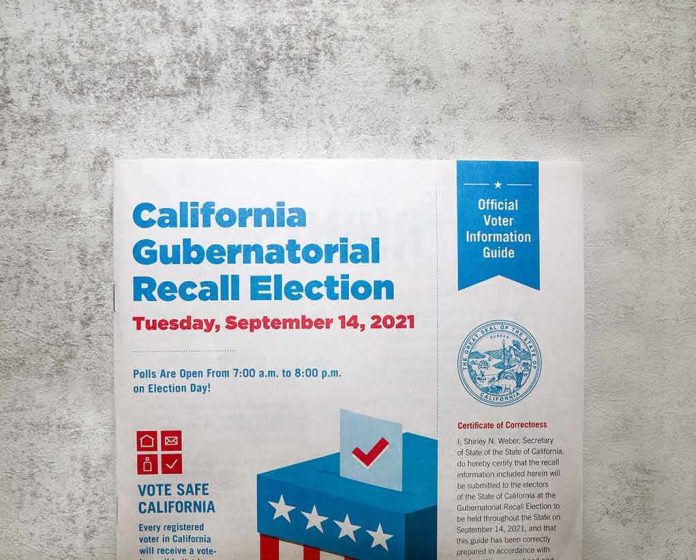
The most potent instrument in a statewide initiative fight is often not the statute itself but the 15–20 words voters see first; when that caption tilts, outcomes can tilt with it.
The Short Version
- California’s official title and summary for Proposition 39, a voter ID initiative, were revised after qualification in terms supporters call materially more negative.
- The Attorney General’s office controls those labels and says revisions are routine and aimed at clarity; critics call this iteration biased and plan to litigate.
- Ballot-language battles are a recurring feature of high-stakes initiatives because voters rely heavily on those few lines in the booth.
- The dispute over Prop 39 centers on framing—“establishes requirements” versus “prohibits citizens from voting unless…”—and whether that crosses from description into advocacy.
What changed, and why it matters
Proposition 39 would institute voter identification and citizenship verification in California elections. The initiative’s supporters gathered signatures under a working caption that said it “establishes additional voter identification and citizenship verification requirements.” After the measure qualified for the ballot, the Attorney General’s office issued a revised title: “Prohibits citizens from voting unless they present government-issued identification,” paired with summary language about invalidating mail ballots lacking the last four digits of an approved ID number. Backers say the rewording is not a semantic tweak but a reframing that primes voters to see denial rather than a compliance standard; they argue it will depress support before readers reach the text of the measure itself.
The reason this narrow fight attracts such heat is structural: California law assigns the Attorney General to write the official title and summary that appear on petitions and ballots. Most voters will never read statutory language; many will decide based on those lines alone. In that environment, diction is destiny—verbs like “establishes” and “requires” read differently from “prohibits” and “invalidates,” and the difference is not merely stylistic but strategic.
The Attorney General’s authority and the standard of “impartial”
By statute, the Attorney General must produce a “true and impartial statement of the purpose of the measure,” capturing its chief points in neutral terms. In practice, that is a judgment call made under deadline and legal constraint. The office’s public defense is straightforward: revisions are common after measures qualify, often to improve clarity, and this cycle’s initiatives all saw edits. The office maintains the Prop 39 language accurately conveys the operative condition to vote in person and the validation rule for mail ballots—core elements a neutral reader needs to know at a glance.
Supporters of Prop 39 do not contest the office’s authority to revise; they contest the editorial choice. They argue “prohibits citizens from voting unless…” is argumentative because every voting rule could be framed as a “prohibition unless…”—signature verification, precinct assignment, or registration deadlines. Their contention is that the phrasing selects the most negative logical form rather than the neutral functional description, thus shading perception. They signal litigation to force a rephrase more akin to the earlier formulation centered on “establishes requirements”.
How ballot labels shape outcomes
Political scientists and campaign veterans converge on a simple truth: when voters are uncertain, they default to the cues before them, and the ballot label is the first and sometimes only cue. That is why initiative campaigns spend early money on title-and-summary fights and why courts see a steady stream of pre-election challenges. California has lived this before across issues—labor classification, taxes, redistricting—where a handful of words functioned as agenda setting. Proponents of Prop 39 see “prohibits citizens from voting unless…” as a prime example of a negative cue that could move marginal voters against an otherwise popular-sounding reform; critics of voter ID see it as a clarifying restatement of what the initiative actually does at the moment a ballot is cast.
In this domain, neutrality is not the absence of connotation—there is no connotation-free way to compress consequences of a 20-page constitutional amendment into a caption. The operative question is narrower: does the label accurately capture the measure’s chief operative condition in a way a typical voter would not find misleading? That is the standard courts apply when asked to intervene on the eve of printing. Where courts have stepped in historically, it was generally because the label misdescribed scope or omitted a critical effect, not because it used a sharper verb than opponents liked.
The mechanics of Prop 39 and the semantic pivot
The initiative, as summarized in coverage and campaign materials, would require a government-issued identification to vote in person and require mail voters to provide the last four digits of a designated ID number; it also contemplates issuance of state voter IDs for those lacking qualifying documents. A caption that says “establishes additional voter identification and citizenship verification requirements” sketches that architecture as policy. A caption that says “prohibits citizens from voting unless they present government-issued identification” reconstructs the same architecture from the perspective of the voter at the check-in table. Both are logically accurate; one foregrounds policy mechanism, the other foregrounds the condition for access. The dispute is over which framing meets the legal test of impartiality when sitting alone above a yes-or-no bubble.
Proponents view “prohibits” as a loaded choice because it evokes denial of the franchise; defenders say the phrasing strips euphemism and tells voters, in plain terms, the consequence of noncompliance. Where that line gets drawn in court often depends on whether the language can be shown to mislead a reasonable voter about baseline law, major effects, or enforcement. It is uncommon for a court to rewrite a title built from literal effects of the measure; it is more common when the text over- or under-claims scope or beneficiaries.
Litigation posture and likely points of argument
Backers of Prop 39 have threatened suit to compel new language. Expect their brief to argue three points: first, that the revised title adopts adversarial rhetoric (“prohibits,” “invalidates”) when neutral alternatives exist; second, that it implies existing citizens are presently entitled to vote without identification and will now be broadly barred—overstating the change relative to current election administration for different modes of voting; and third, that the shift from the earlier working caption to the new one signals advocacy rather than clarification. The Attorney General will counter that the verbs describe discrete legal consequences voters need to understand at decision time and that revising for clarity is routine across measures each cycle; indeed, the office has publicly said all nine statewide initiatives on the ballot saw updates this year.
Timing sharpens the stakes. Ballot titles and summaries must be finalized weeks before printing, compressing judicial review into a narrow window. Courts, wary of becoming editors-in-chief, tend to grant relief only on clear error. That threshold—combined with the office’s statutory prerogative—makes challenger victories possible but not common.
The broader pattern: language as a battleground
None of this is novel to California politics. Whether the subject is classifying app-based drivers, drawing congressional lines, or altering tax rules, campaigns have treated titles and summaries as contested terrain, because they are. The public sees a simple binary on Election Day; professionals see months of rhetorical trench warfare conducted in administrative filings and, if necessary, in court. The Prop 39 clash follows that script line by line: a high-salience issue, a state officer tasked with compression, and rival campaigns litigating diction as destiny.
For voters, the lesson is not to romanticize neutrality but to demand accuracy and then read one level deeper. A well-constructed title tells you the operative condition; a good summary sketches principal mechanisms and nearest consequences. If the issue matters to you, invest two minutes beyond the caption—into the voter guide analysis, the fiscal estimate, or the measure text. That modest effort neuters the power of any single verb to swing your vote.
CA AG Rob Bonta Sued for Manipulation of Prop 39 Voter ID Language Ahead of the November Election https://t.co/1EDxcNfFUJ
— 🌺🌿kam🌿🌺 (@pjkate) July 25, 2026
What to watch next
In the short term, watch the courts. If challengers file, the judge will focus on whether a reasonable voter could be misled about the measure’s chief points by the current wording. A directive to rephrase would signal that the line between description and advocacy was crossed; a refusal would confirm the latitude the office enjoys when it frames conditions in plain terms. Either way, the episode reinforces a durable truth about direct democracy in California: the fight over the first 20 words is a fight over the last two—Yes or No.
Sources:
redstate.com, fox40.com, kmjnow.com, oag.ca.gov, nationalaglawcenter.org, x.com, ca-ilg.org, en.wikipedia.org