

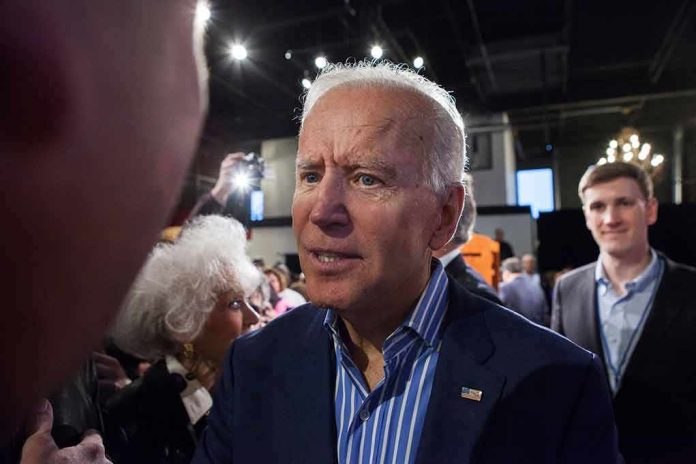
When a former president discloses a serious diagnosis while launching a memoir, the public hears two stories at once—one about health and one about legacy; in Joe Biden’s case, both are straightforward on the facts disclosed to date and sit squarely in the long American tension between a public figure’s privacy and the electorate’s appetite for detail.
The Short Version
- Biden said in July 2026 he was undergoing cancer treatment and that it was going well, later crediting his doctors for an encouraging assessment.
- He tied a reduced slate of public appearances to treatment side effects, saying some days the regimen slows him down.
- His memoir, Promise Me, America, was announced by publisher Little, Brown with a November 17, 2026 release and consistent subject framing across outlets.
- The public updates were qualitative, not clinical; there is no legal requirement to release medical records, and concise disclosures by famous patients are common.
What Biden disclosed and how he framed it
In a July 15, 2026 video, Joe Biden said he was dealing with a cancer diagnosis, was receiving treatment, and that it was “going really well,” a formulation reported by multiple outlets at the time. The message was unambiguous about treatment status and upbeat in tone, without straying into claims of cure. In early November, as his book launch neared, Biden updated the public again: his doctors were “encouraged” by his response to therapy, but treatment sometimes slows him down, so he would scale back appearances. The language does the things experienced political communicators try to do in health matters—acknowledge the condition, cite physician judgment, and calibrate expectations about stamina—without publishing granular medical data that would invite line-by-line adjudication outside a clinical context.
Crucially, none of this was presented as a declaration of remission. Subsequent coverage kept the emphasis on continuity of care and practical adjustments to workload, not on a finish line crossed. That is the sober middle ground credible patients and clinicians occupy: treatment can be effective and taxing at the same time.
What the memoir is, and what it promises to cover
Promise Me, America has ordinary, verifiable publishing particulars. Little, Brown and Company announced the title, author, and on-sale date—November 17, 2026—and opened preorders on its site, which functions as the authoritative catalog of record for the imprint. The book’s thematic brief has been consistent across Biden’s own framing and independent reporting: an account of his presidency, his decision to seek a second term, the governing choices that animated his tenure—economy foremost—and the decision to step aside from the 2024 race. Town & Country and the Associated Press align on those contours; none suggest a bait-and-switch monograph masquerading as a personal diary or a narrow campaign tract.
That the author’s health update arrived amid a commercial rollout is not unusual; publishers schedule big-ticket political memoirs around moments of maximum attention, and principals typically use the same channels—video statements, social posts, selective interviews—to seed both personal news and book news. The sequencing here tracks with industry practice: confirm publication, define the book’s arc, and set reader expectations for how much the author can do on tour.
Why the health language is qualitative—and typical
Readers often want numbers—PSA levels, imaging findings, protocols, timelines. They rarely get them from public figures, and there are principled reasons for that restraint. American law imposes no requirement that a president or former president disclose medical records; physicians remain bound by confidentiality absent patient authorization. Beyond the legal minima, there is a sociological pattern at work: research on media coverage of “famous patients” shows most stories use broad descriptors of diagnosis and progress, which can inform without turning the individual into a case report, though the tradeoff is less clinical specificity for the lay audience.
Biden’s phrasing—“going really well,” “doctors are encouraged”—is canonical in that genre. It communicates directionality without claiming endpoints, preserves flexibility for course corrections, and acknowledges the authority of treating clinicians without drafting them into public advocacy. That balance also explains his note about scaling back events: fatigue, medication effects, and clinic schedules are common friction points during active therapy, and public calendars often shift accordingly.
How the disclosure fits within the modern presidency-memoir continuum
Modern presidential memoirs do three jobs at once: they narrate governing choices, argue a theory of the case about the era, and curate legacy. Health inevitably threads through all three when illness intersects with consequential decisions. The Little, Brown announcement positions Promise Me, America in that mold—four “defining years,” framed through policy and political judgment—and contemporary coverage spotlights the chapters that will interest historians and partisans alike: the economy, the reelection calculus, and the decision to withdraw. Those who want contemporaneous documentation will find it, in time, in the book’s notes, calendars, and cross-referenced White House records; memoirs are not affidavits, but serious ones leave a paper trail readers can triangulate against public archives.
There is also a durable public-health effect when prominent people talk about illness: disclosures by well-known figures can spur screening and reduce stigma, even when the clinical details remain spare. That empirical observation has been reproduced across conditions and media cycles, which helps explain why advisors often counsel a controlled, candid disclosure rather than silence. Biden’s statements align with that instinct—say enough to be clear and responsible; keep the most intimate medicine between patient and physician.
What is contested, and what isn’t
On the record, the core facts are uncontested: Biden said he is in treatment and that it is going well; he later attributed that optimism to his doctors; he plans fewer appearances because treatment can slow him down; and his memoir’s release date, publisher, and subject matter are established in both publisher materials and independent reporting. The updates do not assert cure, do not enumerate biomarkers, and do not name physicians; none of those omissions are irregular for a public figure and none contradict the disclosures provided. As with any personal medical announcement, the precise regimen, response metrics, and prognosis remain private unless the patient chooses to share them. That may frustrate some readers. It is also how the system is designed to work.
🚨 Biden gives heartbreaking update on cancer ahead of memoir release — The Detail Most Headlines Left Out
🔗 Full story: https://t.co/GJxBxzBRB5#Biden #BreakingNews #USNews pic.twitter.com/ZTwVzzH5pD
— DailyShort Drama (@DailyShortDrama) November 9, 2026
The durable takeaway
Two straightforward truths can coexist: a high-profile patient can be doing well on treatment while dialing back public events, and a major political memoir can be both commerce and an earnest attempt to account for consequential years in office. Taken together, Biden’s health update and book launch reflect the norms of an era that expects timely, human disclosures and accepts that not all data belongs in the public square. For anyone trying to read the signal here, the signal is simple: treatment ongoing and reportedly encouraging; a book with clear publishing facts and predictable themes; and a public schedule calibrated to the realities of cancer care.
Sources:
thegatewaypundit.com, hachettebookgroup.com, townandcountrymag.com, usatoday.com, politicalwire.com, eu.usatoday.com, fr.jpost.com, pmc.ncbi.nlm.nih.gov, tmc.edu, heart.org