When a public official is arrested on a violent-threat allegation within hours of winning reelection, the collision of criminal process and political narrative can obscure the basic facts; here, the police account is concrete, contemporaneous, and resulted in formal misdemeanor charges grounded in a detailed probable-cause statement.
The Short Version
- Police say Missouri Rep. Anthony Ealy Jr. threatened to kill a man and referenced a firearm outside a Jefferson City business the morning after Election Day.
- Witnesses reportedly described Ealy yelling, causing a disturbance, and lunging toward the alleged victim; officers documented a quoted death threat.
- Prosecutors filed misdemeanor counts of fourth-degree assault and peace disturbance consistent with those accounts.
- Ealy denied making threats or mentioning a gun when interviewed by police and later asserted he had been pushed and chased with a bat.
What Police And Prosecutors Say Happened
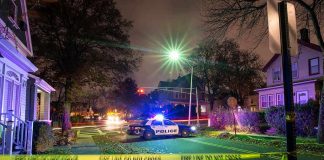
According to reporting that quotes the probable-cause statement, officers responded around 11:30 a.m. on November 4, 2026, to the 600 block of East Capitol Avenue in Jefferson City for a threats-in-progress call. Multiple witnesses described Rep. Anthony Ealy Jr. yelling outside a business and menacing a man who had contacted police. The probable-cause narrative attributed to police states Ealy referenced having a firearm, lunged toward the alleged victim, and repeatedly said he was going to kill him, language the report quotes directly. Prosecutors followed with misdemeanor charges of fourth-degree assault and peace disturbance the next day, an action aligned with the conduct police described.
Several outlets relying on police and incident-report summaries independently converged on the same core elements: a specific location on East Capitol Avenue, a cluster of witnesses, an alleged threat to kill, and a reference to a gun. The account also includes continuity over time—witnesses reportedly told police Ealy had been shouting the prior evening as well—suggesting officers encountered an ongoing disturbance rather than a single isolated outburst. Those details, taken together, meet the familiar early-stage threshold for charging a low-level assault and disorder offense in Missouri.
What Ealy Says In Response
After receiving Miranda warnings, Ealy denied making threats or mentioning a firearm, according to the probable-cause statement quoted in coverage. In subsequent public comments, he asserted he had been approached, pushed, and chased by someone wielding a bat while smoking a cigarette, and he declared himself innocent. That counter-account directly contests the most serious elements of the police narrative—both the death threat and the gun reference—but it does not alter the charging decision officers and prosecutors reached based on the information they say witnesses provided at the scene.
As in many early misdemeanor cases, the public record at this stage centers on police write-ups and brief defense statements rather than sworn, adversarial testimony. That is normal: probable cause is a front-end screen, not a verdict. An officer’s decision to arrest and a prosecutor’s decision to charge turn on whether reasonably trustworthy information supports a belief that an offense occurred; they do not resolve whose account will prevail if the case proceeds to trial.
How The Legal Standard Operates At This Stage
Understanding what “probable cause” means helps clarify why these facts led to charges. Probable cause asks whether, considering all the reliable information then known to police, a reasonably prudent person would believe a crime was committed by the suspect. It is deliberately lower than the proof beyond a reasonable doubt required for conviction; it also requires that officers weigh both inculpatory and exculpatory facts before acting. Here, the described convergence of multiple witness statements, a quoted threat, and reported aggressive movement (the lunge) satisfied that bar for fourth-degree assault—Missouri’s lowest assault tier—and for peace disturbance.
That tiering matters. Fourth-degree assault in Missouri covers conduct that places another in apprehension of immediate injury or involves offensive contact, and peace disturbance addresses tumultuous or threatening behavior that alarms others. The police narrative—threats to kill, gun reference, yelling, and a lunge—maps onto those elements. The absence, in current reporting, of a recovered firearm is not determinative for these counts because the offenses as charged can be supported by threats and conduct creating fear, not by proof of weapon possession.
The Timeline And Why It Drew Attention
Ealy’s arrest the day after winning reelection ensured intense coverage. The event occurred on a weekday morning in a well-trafficked corridor adjacent to the state Capitol, with bystanders reportedly watching the altercation. That mix—fresh electoral validation, proximity to official work, and visible public behavior—predictably amplifies news value. Political and media research has long shown that scandal salience often tracks context and timing as much as the alleged act itself; when an arrest follows an election night, it becomes a ready-made frame for editors and audiences alike.
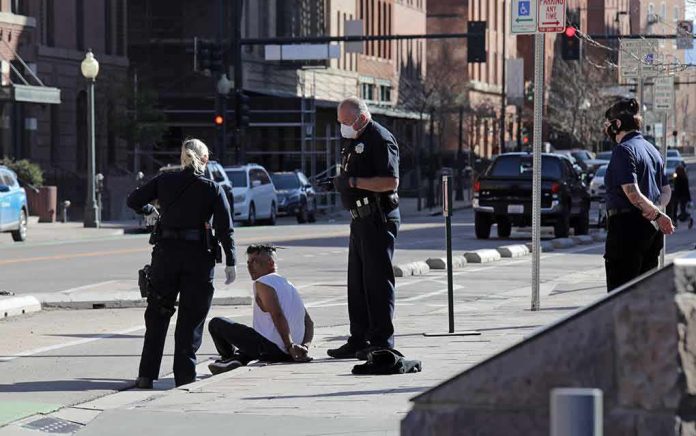
Yet the mechanics here are not exotic. Officers responded to a specific call, interviewed on-scene witnesses, documented quoted language, arrested the identified suspect, and turned over a case file that prosecutors used to file aligned misdemeanors within a standard one-day window. That pathway is the usual sequence for street-level assault and disturbance allegations, whether the suspect is a private citizen or an elected official.
Where The Dispute Actually Lies
The live dispute is factual and direct: did Ealy make a death threat and invoke a gun while lunging at a man outside a business, as witnesses reportedly told police, or was he instead the one accosted and chased with a bat, as he says? Police paperwork and charging decisions answer only the threshold question—was there enough reliable information to proceed—not the ultimate question of truth at trial. That is by design; the system stages evidence, escalating the rigor of proof as a case advances.
For readers parsing early accounts, a practical lens helps. Specificity tends to be load-bearing: exact location, time, quoted words, and multiple witnesses are the kinds of particulars that support front-end legal action. Counter-accounts also matter—especially if they come with corroboration like medical records, third-party statements, or video—and they become consequential as discovery unfolds. In this matter, the reported record to date strongly supports why police and prosecutors acted as they did, while Ealy’s denials and alternative narrative set the terms of any subsequent adjudication.
Democratic Missouri state rep accused of threatening to kill someone — a day after winning re-election
• Anthony Ealy Jr. was slapped with an assault charge after allegedly threatening to kill someone a day after winning reelection. https://t.co/TeVow9EjBB
— Golden State Times 🇺🇸 (@Goldstatetimes) November 7, 2026
What To Watch As The Case Proceeds
Several evidentiary items typically decide cases like this: body-worn camera footage capturing the aftermath and witness demeanor; any surveillance video from nearby storefronts; recordings of 911 calls; and clear, consistent witness statements that either lock in the quoted threats and lunge or undermine them. If recovered, such material would either reinforce the probable-cause account or align with Ealy’s assertion that he was the party threatened and chased with a bat. Those are the determinative artifacts in misdemeanor threat-and-disturbance prosecutions—not social-media spin, and not the electoral calendar.
Sources:
nypost.com, dailymail.com, kctv5.com, fourstateshomepage.com, kansascity.com, kmbc.com, thebeltwayreport.com, supreme.justia.com, txcourts.gov, ijoc.org