

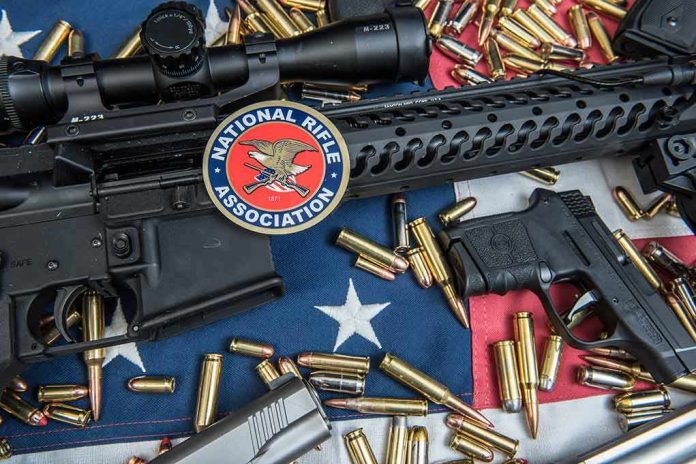
Debates over “assault weapons” bans rarely turn on a single sound bite; they hinge on how a proposal is structured, what courts will permit, and whether any claimed safety gains can be demonstrated rather than intuited. Minnesota’s recent push captures that full triangle: a concrete multi-part package, a live constitutional fight, and an evidence base that is thinner and more conditional than either side’s slogans suggest.
At a Glance
- Minnesota’s Senate advanced a comprehensive bill bundling sales restrictions with school safety, mental-health funding, and a crackdown on ghost guns.
- The measure drew visible support from Annunciation School families, but it stalled before enactment—underscoring politics as much as policy.
- Comparable state laws have survived some lower-court review, yet the Supreme Court is now weighing the core questions, creating real legal uncertainty.
- The research literature on assault-weapon and magazine bans is mixed to inconclusive on overall violence reduction; claims of sweeping impact—positive or negative—outpace the data.
What Minnesota’s proposal actually tried to do
Strip away the rhetoric and the Minnesota package was not a one-line prohibition. Reporting describes four pillars: a ban on the sale of assault-style weapons and large-capacity magazines; felony penalties for trafficking in privately made, unserialized “ghost guns”; funding for school-safety measures; and expanded mental-health resources. That scaffolding matters because it acknowledges the obvious—no single lever solves complex violence—and attempts a layered approach that mixes access controls with prevention and security. Families directly affected by the Annunciation School shooting, including Mike Moyski, publicly supported the bundle’s breadth, a reminder that the coalition behind the bill was anchored in lived loss rather than abstract theory. The Minnesota Senate passed a version by a single vote, establishing there was actual legislative text and institutional backing, not just campaign posture.
Two caveats are essential. First, the specific legal definitions—what counts as an “assault-style” firearm, the magazine threshold, grandfathering or registration terms—varied in descriptions and were not consistently presented in the press coverage available here. Precision on scope is not a nicety in gun law; it determines both who is regulated and how enforcement would work. Second, the measure did not clear the full legislature; it stalled in the other chamber, which was controlled by the opposition at the time—a procedural reality that often decides policy fate irrespective of underlying merits.
Where the constitutional fight actually stands
Since the Supreme Court’s 2022 Bruen decision, Second Amendment litigation turns on historical analogues and whether a regulation burdens arms “in common use” for lawful purposes. Lower courts have divided on how to apply that frame to bans on AR-15–style rifles and high-capacity magazines. In 2026, the Seventh Circuit upheld Illinois’s law in a 2–1 decision, describing it as in step with regulatory tradition—a notable, but contested, marker in the case law. That is not the last word. The Supreme Court granted review of challenges involving Illinois and Connecticut, placing the core issues squarely on the national docket: whether and how states can restrict sales or possession of semiautomatic rifles defined by features, and what limits—if any—apply to magazine capacity. The Court’s ruling will supply the controlling standard Minnesota must meet if it revisits a similar package.
Advocacy groups opposing Minnesota’s measures argue that such bans target firearms and magazines commonly owned for lawful ends and therefore collide with Heller and Bruen’s protections. They also contend that some drafts amounted to near-total prohibitions on most semiautomatic rifles and imposed onerous registration regimes—claims that, if accurate as to a given bill’s text, bear directly on constitutional risk. But advocacy summaries are not judicial holdings; the question is how a final statute, as enacted, maps to the developing Supreme Court guidance. Until that ruling lands, any Minnesota framework in this category lives under legal uncertainty that prudent drafters will plan around.
What the evidence can and cannot tell us
Public-health claims about assault-weapon and magazine bans attract confident headlines; the underlying empirical literature is far more circumspect. Syntheses from the RAND Gun Policy in America project repeatedly classify evidence on these bans’ effects on mass shootings, overall firearm violence, and police shootings as inconclusive or limited—suggestive in places, but not definitive enough to forecast robust population-level impacts across jurisdictions. Some analyses find that high-capacity magazine limits may reduce the lethality of certain attacks, and specific settings like schools may see injury reductions; still, across-study heterogeneity and design limits constrain what can be asserted with confidence.
Two implications follow. First, simply pointing to another state’s statute as precedent does not establish effectiveness; it only shows political feasibility and a degree of legal survivability in that venue. Second, policy evaluation must match mechanism to Minnesota’s problem profile: What proportion of in-state shootings involve rifles meeting the bill’s definition? What share of recovered magazines exceed the proposed threshold? How do firearms actually flow into criminal incidents—lawful retail, theft, straw purchasing, trafficking, or privately made guns—and which elements of the package plausibly interrupt those channels? Without Minnesota-specific answers rooted in reproducible data from the BCA, FBI, ATF, and court records, both sweeping promises and blanket dismissals are more rhetoric than risk analysis.
Mechanism and design choices that matter in practice
Details decide outcomes. Definitions built around cosmetic features are easier to market but harder to defend empirically; definitions keyed to rate of fire, energy, or functional attributes tie more closely to hypothesized lethality but risk sweeping in common platforms. Magazine thresholds involve trade-offs: numbers set too high dilute the constraint; numbers set too low heighten both compliance friction and constitutional exposure. Grandfathering with or without registration changes the enforcement posture dramatically; so do carve-outs for law enforcement and exemptions for fixed magazines or rimfire firearms. Ghost-gun provisions hinge on serialization enforcement and prosecutorial capacity; absent tools and staff, a felony label may impress more than it deters.
The non-firearm pillars also need operational clarity. School-safety funding must specify what it buys—physical hardening, threat assessment, secure storage initiatives, or trained personnel—and on what evidence base. Mental-health expansions perform best when they connect specific services to identified risks (crisis stabilization, firearm relinquishment during acute risk, community-based supports) rather than generic line items. In short, a credible public-safety package ties each instrument to a pathway of harm with measurable intermediate outcomes, not just ultimate aspirations.
Where genuine disagreement lies—and how to adjudicate it
The most durable disagreement is constitutional. If the Supreme Court blesses feature-defined rifle and magazine bans within a historical-analogical test, Minnesota will have a wider design lane; if it reads “common use” to block such prohibitions, legislators will need to pivot to measures with clearer historical lineage (for example, dangerousness-based temporary disarmament, objective licensing standards, or commercial-sale conditions). A secondary disagreement is empirical: whether restricting particular platforms reduces casualties meaningfully given substitution to other firearms. Adjudicating that requires event-level data on weapon mix, reload dynamics, and outcomes—work that is demanding but feasible if the state commits to it.
The third disagreement is about scope and trust. Opponents see confiscation by inches; supporters see bounded risk reduction amid intolerable harms. The only way to narrow that gap is via disciplined drafting, transparent implementation costs, clear enforcement guidance that prioritizes genuinely risky conduct, and ongoing, public evaluation that can be course-corrected as results warrant.
Minnesota Gov.-elect Amy Klobuchar: "I think the gun safety bill is going to get passed."
She is backing an assault-weapons ban.
The Second Amendment does not expire after an election.GFY, Amy. pic.twitter.com/3GMCNkQBKb
— Navy J Frank Jr 🇺🇸 (@navyjfrankjr) November 7, 2026
What it means for Minnesota going forward
Three practical steps would make any future effort both stronger and more resilient. First, draft to the forthcoming Supreme Court standard—not merely to lower-court dicta—so the law does not spend its early life under injunction. Second, build a Minnesota-specific evidence spine before the floor vote: publish the weapon-type prevalence in violent crime, the magazine distribution in recovered firearms, known acquisition channels, and a theory-of-change for each provision with measurable targets. Third, price and staff the implementation: registration systems if used, serial-number enforcement, prosecution priorities, school-safety deliverables, and mental-health capacity. Legislating in this space rewards precision and punishes bravado. The families who show up at hearings deserve both the urgency they ask for and the rigor required to make urgency count.
Sources:
twitchy.com, njoag.gov, edition.cnn.com, nytimes.com, stthomaslawreview.org, reuters.com, supremecourt.gov, gunowners.mn, postbulletin.com